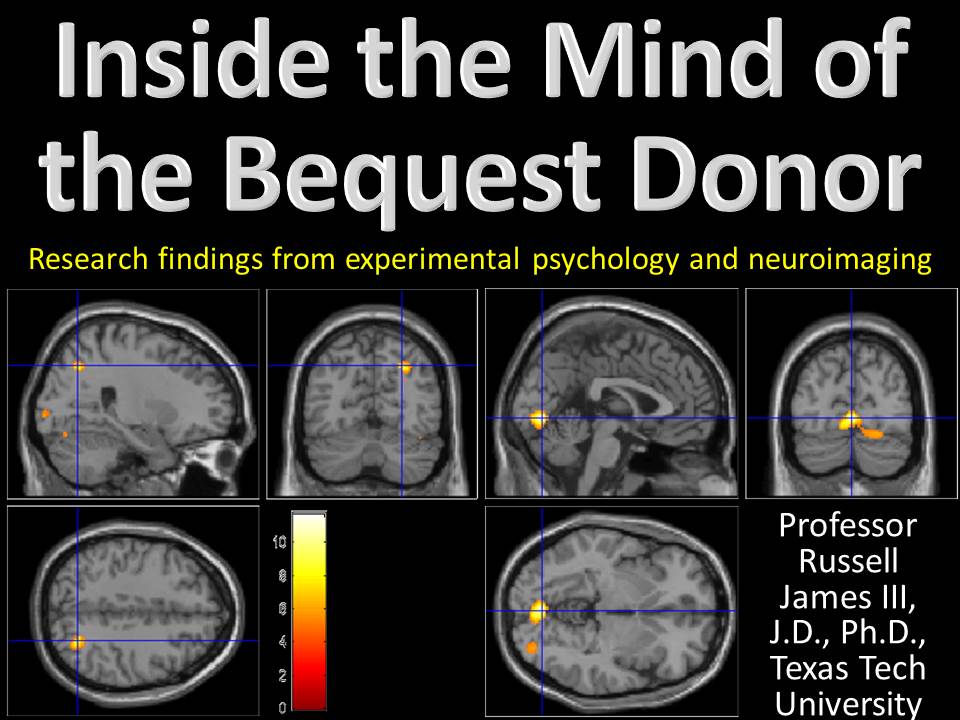
As will become readily apparent when flipping through this volume, it isn’t arranged in the typical style of a book. Instead, this is an arrangement of lecture slides and related discussion that cover the concepts from research that I have been engaged in for the last several years. Why structure a book this way rather than using the traditional approach of having only text? There are a couple of reasons.
The first reason is that this type of presentation gives the reader the opportunity to engage with the material at different levels and different speeds. For example, you could certainly use this book without reading the accompanying text by simply flipping through and reading the presentation slides. Alternatively, you could flip through the slides until you reach a section of particular interest and read the related text. Of course, you could always just read it like a traditional text, including all the words. The reason I believe such flexibility is particularly important is that this book is addressed largely to those who are working in the field of planned giving. For the most part, these are busy working professionals. When time is scarce, it makes sense to provide an opportunity to simply glance through material at a rapid pace, while at the same time leaving room for more in-depth reading on each topic.
The second reason for this approach is that I have far more experience at communicating to a non-researcher audience with the use of lectures and lecture material. (Since I’ve been teaching college classes for 20+ years, this is not a new approach.) And although the content in this book may seem extraordinarily dry or disagreeable to you, I can assure you that my typical writing, which is intended for academic journals, is far more painful than what you will see in this book. Thus, this approach helps me to stay in a “communication” mode rather than a “technical” writing mode. It is my hope that this nontraditional format (essentially replicating the lecture format) will be helpful both to those who have a deep interest in the topic and to those who have limited time, but would like to get the gist of new research findings and frameworks.
An additional reason for this approach is my desire to include many visual elements in the presentation. Due to my work in neuroimaging research, I am able to witness the dramatic impact of presenting images, rather than pure text, on activation in the brain. If you want the brain to “wake-up”, using images really helps. (Actually a thumbscrew works even better, but that’s not really the kind of experience I am intending here.) Naturally, one of the central goals in presenting any kind of information is to assist the reader in not going to sleep. Perhaps the presentation of the images here will occasionally be able to break up the material in such a way that encourages continuing through the material. (Apologies also for converting the images to grayscale. Unfortunately, the cost of a full-color text on such a tiny print run as this is pretty ridiculous.)
A final reason for this format is that I am occasionally called on to deliver lectures regarding my research to a practitioner audience. Such audiences typically include fundraisers, planned giving officers, financial planners, estate planning attorneys, or others. It is inevitably the case that these opportunities for presentations are time-limited, usually about 50 minutes. And while this period of time is appropriate for the general audience, I often find that there are a few who have particular interest in the topic and for whom it would have been worthwhile to have had more time in order to allow for a more expansive discussion of topics. It is with this rare person in mind that I initially developed the concept for this project. (I hesitate to even refer to it as a book given its odd format.) For those who have attended a brief summary lecture, this represents what I might have presented if I had unlimited time and you had unlimited patience. (The requirement for unlimited patience to withstand the additional material presented here also underlies my choice of structure which makes skipping ahead fairly easy.) I hope that the structure is useful or entertaining for the reader.
As a last note of apology, those who, like me, have been subjected to legal training will note that I am not using the term “bequest” in its proper legal sense, but instead in its generic colloquial sense. After struggling for some number of years to retain the original distinctions for the terms, I have finally relented, in part because I have found that for international audiences the term “bequest” is far more recognized than any other generic descriptive terms, and that the precise legal terms provide an almost impenetrable barrier to communication. Thus, throughout this text please do not think of “bequest” in the narrow sense of personal property left by means of a will document (leading to the necessity to separately distinguish legatees, devisees, and beneficiaries), but rather as a broad term encompassing all forms of leaving a financial legacy.
This text represents an update on the ongoing process of research and learning. My life experiences have exposed me to a variety of different perspectives on the topic of charitable bequest planning. After graduating from the University of Missouri School of Law, I began working as assistant director, and then director, of planned giving at Central Christian College. Additionally, as part of my working arrangement with the college, I also maintained a private law practice, which was limited exclusively to estate planning and advising nonprofit organizations. Over the course of many years, this gave me the opportunity to see the charitable bequest planning process from the perspective of the nonprofit organization and from the perspective of the donor. Additionally, it gave me substantial experience in working with non-donors in their estate planning process.
However, during these years as a practicing estate planning attorney and director of planned giving, my academic and research interests continued to grow. I always taught an evening course each semester for the college and after many years, decided that the college professor career was my ultimate goal. In pursuit of this, I completed my PhD studies at the University of Missouri, graduating with a degree in Consumer Economics with a dissertation on the topic of charitable giving.
My research career was postponed, however, when the board of directors of Central Christian College appointed me as president of the college. As with most college presidencies, this position focused heavily on fundraising. (This was perhaps more true given that I was moving into the presidency from the development office.) Over the next 5 ½ years, we finished two major capital campaigns and started a third. We were able to build several new buildings on campus (a library and residence hall chief among them) all paid for with newly generated cash. The college was twice named as the fastest growing Christian college in the U.S. by Christianity Today magazine.
I relay all of this primarily to let you know that – if you work in development – I have been there. This is a volume about research findings and theoretical approaches. But, it is intensely focused of the real world of practical application. Many of the my research findings discussed here have been published in peer-reviewed academic journals. But, ultimately, my hope is to impact, not just other researchers, but the working estate planner, financial planner, fundraiser, or planned giving officer.
As I left the daily practice of fundraising and entered a faculty position at a research university (the University of Georgia), my day-to-day focus turned towards researching charitable giving and charitable bequest planning. Those years were spent mostly analyzing large secondary data sets to better understand motivations behind charitable giving and charitable bequest giving. Although that research and those findings are not the focus of this book, the knowledge gained through that process has been very helpful in identifying several important research questions explored here.
In pursuit of understanding the decision-making processes of charitable giving and charitable bequest giving (and also in pursuit of surviving the tenure track), I published many academic journal articles. Although my research articles have appeared in academic journals in psychology, sociology, and economics, the audience of these technical journals is typically limited to other researchers. I doubt that I would be too far off in assuming that few readers of this text will have ever come across any of these (nor would I necessarily recommend doing so unless you enjoy the technical details of statistical analysis).
The next thing that happened in my career changed things substantially. I got tenure. Also, as part of an offer to get me to change universities, I received substantial research funding. So, having both tenure and initial funding I decided… to go back to school. (And you would have thought two doctorate degrees would have cured me of the “stay in school” bug!) This new training was not for the purpose of receiving additional degrees, but to learn how to develop and analyze functional magnetic resonance imaging experiments. My thought was that if we really wanted a deep understanding of how bequest decisions were made, then we would need to go beyond a “fill in the box” survey, and actually reach deep into the neurological underpinnings of the behavior.
Over the course of some years, including training at Harvard, MIT, and the MIND institute in New Mexico, I learned this new field. Also, I must give much recognition to my colleague (and co-author on some findings discussed later) Dr. Michael O’Boyle, an experienced neuroimaging researcher and founding director of the Texas Tech Neuroimaging Institute, for his years of patient explanation. As it turned out, the field of neuroimaging analysis was not so far removed from the statistical analysis I had practiced for years analyzing large longitudinal datasets. There are some differences (convolution with the hemodynamic response function, three-dimensionally related data, and a massively larger set of data), but the fundamental statistical process of detecting changes over time was quite similar. Now, after publishing several academic journal articles using functional magnetic resonance imaging (fMRI), and even teaching a graduate course in the design and analysis of fMRI experiments, I wanted to translate these results into practical terms for those who are not full-time researchers. A few months before starting this writing project I also learned of my promotion to full professor. Having run out of career ladder to climb, it seemed appropriate to peek my head out of the obscurity of academia, and share what I think we have learned so far, and how this might cause us to rethink how we encourage generosity in others.
This text presents findings from a variety of different studies, many of them mine and some of them from other researchers. All of them relate to understanding the mental, emotional and cognitive processes involved in bequest planning, in particular focusing on charitable bequest planning. This volume, however, is not a finish line, but merely a brief pause to report progress so far. We do not have final answers to many of the important questions in this area. In fact, I expect that I will never publish a “finished product” that answers all questions in this area. In this sense, I hope never to reach the status of being an “expert,” but always maintain my status as a “learner” in this field. As long as there is funding and interest, I believe we will continue to learn and refine our understanding of what takes place in these decision-making processes. This text is simply a presentation of where we are at this point in time. I think it is valuable to take a moment to summarize the progress so far, because I believe that what we have learned so far, can substantially add to the tradition of simply sharing personal experiences and “war stories.”