The modern psychological field of terror management theory traces back at least as far as the writings of psychiatrist Otto Rank. Most notably in his 1932 book, Art and Artist, Otto Rank began to develop the concept of the importance of death contemplation in a variety of human endeavors. This stream of thought was later picked up by Ernest Becker, most pointedly in his 1973 book The Denial of Death. It was Becker’s book that served as the genesis of the field of terror management theory. Terror management theory presents the idea that humans are the only creatures which have sufficient cognitive ability to understand that they are mortal. This comprehension or understanding of our own mortality creates an enormous difficulty for our own self or ego. This is a difficulty that other animals do not face because of their inability to contemplate and understand their own personal mortality.
The management of this understanding of our own mortality is one of the most, or perhaps the single most, important psychological tasks of humans, both individually and socially. Hence, the name of the theory, “terror management theory” refers to the management of the psychological impact of understanding our own personal mortality. For those who have a deep interest in Freudian psychology, these foundational books may be of great interest. However, for our purposes, we are most interested in the experimental results related to mortality reminders. Thus, I do not expect for the reader to become conversant with the details underlying the original theories that motivated this line of experiments. Instead, we want to examine the bottom line consequences of how mortality reminders affect people and their decisions. So whether you accept Freud, reject Freud, or could care less about Freud, is not essential for our purposes.
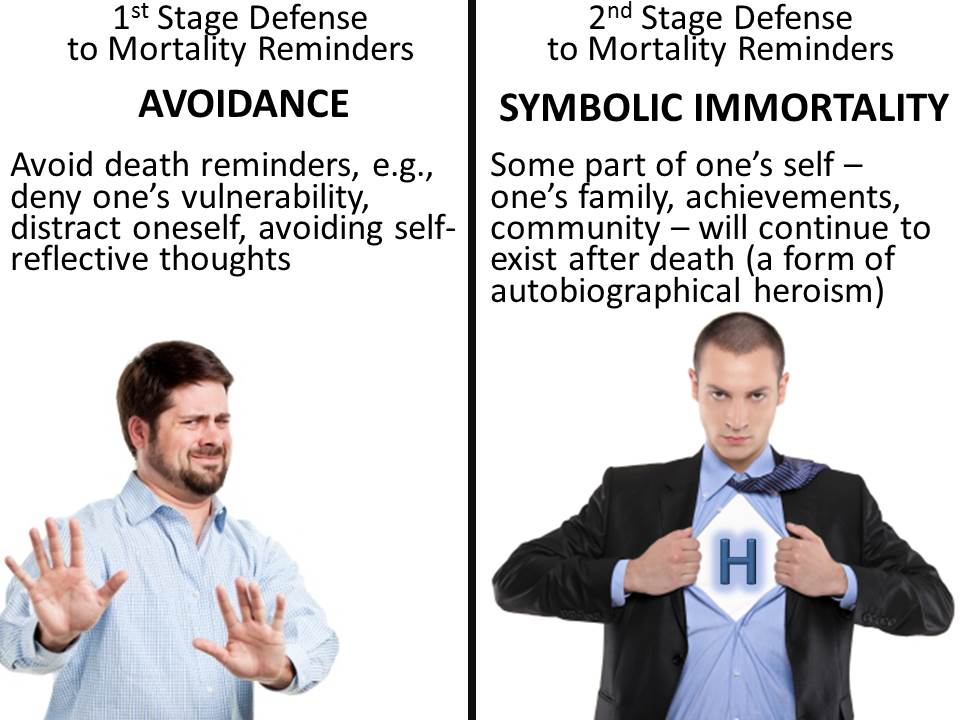
The essential finding of a wide range of experiments in mortality salience is that reminders of personal mortality constitute an assault on our ego, which is responded to with two stages of defenses. The first stage of defense is simple avoidance. When faced with mortality reminders, avoidance defenses involve strategies such as denying one’s vulnerability, distracting oneself, avoiding self-reflective thoughts, or simply engaging in any behavior which will avoid the contemplation of one’s own mortality. These first-stage defenses are rational, immediate, and relatively well perceived by the people engaging in them (at least retrospectively).
However, these first-stage defenses often do not provide complete protection against mortality salience. In some cases, external circumstances may prevent their effectiveness. Additionally, it may be that avoidance is effective only at the immediate, rational level, but not at the subconscious level. When, for whatever reason, these first-stage defenses do not protect the “self” against mortality salience, it leads to the use of second-stage defenses.
Second-stage defenses are more subconscious than first-stage avoidance. They may not even be directly perceived by the actor. Indeed, in experimental settings much of the impact of mortality salience on the use of these second-stage defenses is greater after the passage of some time following mortality reminders. The thought here is that, to the extent that second-stage defenses result from a subconscious process, the delayed impact of mortality salience on generating these second-stage defenses fits with the slower influence of the subconscious. Whereas the first-stage defense of avoidance is a relatively straightforward and immediate reaction, the second-stage defenses are a bit more involved. We will examine these second-stage defenses in more detail a bit later. For now, as a placeholder, think of these second-stage defenses as creating a form of symbolic immortality. Symbolic immortality is the idea that some part of one’s self – one’s family, achievements, community – will continue to exist after death. Psychologically, this can be an effective defense to the attack on the ego that results from reminders of one’s own personal mortality. (Note that for those with certain religious beliefs, symbolic immortality may also refer to actual immortality in the sense of an afterlife.)
We begin our examination of the effects of mortality reminders by looking at the first-stage defense of avoidance. This first-stage reaction is critically important for the way we develop and communicate marketing material related to charitable bequests. We will explore the practical implications of these findings later. But first we begin by examining some of the conclusions of those researchers who have spent years examining the effects of mortality reminders on human behavior.
How does the avoidance defense work? How do we see this defense play out in actual practice in human behavior? Avoidance can be seen in a wide range of behaviors, all of which have the purpose of avoiding contemplation of one’s own personal mortality.
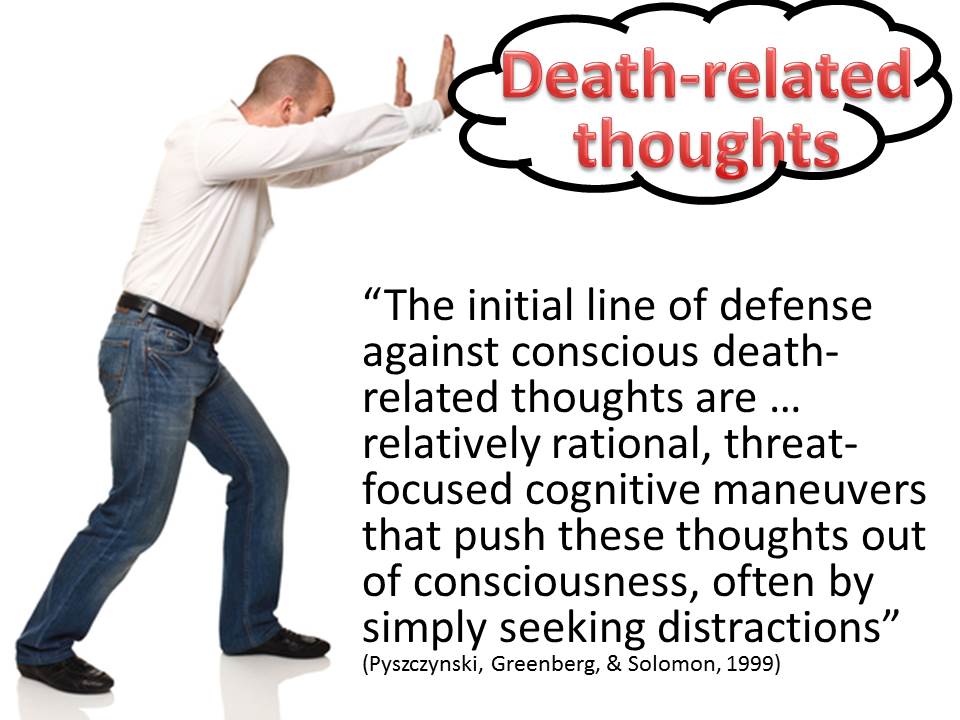
The fundamental goal of the initial avoidance defense is to push personal death-related thoughts out of one’s mind. Simply put, thinking about one’s personal mortality (i.e., mortality salience) is unpleasant and aversive. The avoidance defense attempts to reduce this unpleasant feeling by reducing mortality salience.
This first line of defense can be very much rational and intentional. The reminder of one’s own mortality is a threat. We react to that threat by attempting to reduce or avoid it. As pointed out by the above quote from some of the most notable researchers in this field, one of the strategies for avoiding this type of contemplation is to simply distract oneself from the reality. Beyond this, there are a range of strategies that can be used to push these unwanted death-related thoughts out of one’s mind, or at least out of one’s immediate focus.
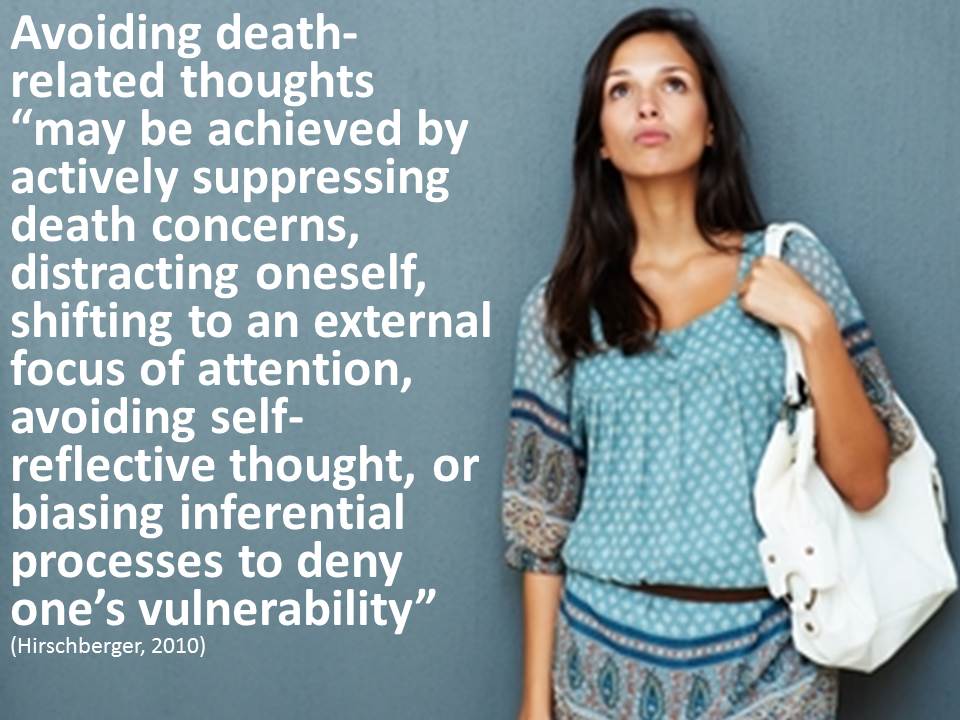
This quote from Gilad Hirschberger in 2010 provides a summarization of some of the strategies used to avoid death-related thoughts. We may actively (i.e., intentionally, rationally and cognitively) suppress death concerns by focusing on why such concerns are not immediately relevant. We may engage in distraction – shifting to some other focus of attention – as a means of reducing the amount of attention being paid to the personal mortality reminder. We may simply attempt to avoid any type of self-reflective thought. Often this can be accomplished through pursuing external stimuli or external distractions. Finally, we may engage in “biasing inferential processes.” In other words, we intentionally alter or misconstrue evidence so that it reduces our own sense of vulnerability in the face of mortality reminders.
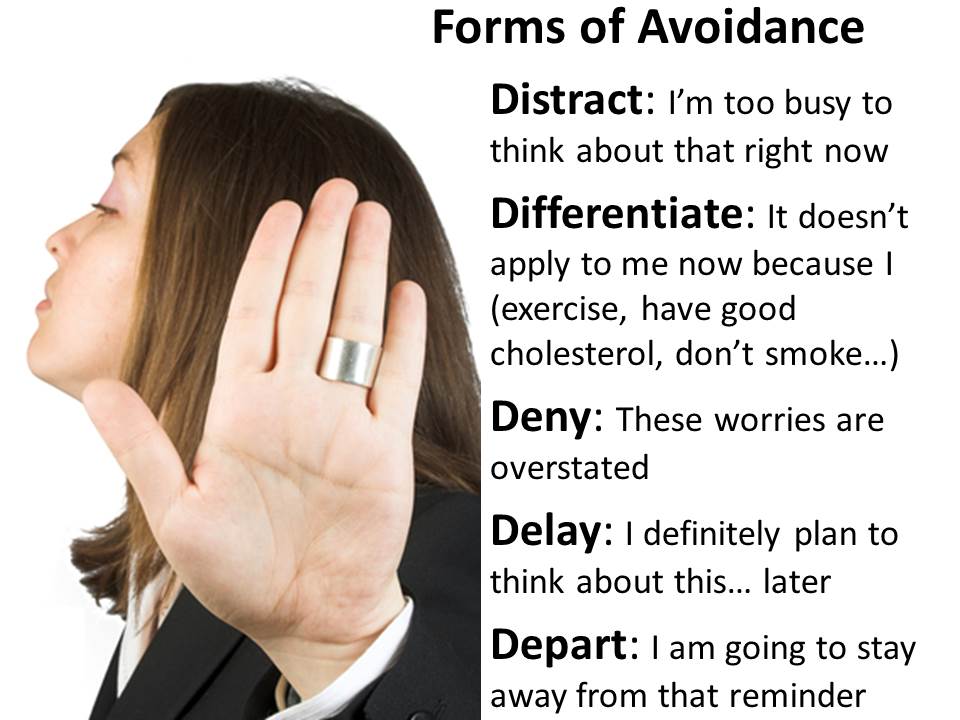
We might summarize some forms of avoidance by looking at the five D’s listed above. This list gives us a sense of the wide variety of strategies that we can use to avoid thinking about our own death. How do we go about doing this?
First, we can simply engage in distraction. This is the idea that, “I’m not going to deny what you’re saying, but I’m too busy to think about that right now. I’ve got something more pressing that I have to attend to.” By seeking out other, less aversive stimuli, we avoid having to engage with the source of mortality salience.
A second strategy is to differentiate ourselves from examples demonstrating our risk of mortality. For example, if someone we know dies, it creates an immediate sensation of realizing our own vulnerability. We protect against this by focusing on characteristics that differentiate the deceased person from ourselves, because if we don’t differentiate between the person who has died or has had a life-threatening injury, then it exposes us to the unpleasant reality that we are also vulnerable, that we are also subject to unexpected death at any point. Those type of thoughts are naturally aversive, so we look for ways to differentiate between us and the person who experienced mortality or serious injury. If someone dies, who is otherwise similar to us or who was within our social group, we may think about how that person is different from us. For example, if someone dies of a health issue, we may think about how we exercise, but that person did not. Or, we have good cholesterol levels. Or, we don’t smoke. Or, we have some characteristic that differentiates us from the person who has just died (or has experienced some serious injury posing a substantial risk of death).
Another strategy is to simply deny the concerns about mortality. Although it is difficult to completely deny our own eventual personal mortality (given the evidence of the ultimate death of all forms of life around us), we are able to protect ourselves psychologically by denying individual risks to death, especially risks of death that might come sooner rather than later. This bias will actually cause people to ignore scientific or statistical evidence about their mortality-related risks.
For example, we might see smokers engaging in the intentional denial of massive scientific evidence about the death-related effects of smoking. It is not that these smokers have any lower level of mathematical or cognitive ability, nor do they have any less ability to interpret statistical data when presented in any other frame of reference. However, when it comes to data leading to a conclusion demonstrating one’s own personal mortality risk, those statistical abilities are not applied. Instead, we see a pattern of denial, concluding that mortality concerns are overstated. Of course, this tendency is not limited to smokers, but affects people in general when they contemplate their own personally-relevant mortality risks, and is often expressed in a tendency to deny such risks or to believe that the risks have been overstated.
Also related to the distraction strategy is the delay strategy. This strategy, of course, is directly applicable to the challenging realities of trying to motivate people to engage in estate planning. A common example of this defense is responding to a call to action by replying, “Yes, that’s a good idea. Yes, I agree everyone should do that. But, I’m too busy right now to take care of it. I’ll do that later.” The underlying psychological goal here is to avoid the contemplation of one’s own mortality. One way to avoid that contemplation which does not require denying one’s own mortality or even denying the necessity of contemplating mortality is to simply delay the contemplation of mortality. Consequently, the enemy of estate planning, and indeed, the enemy of the charitable bequest, is not the answer of “no.” Instead, the enemy is the answer of “later.” We fight against this underlying psychological mechanism of delay whenever we attempt to encourage estate planning, because we are attempting to make people engage in the contemplation of their own mortality.
Whenever it is available, another strategy to avoid mortality contemplation is to simply depart from the reminder. If we can avoid mortality contemplation by simply avoiding the personal mortality reminder, this may be the easiest way to accomplish the underlying psychological goal. Obviously, the desire to depart from or avoid things which remind us of our own personal mortality will likely have a substantial impact on the effectiveness of marketing designed to get people to engage in a behavior (e.g., estate planning) that directly focuses on their own personal mortality.
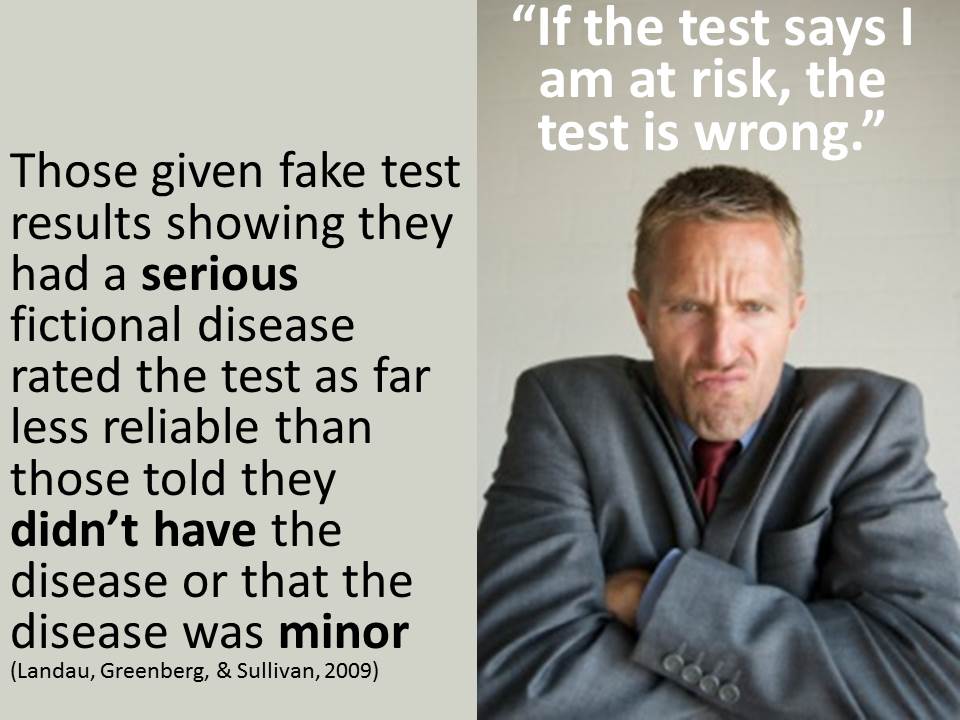
An example of this avoidance strategy was demonstrated in the research experiment from 2009 referenced above. In this experiment, the researchers found that those given fake test results showing they had a serious fictional disease rated the test as far less reliable than those told they didn’t have the disease, or that the disease was minor. Participants in this study were told about a fictional disease with a made-up name and made up consequences. They were then given a “test” to see if they had this fictional disease. After getting the results showing whether or not they had this serious fictional disease, they were asked to rate the reliability of the test.
From an objective point of view, a participant’s personal outcome should have made no difference in their rating of the reliability of the test. The quality of the test is the quality of the test, regardless of whether the participant happens to have been diagnosed with the disease or not. But that’s not how participants rated the quality of the test. Instead, if participants were told that the test indicated that they had the disease, they rated the test as much less reliable than if they were told that the test indicated they did not have the disease. This reflects the underlying tendency to bias statistical results in such a way as to disregard our own personal risk of mortality.
Similarly, the results showed that if participants were told that they had the disease, but the disease was described as being minor (i.e., not related to any risk of mortality), the participants rated the test as more reliable. Again, we have a simple comparison between two scenarios. In both scenarios the participants were diagnosed with a disease. (In both scenarios this was a made-up disease with a made-up name.) If the disease was minor, participants believed the test to be reliable. If the disease was major (i.e., having a risk of mortality) then participants believed the test was not reliable.
These results suggest an underlying psychological tendency to think, “If the test says I am at serious risk of death, the test is wrong. If the test says I am a serious risk of a minor disease, the test is probably right.” This relates to the basic tendency to avoid mortality salience. If something makes us think that we are not invincible, if it makes us think about our own mortality, then we have a tendency to engage in these statistically biasing reasoning processes which make us feel better about the results and about ourselves.
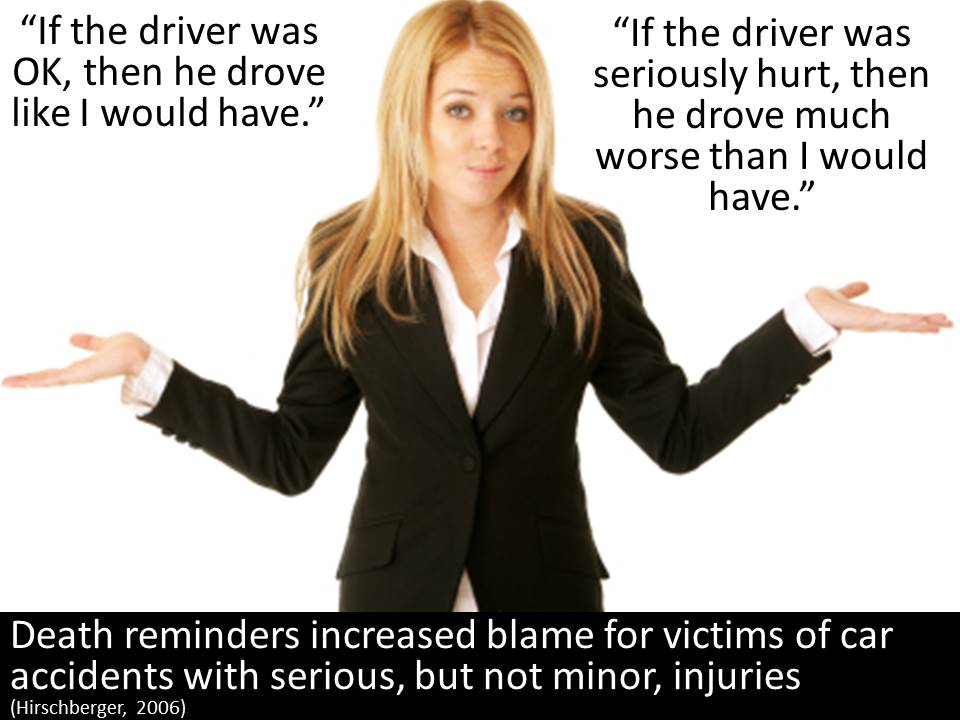
Another example of this avoidance defense against mortality salience can be seen in the results of a study published in 2006. In this study, Hirschberger found that death reminders increased the tendency to blame victims of car accidents with serious, but not minor, injuries. The experimental setup was that individuals were asked about the relative blame that should be applied to the victim of a car accident based upon a text description of the accident scenario. One group of those participating in the experiments were first asked to engage in a series of tasks that brought to mind their own personal mortality. The other group completed other tasks that were aversive, but had no relation to personal mortality. Those who had been reminded of death prior to assessing blame for the car accident victims answered the question differently than those who had not. Specifically, those who had received the death reminders were much more likely to blame the victims of serious car accidents than those who had not.
This fits with the idea that personal mortality reminders increase the desire to differentiate ourselves from those who experience death-risking traumatic injury. In a sense, mortality reminders are an attack. This attack causes us to separate ourselves from other mortality reminders. In other words, the first-stage response to personal mortality reminders is a defensive mode where we try to push away other personal mortality reminders. In this case, the accident scenario created a reminder that we are all at risk of death or serious injury as the result of driving an automobile. By blaming the victim, participants could separate themselves from the actions of the victim and thus mentally separate themselves from the death-related risk. This attempt at separation/avoidance can be summed up in the idea that if the driver was seriously injured, then the driver was behaving differently than I would have.
Contrast this with another result from the same study. The mortality reminders did not change the attribution of blame to the victim if the victim was described as having only minor injuries. Nothing else about the accident description differed, except for the extent of the injuries of the victim. But, this difference dramatically changed the blame attributed to the victims. Why? When we are dealing with minor injuries, we are not dealing with a mortality reminder. When we are dealing with major injuries, we are dealing with a mortality reminder. Thus, it makes sense to explain this difference in attributing blame as a psychological strategy to defend against personal mortality salience. Participants were setting up a barrier between themselves and the risk of mortality when differentiating between their normal behavior and the behavior of the seriously injured victim of the car accident. No such barrier was required when considering a driver with only minor injuries. Or, to summarize, “If the driver was okay, then he drove like I would have. But, if the driver was seriously hurt, then he drove much worse than I would have.”
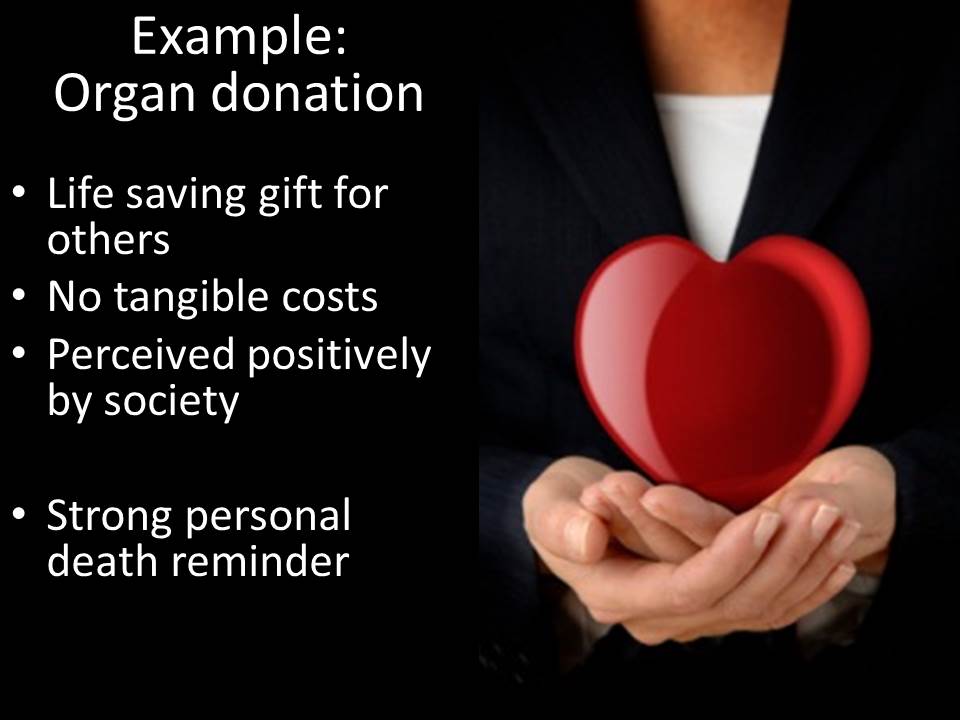
The decision to become a posthumous organ donor is one that shares many commonalities with charitable bequest decisions. The organ donation decision can be a life-saving gift that benefits other people. Like a bequest gift, it is a gift that the donor doesn’t get to see the benefits of, because it is a gift that takes place after death. Further, organ donation is a gift that has no tangible costs. The donor doesn’t lose anything valuable during his or her life. As a result of making this gift, it doesn’t reduce the donor’s income. It doesn’t reduce the donor’s wealth. It doesn’t reduce the donor’s ability to spend money on anything or to do anything for as long as the donor is alive live. (In fact, it doesn’t even reduce the financial rewards to any of the donor’s heirs.) Becoming an organ donor simply has no tangible economic costs.
Organ donation is also similar to charitable bequest giving, as both are perceived positively by society. Almost no one thinks that others should be discouraged from organ donation. We see it as a helpful, selfless, and pro-social action. So with all this going for it, getting people to engage in organ donation must be one of the simplest acts ever conceived!
However, there is one major negative characteristic of engaging in organ donation. Organ donation is a strong personal death reminder. In this way also, organ donation is similar to charitable bequests. Attempts to encourage organ donation may face the same challenges and barriers inherent in attempting to encourage charitable bequests. Thus, it makes sense to explore research on organ donation decisions.
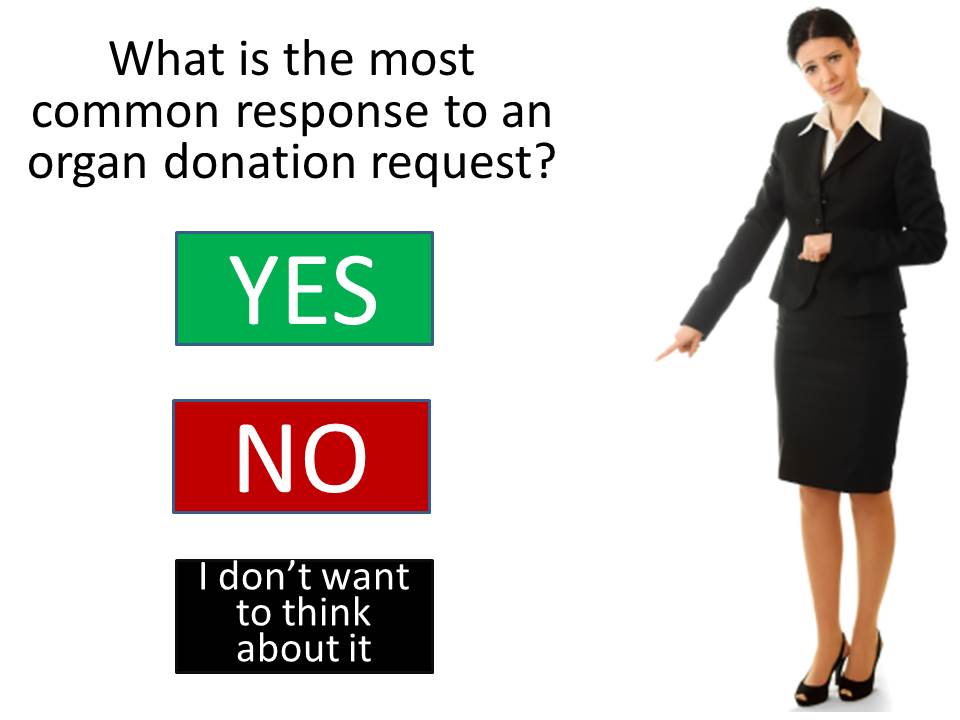
So how do people respond to an organ donation request? What is the typical, instinctive reaction to this question? We should consider three types of responses. First, is the response of, “Yes, I would like to donate my organs at my death.” Second, is the response “No, I do not want to donate my organs at my death.” And perhaps most importantly is the third option, which is neither “yes,” nor “no,” but is instead, “I don’t want to think about it!”
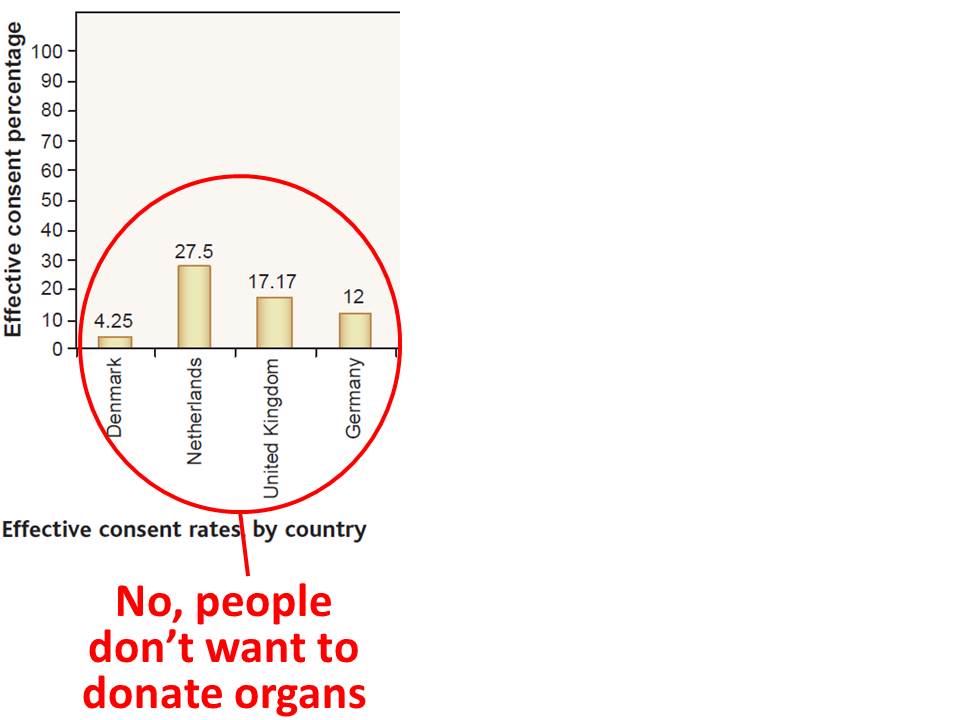
From an academic research article published in the journal Science, we see national results from four European countries. These results show the effective consent rate in each country to the organ donation request. If we were to describe typical preferences based upon results from these four countries, we could reasonably conclude that most people respond to the organ donation request with, “No, I do not want to donate my organs after death.” However, additional evidence prevents us from claiming that this is the typical response to the question.
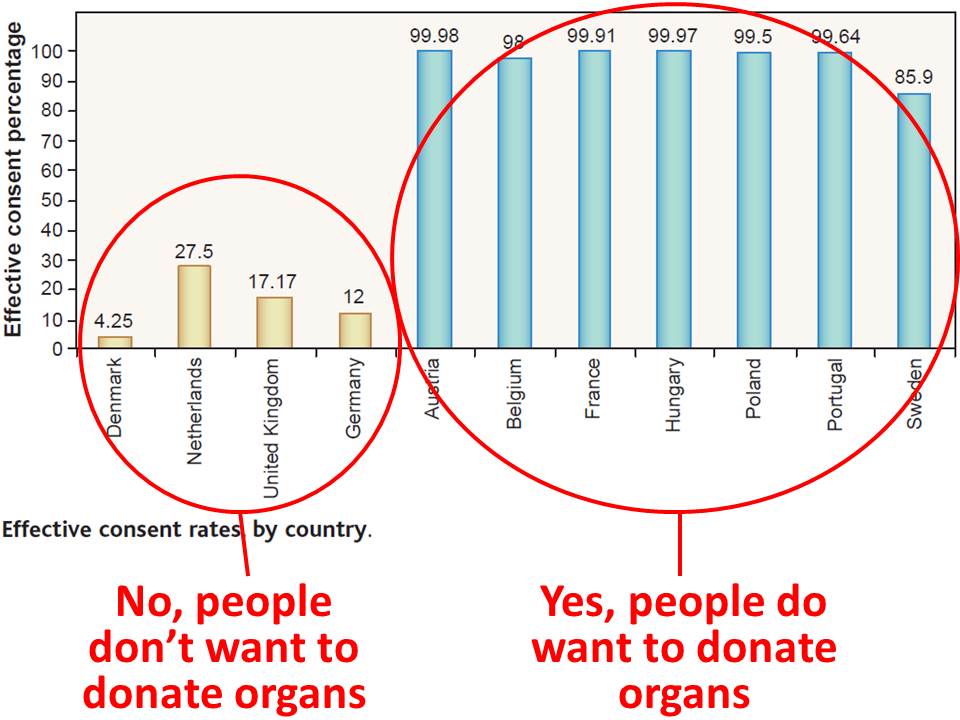
As we now look at consent rates to organ donation in a variety of other European countries we see acceptance rates near or even above 99%. If we were to look at these countries, we could reasonably conclude that the typical response to an organ donation request is, “Yes, I would like to donate my organs at death.”
So how then can we resolve the conflict between these two sets of results in these two sets of countries? Before we attempt some explanation that differentiates between the countries on the left and the countries on the right based on some sociological or historical or even ethnic characteristics, let’s look at what the real difference is between these two sets of countries.
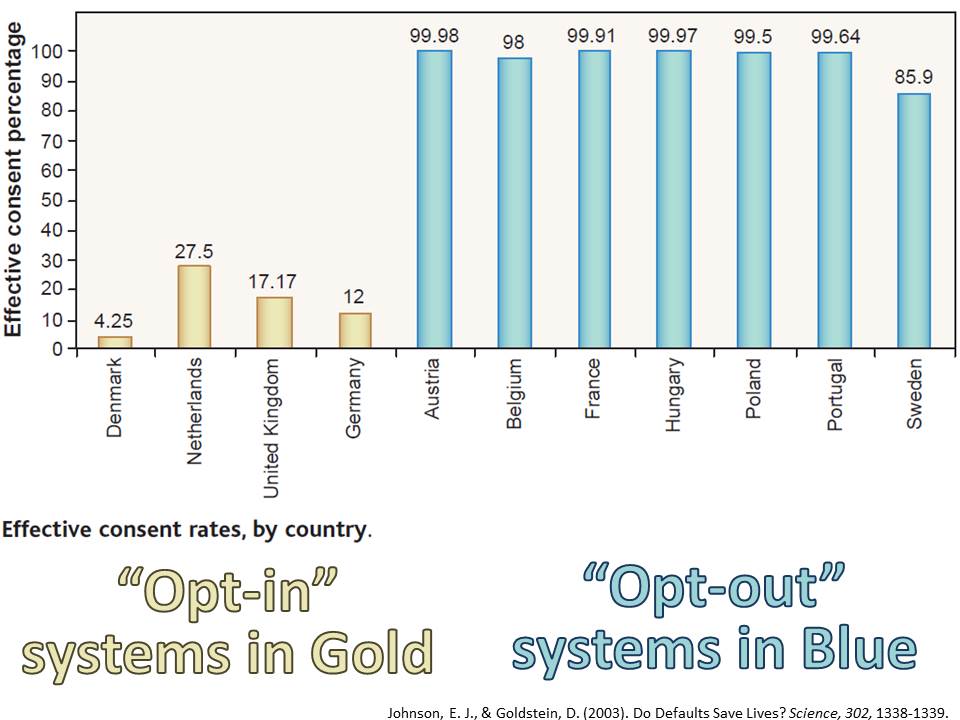
Here we see the important difference between the two sets of countries is not social or cultural. It is whether they have an opt-in system (the four countries on the left) or an opt-out system (the seven countries on the right). An opt-in system is one in which a person must check the box in order to opt-in to an organ donation agreement. An opt-out system is one in which a person must check the box in order to opt-out of an organ donation system. There is no meaningful difference in effort between checking the box or not checking the box. However, this simple difference in the presentation of the question produces a dramatic effect. Why might this be?
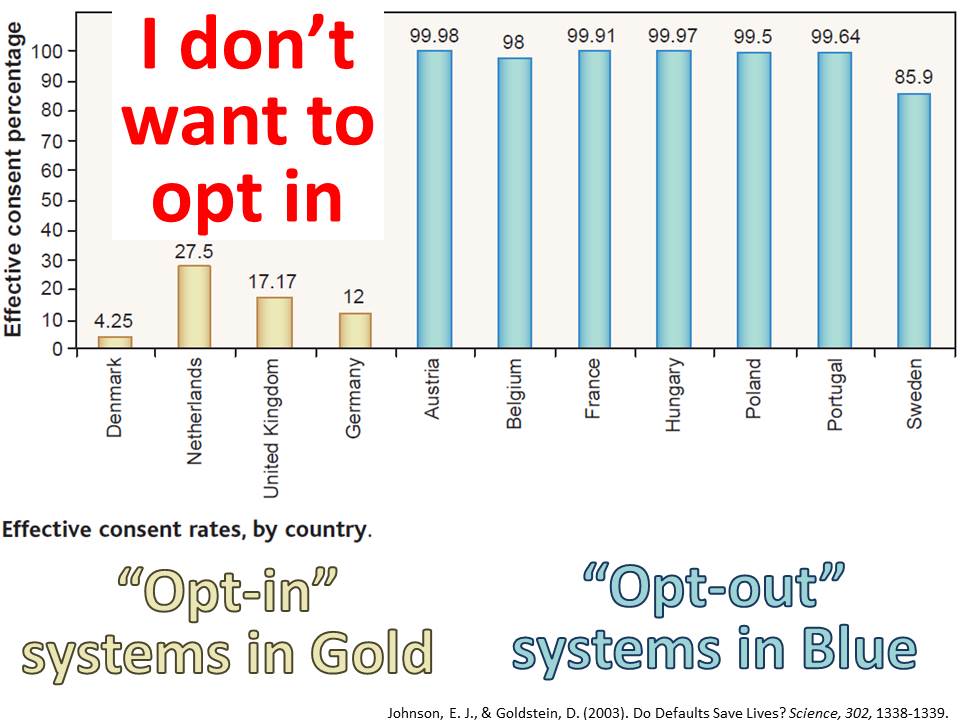
We can think of the results in the following way. The first set of countries provides evidence that people do not want to opt-in to an organ donation agreement.
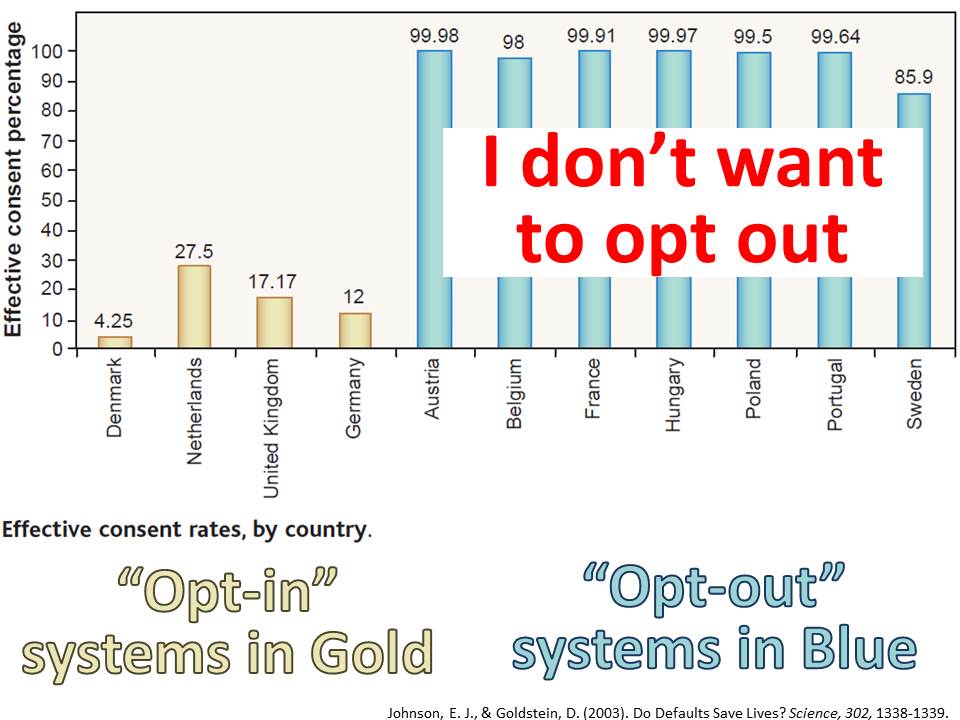
Results from the second set of countries provide evidence that people do not want to opt-out of an organ donation agreement. So if people do not want to opt-in to organ donation and they do not want to opt-out of organ donation, how can we reconcile these two apparently contradictory behaviors?
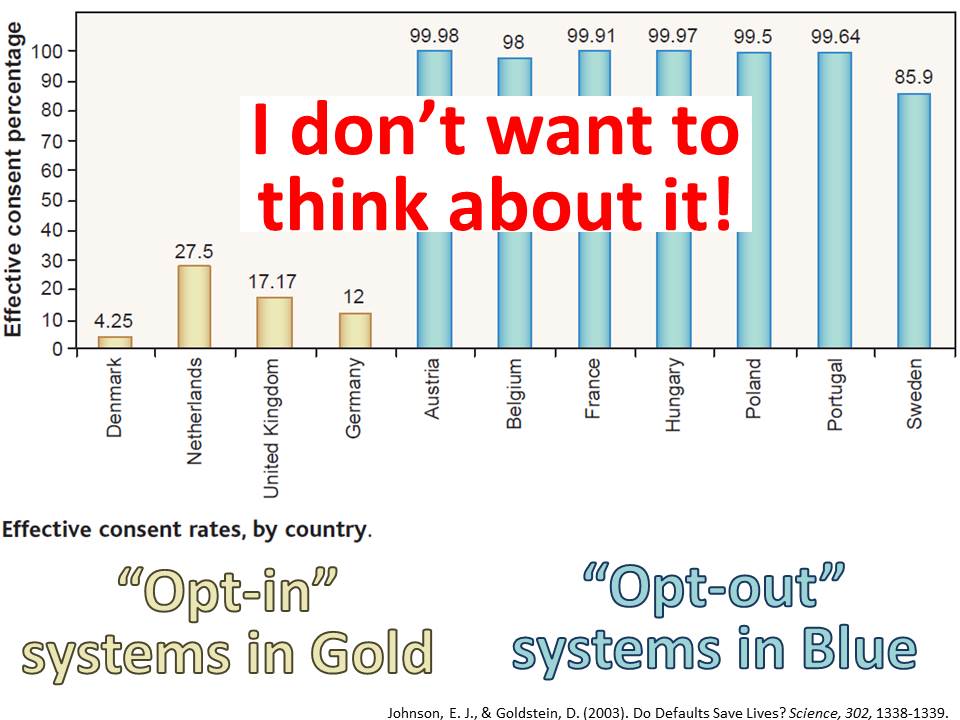
The two apparently contradictory behaviors can be reconciled, if the answer to the organ donation question is not “yes,” or “no,” but instead is “I don’t want to think about it!” If the driving factor in organ donation decision-making is avoidance, then we would predict exactly the results that we see in this international comparison of behavior. Of course, this fits with the framework from experimental psychology that the first defense in the face of mortality reminders is avoidance. We want to avoid contemplation of personal mortality.
That desire for avoidance explains the apparently contradictory behavior in these results. In order to engage in an action, even an action as simple as checking a box, a person must think about, contemplate, and decide upon the issue. The easiest way to avoid that contemplation is to do nothing (perhaps justifying that we will think about it in more detail later). In this way, we delay committing to a positive action and, consequently, delay contemplating the aversive topic.
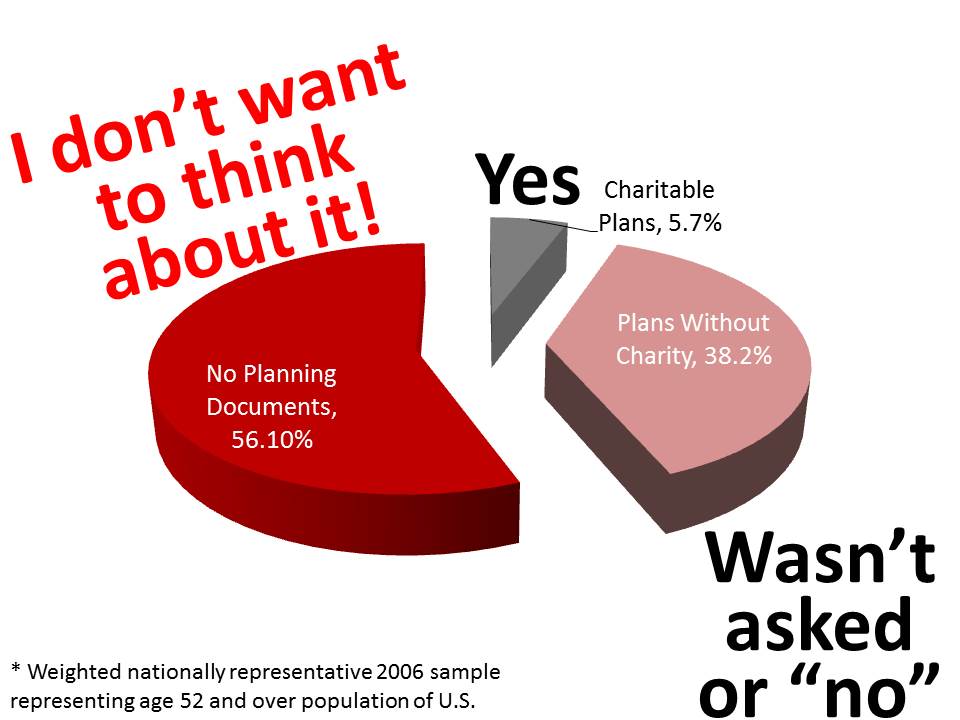
In the same way that the last results displayed the dominance of the “I don’t want to think about it” response in an organ donation context, we see essentially the same behavior in the charitable bequest planning context. A small portion of people respond to the question of whether or not they wish to leave a bequest to a charitable organization with the answer of “yes.” Some other share of respondents either answers the question “no,” or, perhaps much more commonly, are never asked the question in the first place. But, the majority responds to the question very clearly with the answer, “I don’t want to think about it,” as evidenced by their complete lack of planning. What we see from the experimental results related to mortality reminders, and actual behavior across many countries related to organ donations, is consistent with what we see in estate planning behavior – avoidance is the dominant response.
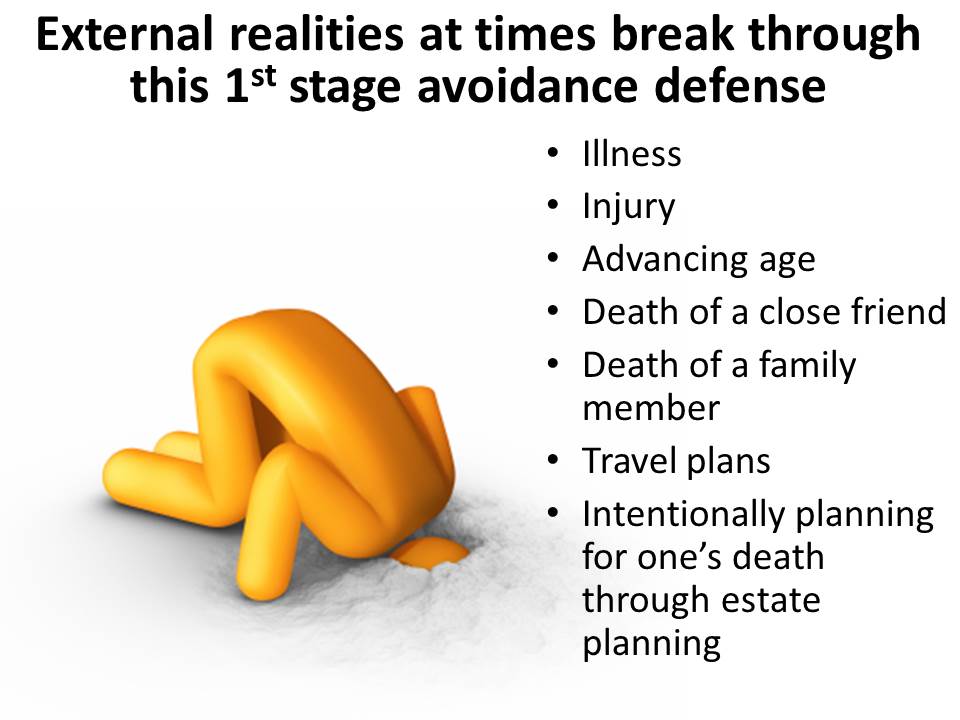
Given the power of this first-stage defense of avoidance, we might despair that almost no one would engage in estate planning, much less charitable estate planning. However, it is critically important to understand that although avoidance is a common first-stage response to mortality reminders, it is often not a completely effective response. Avoidance is the common initial response to mortality salience and it might work in some cases, or for some period of time, but the nature of an avoidance defense is that it is not a final answer to the problem. Avoidance is simply an immediate maneuver that serves as a first-stage attempt to deal with the threat represented by mortality reminders.
But avoidance doesn’t change the reality of our own undeniable personal mortality. And so, despite the best efforts at avoidance, this truth of personal mortality will often seep through into conscious and subconscious awareness.
The causes of this breaking through of mortality salience can come from a variety of sources. It might be illness, injury, advancing age, the death of a close friend or family member, travel plans, or some other external factor that breaks down the effectiveness of the avoidance barrier. At this stage avoidance no longer works to avoid contemplation of personal mortality. Attempts to distract, deny, delay, depart, or differentiate are simply no longer effective in the face of external reality.
It is at this point that second-stage defenses become much more important. These considerations are especially critical for estate planning decision-making. Once someone is at the point of engaging in estate planning for themselves, this demonstrates that he or she has broken through the first-stage “avoidance” defense. And thus, the decisions made in the estate planning process may be strongly influenced not by the first-stage issues of avoidance, but by the second-stage issues of “symbolic immortality.”
Thus, in practice, both stages are important for encouraging charitable estate planning, but for different reasons. The first-stage “avoidance” is the major barrier to engaging in any form of estate planning. For that reason, it is critical to the way that we attempt to encourage estate planning. The second-stage defense is more important for the content of the estate plan and the motivations within an estate planning process. The second stage is more critical, not for whether any planning occurs, but for the potential content of those plans. We now turn to examining the second-stage defense to mortality salience.