In this section we look at the experiments actually conducted in our laboratory using neuroimaging. The first set of experiments was focused on comparing bequest giving decision-making with regular giving and volunteering decision-making. As discussed previously, in neuroimaging the goal is to compare the task of interest with a control task that is similar in all ways, except for one. Thus, in this case we use the relatively similar tasks of contemplating giving and volunteering as a comparison points.
Because there had already been previous neuroimaging experiments completed related to charitable giving, we wanted to use this as one of our comparison points. Additionally, understanding the difference between bequest giving and current giving is, ultimately, related to the central task of the inquiry. This is because there is a dramatic behavioral gap between people’s propensity to engage in current giving and their propensity to engage in bequest giving. Consequently, we are particularly interested in understanding the differences between these two decision-making behaviors that might help us better understand the massive behavioral difference in the propensity to engage in the behaviors. As a final point of comparison, we also include the category of volunteering decision-making.
What did we expect find when we started this study? Because this was the first inquiry into this field of study, our expectations were consequently pretty generic. However, an obvious difference between current giving and bequest giving is that bequest giving patently involves the contemplation of one’s personal death. Thus, we anticipated that there would be some neural activations distinguishing bequest giving that would relate to the death-related nature of bequest contemplation. Unfortunately, there is only very limited fMRI research on death-related contemplation.
The line of neuroimaging research most closely related to death contemplation comes from research on the topic of grief. In particular Harald Gündel, et al., (2003), were the first to scan participants who had lost a close relative in the previous year. For purposes of that study, “close relative” referred to someone who was a first-degree relative, meaning a parent, child, or spouse. After asking subjects to describe the conditions of the deceased’s final illness and funeral, the researchers then used the words from this description as “grief-related” words and contrasted the reaction to these words with the reaction to the presentation of neutral words in the scanner. Thus, the “grief-related” words, although unique to each individual, were likely to include phrases related to death, illness, and funerals. In these results, the only region showing significant activation in response to the grief-related words, as contrasted with neutral words, was a brain region known as the precuneus.
The precuneus is a brain region which we will have cause to explore in much more detail later. However, for the present, consider that this region is often engaged when a person takes an outside perspective of himself or herself. Thus, if you were to imagine yourself in a scene from the perspective of an outside observer, such an imagination might engage the precuneus region. It is possible that the grief-related words may have caused individuals to flash back to individual scenes in the hospital or funeral home where, perhaps, they envisioned the scene as an outside observer, including both themselves and the deceased in the imagined scene.
Additionally, some other research suggests that precuneus activation increases gradually as we move from envisioning a complete stranger to envisioning one who is more closely connected to us, ultimately then generating the highest activation when envisioning ourselves. This again would fit with the idea that words reminding the participants of their recently deceased loved one might bring to mind images that would activate the precuneus.
In a more recent study, Peter Freed, et al. (2009), examined those who had lost a long-time pet within the previous three months. Again, in that study, reminders of the deceased pet created activations uniquely within the precuneus region of the brain.
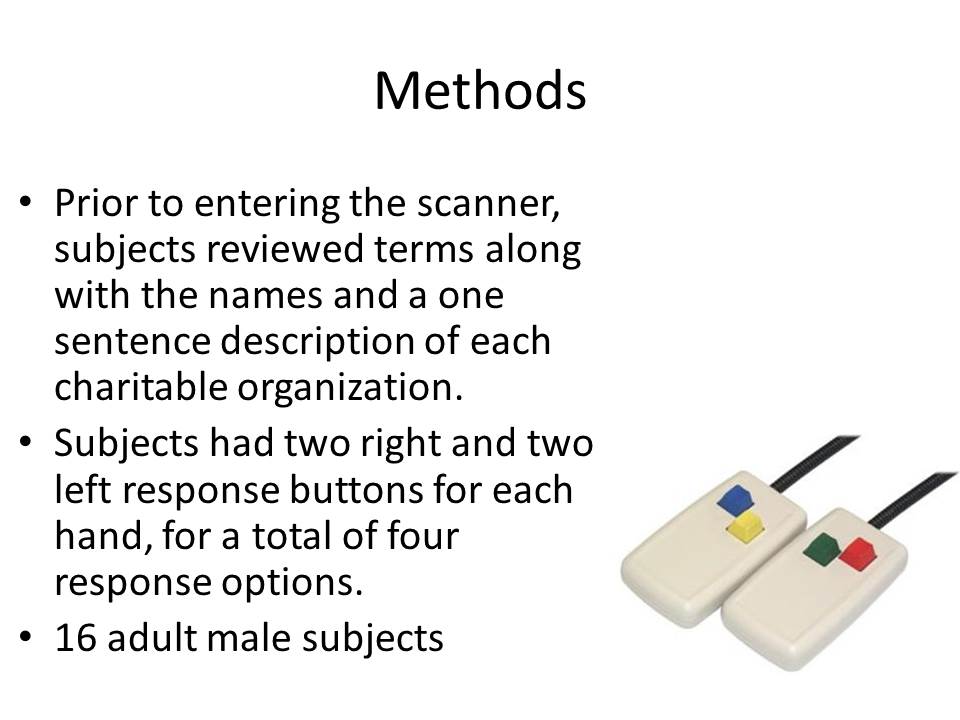
For our initial study we used 16 adult male subjects. Prior to entering the scanner the participants spent time reviewing the names of all charitable organizations that would be used in the experiment along with descriptions of the purposes and activities of the organizations. In addition, participants reviewed all terms used in the study to ensure that they were familiar with the words prior to being presented with the questions. Subjects had two right hand and two left hand response buttons, giving them a total of four response options. Consequently, several of our questions involved four response options, corresponding to the four available buttons.
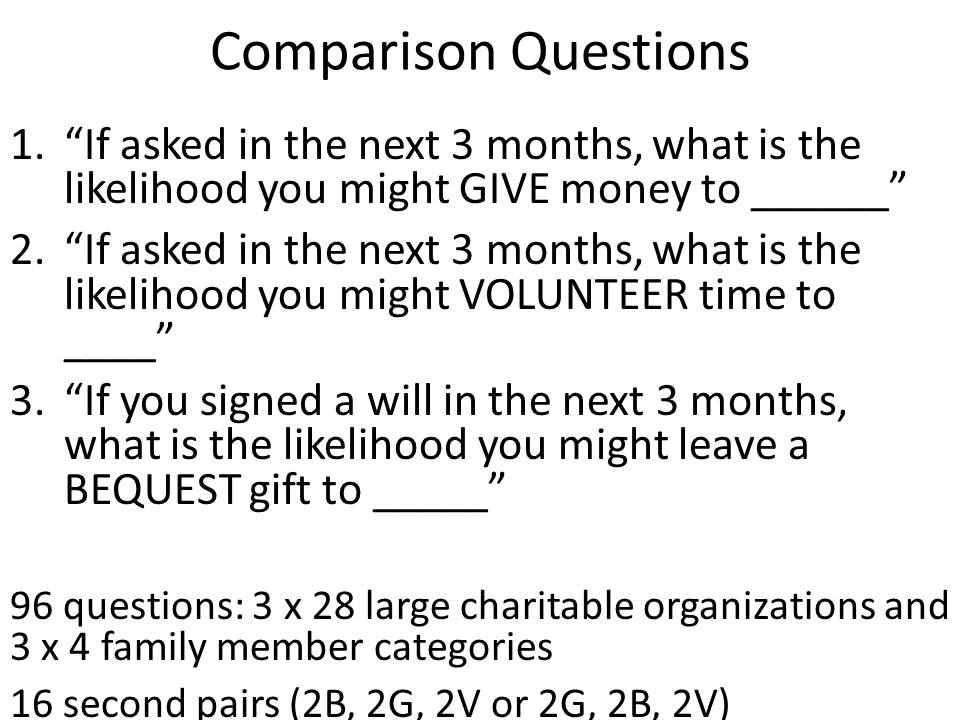
The comparison questions used in this study are listed above. There were a total of 96 questions presented to each participant. The three questions (giving, volunteering, and bequest) were asked for 28 large charitable organizations and four family member categories. Each recipient group was presented in 16-second pairs of two bequest questions or two giving questions or two volunteering questions. For each pair of organizations or individuals, the questions were presented in the sequence of two bequest questions, followed by two giving questions, followed by two volunteering questions, or, alternatively, two giving questions, followed by two bequest questions, followed by two volunteering questions. The actual recipient organizations and individuals presented in their order of presentation was as follows: UNICEF; CARE; World Wildlife Fund; The Nature Conservancy; Ducks Unlimited; National Audubon Society; Wildlife Conservation Society; a church, synagogue, mosque, and so forth; a missionary or missionary organization; a religious school (K-12); a religious college or university; a religious disaster relief organization; The YMCA; your parent or parents; your child, niece, or nephew; your brother or sister; your grandparent, aunt, or uncle; The American Cancer Society; The American Alzheimer’s Association; The American Heart Association; The American Diabetes Association;
Komen Breast Cancer Foundation; YWCA; Boys and Girls Clubs of America; Girl Scouts or Boy Scouts; Big Brothers/Big Sisters of America; Campus Crusade for Christ; Christian Broadcasting Network; Focus on the Family.
It may be worthwhile to discuss for a moment the reason why the questions were constructed in the way that they were. Remember, that the goal is to construct the questions so that they are as similar as possible, except for the one variation of interest. In this case, we converted all questions into a contemplation of the behavior if faced with the question in the relatively near future.
Previous studies on charitable giving using fMRI were able to examine real charitable giving decisions that involve the transfer of small amounts of funds to charitable organizations, usually taken out of the participant’s payment for participating in the experiment. Thus, in that sense, the previous studies were examinations of fundamentally more “real” behavior, because the choices had actual economic consequences. However, we did not use that comparison point in this study because it is not feasible to enforce a bequest decision within an experimental environment in the same way that a current giving decision can be immediately charged. Thus, because we wanted all of the comparison points to be as similar as possible, we pushed all comparison points to contemplation of the decision in a near-term future setting.
Although it is reasonable to object that this is an analysis of contemplating future behavior rather than immediate behavior, we were most concerned with the differences between the giving, volunteering and bequest decision-making processes. Given that, what is most important is that the context between the three types is as similar as possible. In a subsequent study described later, we increased the realism and the immediacy of the decision framework for charitable estate planning using a different approach, with different points of comparison.
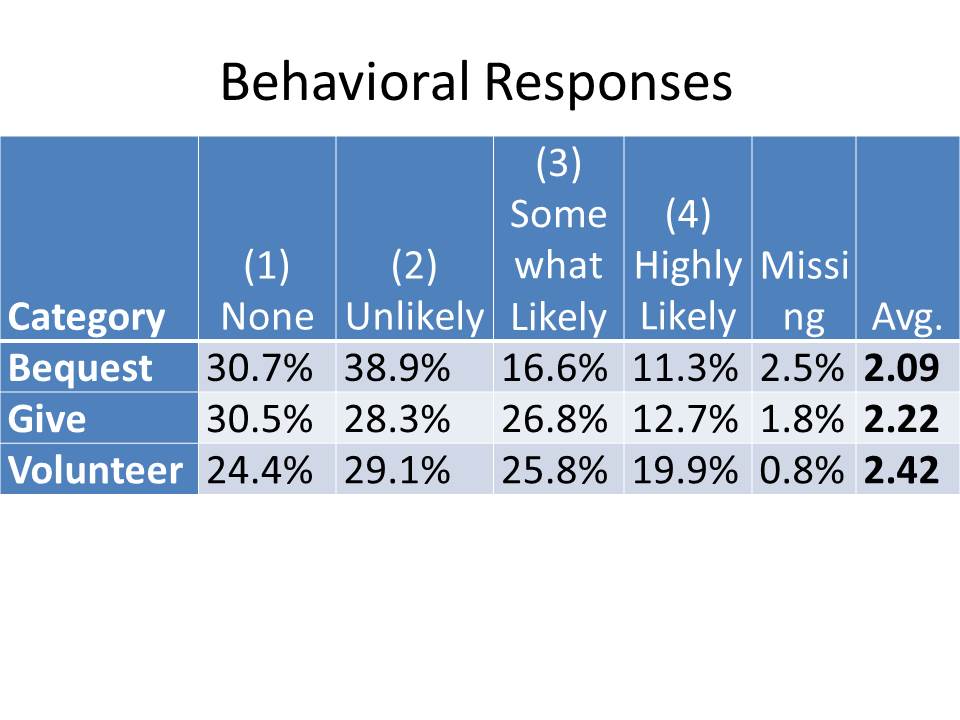
So what were the results of the study? First, we can look at the behavioral results. In other words, how did the participants respond to the questions presented? The above table shows the descriptive statistics for the selection of the four different response levels. It appears that the 16 second intervals allowed for the question pairs was sufficient to allow time to respond to the questions, as demonstrated by the relatively low frequency of missing responses. A missing response means that the participant did not press any of the response buttons during the period in which the question was presented on the screen. However, in the circumstance that a respondent pressed a button within one-half second of the removal of the question from the screen, this was assumed to be a response to the question, and was counted as such. It may also be that the bequest question was more challenging to contemplate given the slightly higher proportion of missing responses.
In this table, we see a similar result to the real world reality where bequest giving was less likely than current giving. Participants reported that they were less likely to leave a bequest gift as compared with their likelihood of making a current gift. Thus, the gap we see in the real world was also seen in these results. Further, these results showed a relatively good distribution among the four categories, in the sense that all categories were used in a substantial number of the responses.
It is worth noting that we were asking people to project their future behavior rather than engage in any costly behavior today. Doing so clearly increased the likelihood that responses could be subject to social acceptability bias. In other words, people tend to attribute positive or pro-social intentions or actions to themselves when responding to questions that will be observed by others. This social acceptability bias would be a great concern, if we were using these results as a method to predict the actual subsequent behavior of the participants. However, in this case we are not using the data in that way, which makes the problem less of a concern.
In other words, we are not particularly concerned with the ability of these responses to accurately predict the actual future behavior occurring in the next three months. Instead, we are interested only with the neurological correlates for contemplating each type of behavior. And, more particularly, we are actually interested in the differences in the neural activations associated with contemplating future bequest gifts as contrasted with contemplating future current gifts or future volunteering of time. Thus, what is most critical is that the comparison is similar across all three conditions and that the comparison engages the contemplation of the three behaviors. The extent to which these responses correspond with later actual behavior is not critically relevant to the exploration here.
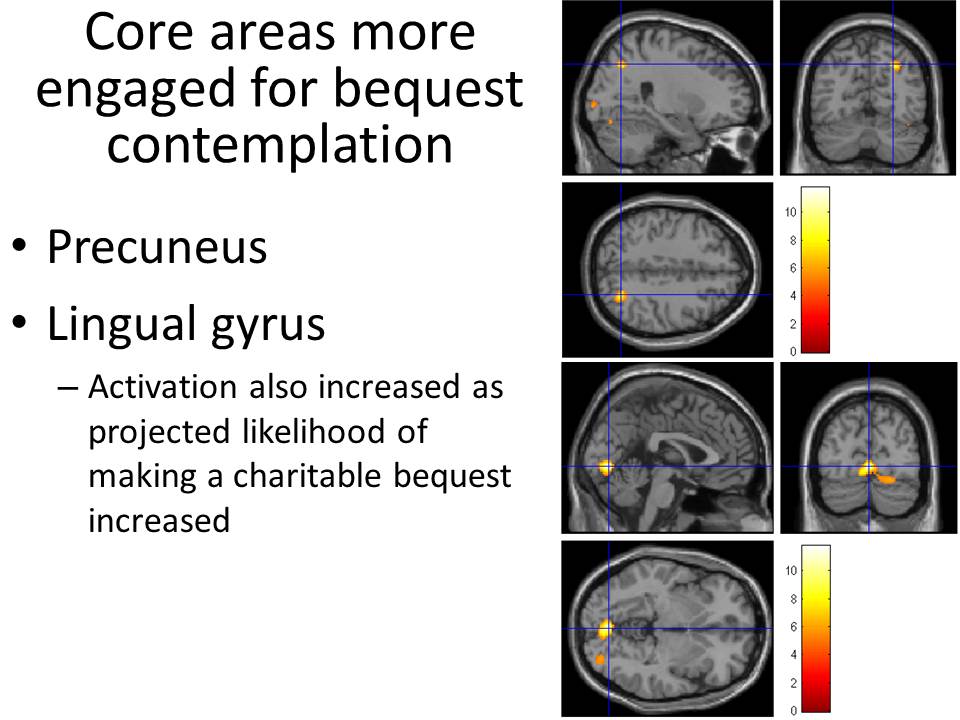
So what areas were ultimately more engaged for bequest contemplation than for charitable giving contemplation or volunteering contemplation? We will look at the specific neuroimaging results table next, but the above images show the location of the two areas of most interest specifically associated with bequest decision-making. These two areas were the precuneus and the lingual gyrus. The precuneus was mentioned before and will be covered in more detail later. The lingual gyrus is an area related to vision and visualization.
The lingual gyrus activation also increased as the projected likelihood of making a charitable bequest increased. This means that comparing the neural activations in participants when they had a high level of agreement with the bequest giving statements with their neural activations when they had a relatively low level of agreement revealed an increasing level of activation in the lingual gyrus, corresponding with the increasing level of agreement. (This is being examined in what is referred to as “parametric modulation” analysis, which was conducted separately from the comparisons of bequest and current giving.)
This type of analysis is particularly important for understanding the lingual gyrus activation. Because the lingual gyrus is a visual (and visualization) area, it is likely to respond to differences presented in the visual field. This is a concern with the initial analysis because the bequest questions were slightly longer than the comparison questions. And thus, there is some risk that the distinction between the bequest condition and the comparison conditions was generated simply by the longer length of the text.
The “parametric modulation” analysis was conducted in order to address this concern. This deals with the concern because the parametric analysis compares responses to different bequest questions. Thus, the bequest question text framework would have been identical across all bequest questions. Further, a post hoc analysis of the level of agreement for each recipient revealed no association between the length of the recipient name and the level of agreement. This confirms that the neural activation revealed in the “parametric modulation” analysis was not driven by different word lengths. Having eliminated this mechanism of differential activation in the lingual gyrus, the “parametric modulation” analysis still found an association between increased agreement with making a charitable bequest and increased activation in the lingual gyrus. The ultimate result of this analysis is to increase the confidence in the hypothesis that the increased lingual gyrus activation relates to the bequest giving contemplation process and not to the character length differences in the text of the questions.
As we examine the physical location of the core areas of distinction for the bequest contemplation questions, it is notable that these regions do not occur in the front of the brain. In other words, we are not seeing distinctions in the purely rational, intentional reasoning parts of the brain associated with the prefrontal cortex. Instead, we are seeing differences towards the back of the brain specifically related to visualization and self-referencing.
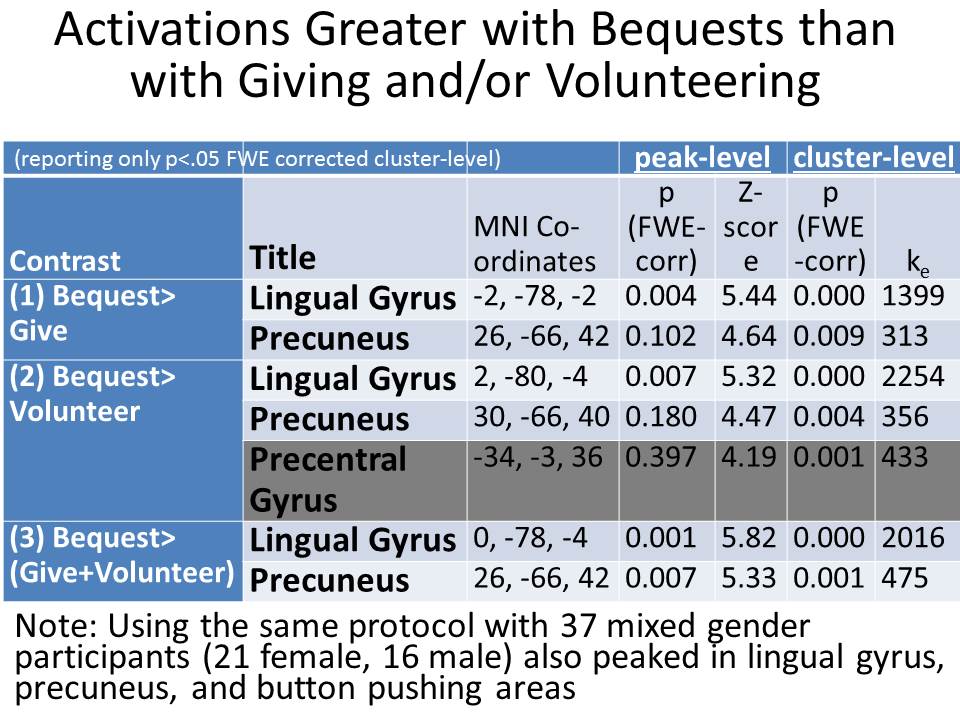
The previous chart displays the neuroimaging results for three different contrasts. First, we contrast bequest giving with current giving. Second, we contrast bequest giving with volunteering. And finally, we contrast bequest giving with both current giving and volunteering simultaneously. This displays the regions that were more active for bequest contemplation at a statistically significant level. In the first set of results, we find that only two regions were significantly more activated during bequest contemplation than during contemplation of current giving. Those two areas were the lingual gyrus and the precuneus. The lingual gyrus was activated in both the left and right hemispheres centered just slightly left of center. The precuneus activation occurred in the right hemisphere. The lingual gyrus activation was larger, activating almost 400 voxels differentially, as contrasted with the 313 voxels activated differentially in the precuneus region.
Turning to the second set of results, we see a similar outcome. Both the lingual gyrus and precuneus (in locations similar to those seen in the contrast with current giving) were more heavily activated during bequest contemplation than during volunteer contemplation. As a side note, we see that the precentral gyrus was also significantly more activated during bequest contemplation than during volunteering contemplation. However, this activation is not of interest to us, because it relates to the difference in button pushing associated with the different levels of agreement to the two questions. Consequently, we will ignore this activation for future discussions.
Finally, in the third column we compare the neural activations during bequest contemplation with those occurring during either giving or volunteering contemplation. As expected, we see similar results where both the lingual gyrus and the precuneus regions significantly increased activation during bequest contemplation. Note, that these results relate to the initial study involving 16 adult male participants. However, the same analysis was also conducted at a different time, using 21 female participants. The results of a combined analysis on all 37 participants resulted in similar outcomes, with peak activation differences in the precuneus, the lingual gyrus, and regions related to button pushing.
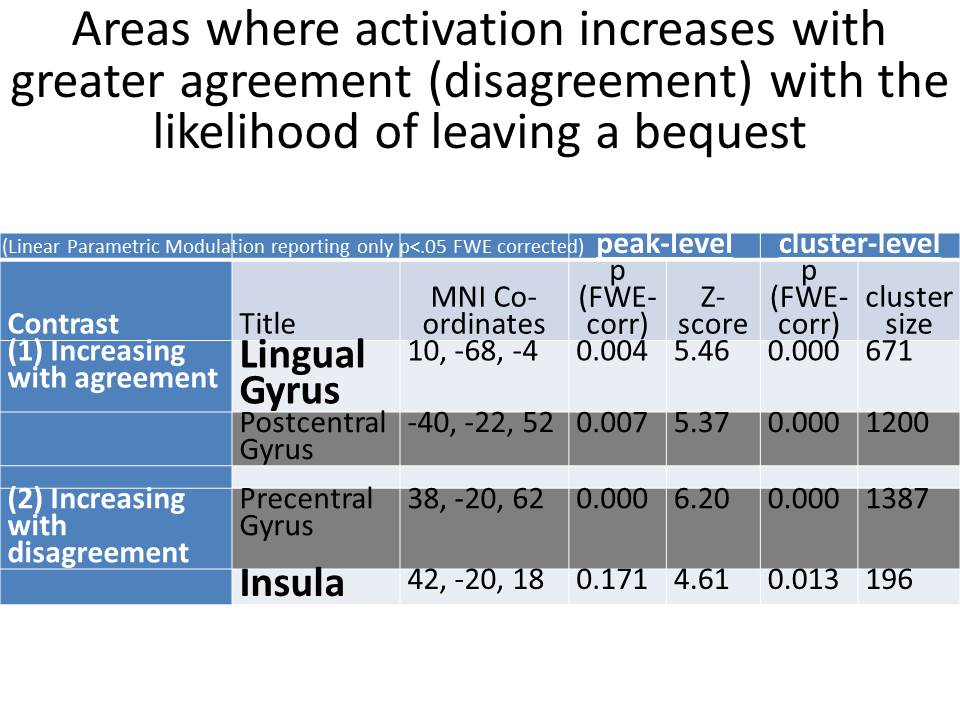
The previous chart showed the statistical results from the parametric modulation analysis. Here we are not contrasting bequest giving with other types of giving, but rather contrasting bequest giving contemplations where the responses were more or less positive. The first set of results shows that activation in the lingual gyrus increased with an increasing agreement to leaving a charitable bequest gift. The only other area of significantly increased activation associated with increasing agreement was a region associated with the physical act of button pushing. (Specifically, this shows greater activation in the button pushing regions of the left hemisphere which corresponds to using the right hand. The right hand was, in this study design, associated with the more positive responses. Consequently, the activations of the postcentral gyrus here and the precentral gyrus in the next analysis are both completely expected, and uninteresting.)
Although not the focus of the remainder of this text, there was also an increased activation found in the insula associated with increasing disagreement with bequest giving. This means that as resistance to making the bequest gift increased, so did activation in the insula. The insula has previously been associated with emotional responses, including negative responses such as disgust or aversion. Thus, the possibility that this activation reflects association with (negative) emotional reactions to the proposed bequest beneficiary makes sense.
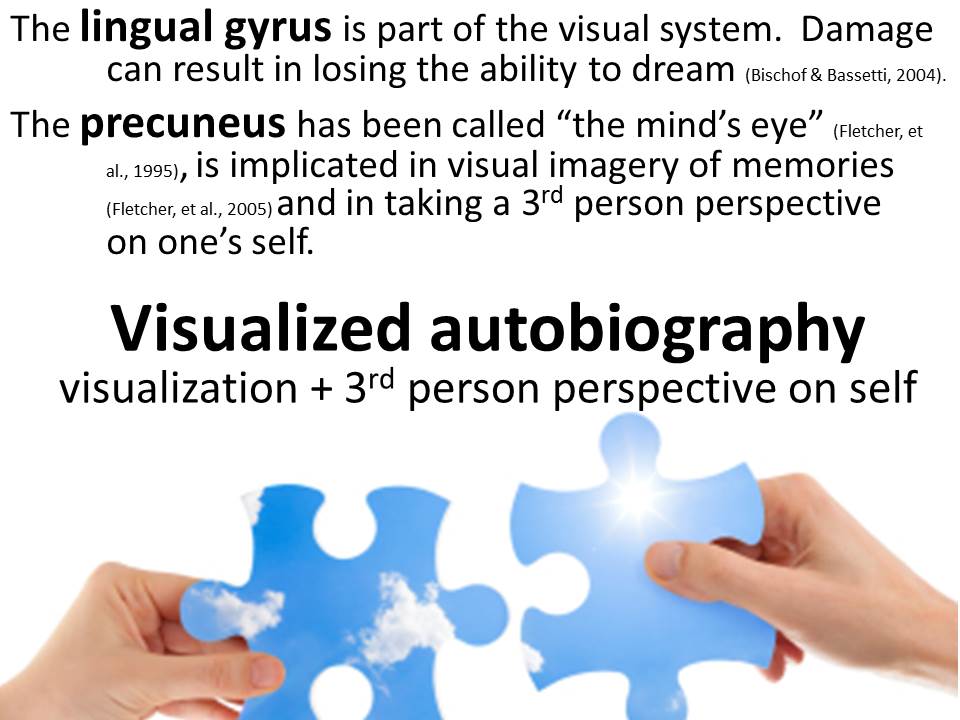
So what do these activations mean? Although brain regions are often associated with a range of actions, we can begin by reviewing the most common associations related to our regions of activation. The lingual gyrus is part of the visual system. Thus, it is involved in visual activity. However, the lingual gyrus has also been associated with internal visualization. For example, previous research has found that damage to the lingual gyrus can result in losing the ability to dream.
The precuneus has been called the “mind’s eye” meaning that it is often engaged when we take an outsider’s perspective on ourselves or our situations. If we were to look at ourselves as an outside observer, i.e., from a third-person perspective, we would potentially see increased activation in the precuneus. Corresponding with this role, the precuneus has also been implicated in the visual imagery of memories involving the self.
Combining the primary functions of the two regions suggests that what may be taking place here is a combination of visualization and a third-person perspective on one’s self. In other words, it appears that the activations are consistent with a visualized autobiographical cognitive processing. Let us turn to other studies that have looked at this concept of visualized autobiography.
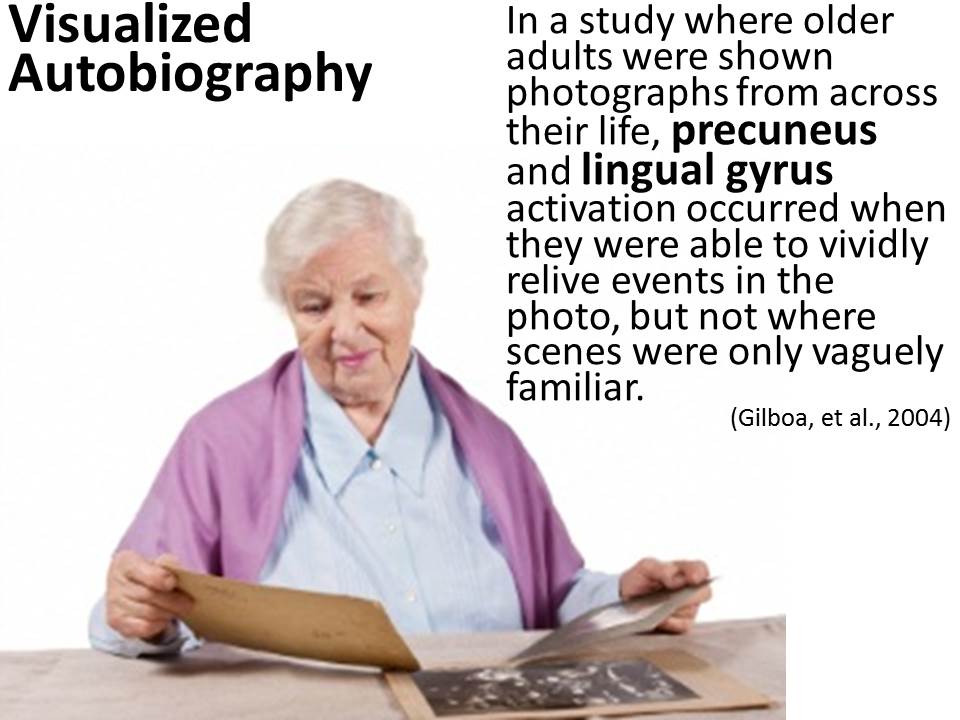
In Gilboa, et al., (2004) researchers worked with family members of older adult participants to acquire photographs taken from across the participants’ lives. These photographs were not simply portrait images of the participants, but rather photographs from active scenes involving the participant. During the scanning session, participants were shown these images. The analysis compared those images which the participants rated as being vividly memorable with those images which the participants did not recall (or only vaguely recalled). In this way, the researchers were able to distinguish the special neural regions associated with vividly recalling autobiographical memories from one’s own life. This vivid recollection of visual memories associated with different stages of one’s life differentially activated both the precuneus and the lingual gyrus. This finding is particularly interesting for our results because it demonstrates activations in both of the regions that were differentially activated by our experiment.
In that study, the authors indicated that retrieving detailed vivid autobiographical experiences was uniquely associated with the precuneus and lingual gyrus, in addition to the hippocampus. The hippocampus is a region known to be related to memory recall. Given that the hippocampus is involved with recalling experiences, it is not necessarily a surprise that we did not see hippocampus activation associated with bequest decision-making. Instead, it may be that what we are seeing is visualized autobiography projected into the future.
In other words, perhaps the bequest decision-making process can accurately be conceived of as the process of completing the final chapter in one’s visualized autobiography. Thus, we see the activation in regions associated with vivid autobiographical experiences, but not activation in regions associated with memory recall.
Additional evidence of this idea that bequest decision-making involves visualized autobiography projected forward into the future, comes from results associating visually traveling through time with activation in the precuneus and lingual gyrus. Specifically, in Viard, et al. (2007), four of the six regions showing significant activation when reliving events were in the precuneus and lingual gyrus. The authors referred to this as mentally “traveling back in time.” Similarly, in research by Denkova, et al., (2006), three of the four most statistically significant regions associated with recalling autobiographical personal events were also in the lingual gyrus and the precuneus.
Putting all of this evidence together suggests that a simultaneous activation in the lingual gyrus and the precuneus may indicate the presence of some form of visualized autobiography. In the context of this previous research, the visualized autobiography was related to existing memories. However, in our context, we were not asking people to recall previous memories, but rather were asking them to contemplate a future action. Taking a broader perspective, we may be engaging the areas related to one’s life story. The recipient of the bequest gift may relate to one’s life story, which may be perceived in visual terms. Although the precise connection is not final, there does seem to be an association with these regions which previously, when combined, have been activated in tasks involving visualized autobiography.
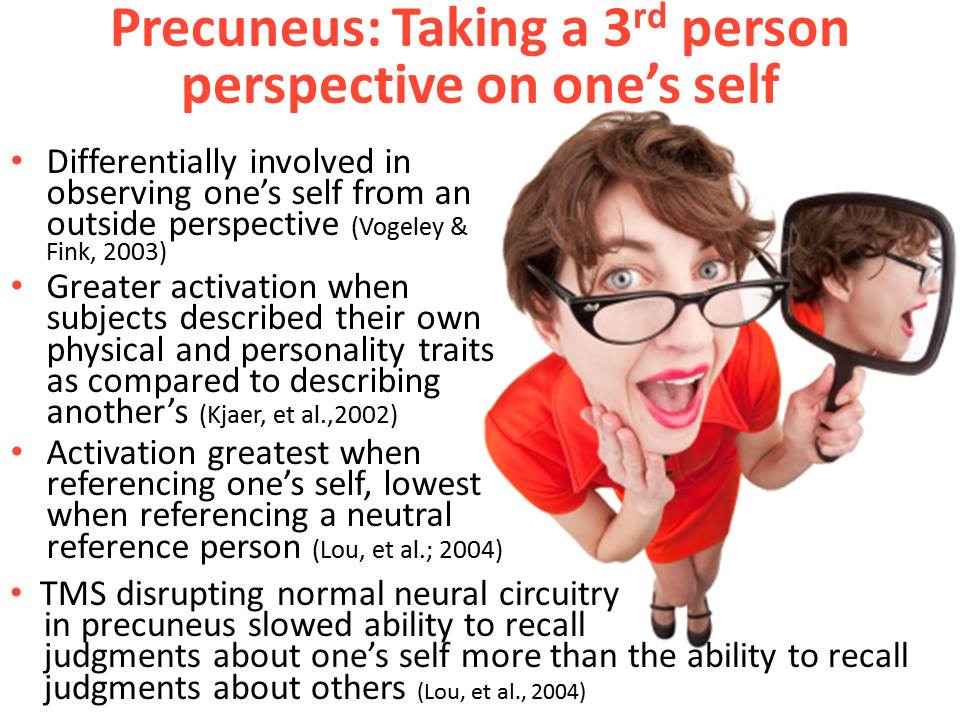
The idea that the precuneus is particularly involved in taking a third person perspective on one’s self has been demonstrated in a variety of previous research. For example, when people are asked to observe themselves from an outside perspective, this has been shown to result in activation of the precuneus. However, this activation is not limited to taking a visual outside perspective on one’s self. It can also be activated when subjects are asked to describe their own physical and personality traits as compared with describing another person’s traits. The description of one’s own physical and personality traits differentially engages the precuneus. Another research study found that activation in the precuneus was greatest when referencing one’s self, somewhat lower when referencing a person closely connected to the subject, and lowest when referencing a neutral reference person.
Finally, research using a very different methodology found even more powerful evidence for the engagement of the precuneus in self-referencing. This involved the use of transcranial magnetic stimulation (TMS). TMS uses magnetic stimulation to interfere with the normal neural activity of the brain in a small region. When interfering with normal neural activations in the precuneus region, researchers found that such interference reduced the ability to recall judgments about one’s self more than the ability to recall judgments about others. This suggests that the precuneus is particularly involved with self-referential judgments, given the differential effect of precuneus interference on such cognitive processes.
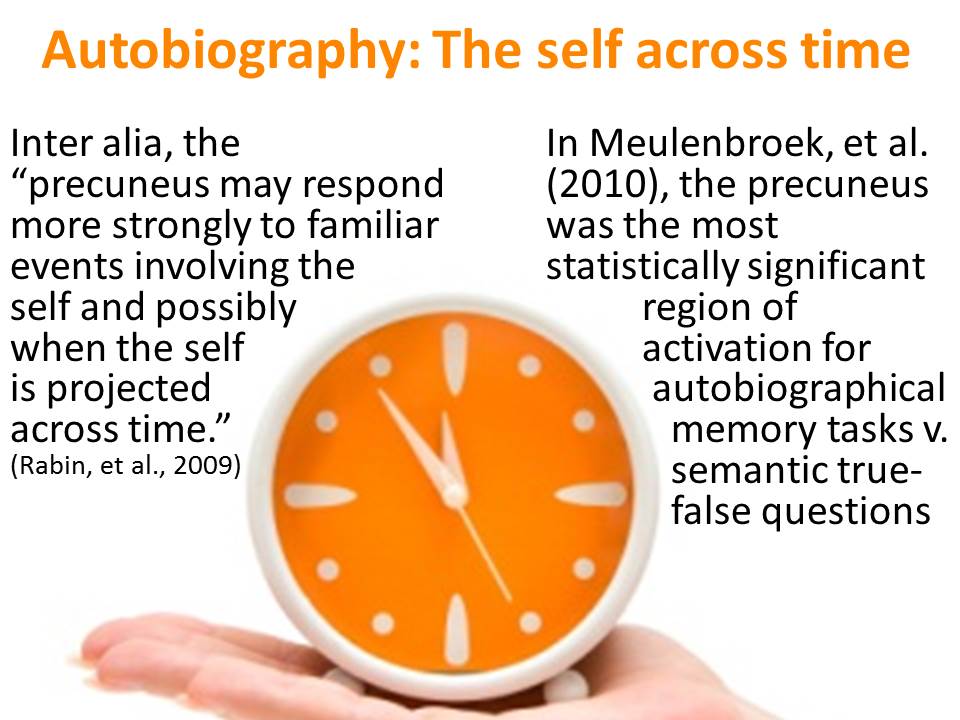
As demonstrated in the above quotations, other researchers have previously suggested that the precuneus may be particularly involved in projecting oneself across time. Again, this is consistent with the idea that charitable bequest contemplation involves the projection of the self across time, perhaps through a mechanism appropriately described as visualizing the final chapter of one’s autobiography.
It is important to note that, as this is the first inquiry into charitable bequest decision-making from a neuroimaging perspective, these hypotheses are only potential descriptions of underlying mechanisms. We have results from previous research that supports this possibility, and make it a plausible hypothesis. However, this is by no means a settled issue, rather this is simply an initial hypothesis that is consistent with previous neuroimaging results.
The suggestion of involvement of the lingual gyrus in autobiographical visualization is also not a new one. As seen above, researchers have previously suggested that activation in this region plausibly relates to visual imagery of one’s autobiographical memory.
Ideally, a proposed hypothesis that is consistent with neuroimaging results should also be confirmed by other findings using other methodologies. So what then might this hypothesis of visual autobiography look like in practice? Claire Routley in her 2011 doctoral dissertation completed a qualitative study resulting from interviewing a number of older adults who had made charitable bequest plans. In summarizing the findings of her qualitative, in-depth interviews, Routley specifically emphasized the links between the charities selected and the autobiographical stories of the respondents. We will explore in more detail some representative statements from this research. However, this summary result suggests a potential connection between qualitative interview results and neuroimaging results, both centering around the idea that charitable bequest contemplation involves visualized autobiography.
In the next experiment, we attempted to take a different approach to analyzing the neural correlates of charitable bequest decision-making. First, we attempted to increase the realism of the decision-making context and second, we compared not different types of charitable giving, but different types of bequest recipients. In this case we were not comparing bequest giving to current giving or volunteering, but instead we were comparing making bequest gifts to charitable organizations with making bequest gifts to family members or making bequests gifts to friends.

The above text shows what was presented to the participants, across a large number of slides, in this experiment. To begin with, the participants were informed that at the end of the session a legally valid last Will and Testament would be mailed to them at no charge, and that the questions they were about to respond to would assist in designing that plan. The idea here was to make the decisions as real as possible, given the context that the participants were in a scanner during the time that the questions were being asked.
After this introduction, participants were asked about their preferences for leaving assets to charities, friends who were not family members, and family members. This was asked about residual (i.e., percentage) gifts, about specific personal property items, and about specific cash gifts. Participants responded to these questions by either selecting a level of agreement or, in the case of the percentage question, using a slider bar to select the precise percentage intended for each separate recipient group. In this section questions were asked not about individual recipients, but only about recipient groups. Consequently, we had a smaller number of repetitions with this analysis as compared with the previous analysis. All together, we had a total of nine different responses from 36 participants to use in this analysis.
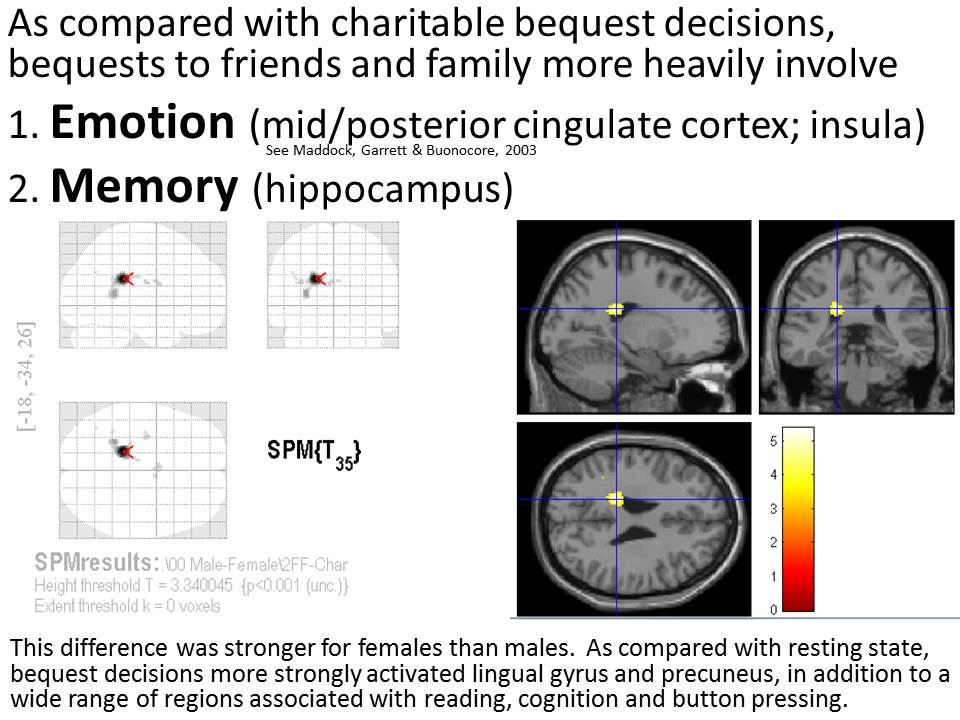
The preceding image shows the areas of greatest differential activation comparing charitable bequest decisions with bequest decisions to friends and family members. The results show a greater activation in areas associated with emotion and memory during bequest decision making related to family members and friends than during bequest decision-making processes related to charitable recipients. Activation was seen in the mid-cingulate cortex and posterior cingulate cortex as well as the insula. These regions have previously been associated with emotional responses. Additionally, greater activation in the hippocampus, which, as discussed before, has been associated repeatedly with memory and recall, was associated with bequest decision-making involving friends or family members as compared with bequest decision making involving charitable beneficiaries.
Although this finding is unsurprising, it provides some neurological evidence that bequest decisions involving friends and family members naturally engage much more substantial levels of emotion and memory than do bequest decisions involving charitable recipients. At this point we end the description of the results of the neuroimaging of bequest decision-making. For the remainder of this text, we will explore practical implications of the findings from the neuroimaging research.
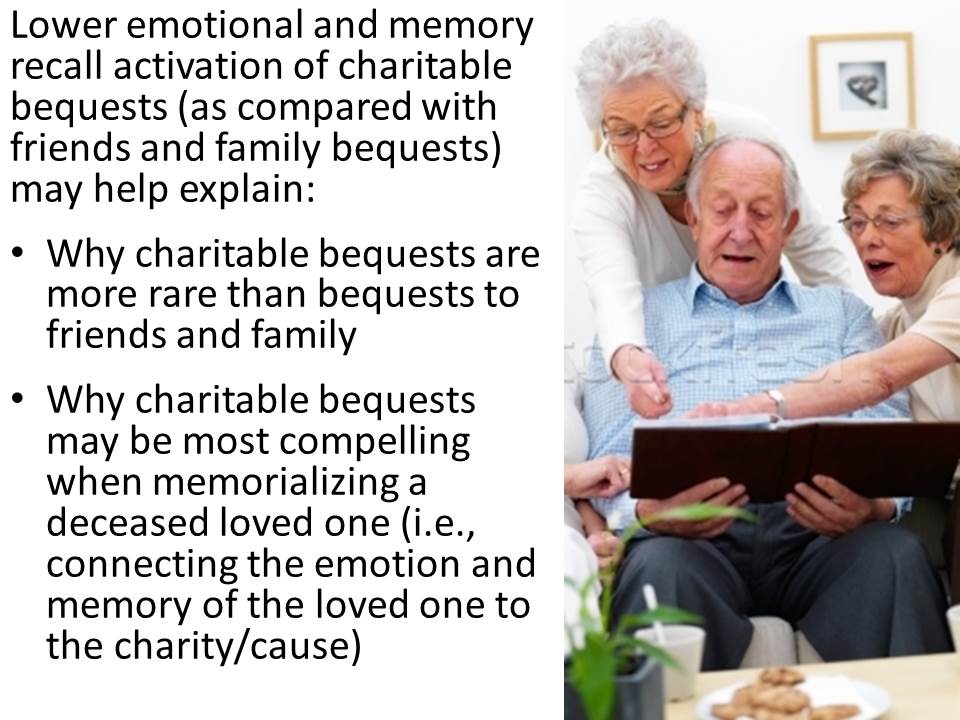
The suggestion that contemplation of charitable bequests involves lower emotional and memory recall activity as compared with contemplation of bequests to friends and family is by no means shocking. However, understanding this reality may be part of the answer to the question of why charitable bequests are so much more rare than bequests to friends and family. The understanding of the relatively lower emotional and memory content of charitable bequest contemplation may also lead to the pragmatic consideration of attaching the charitable cause to the memory of a friend or family member. In other words, charitable bequests may be particularly compelling when they are memorializing a deceased loved one. In this way, the charitable cause, which we know generates relatively less emotion and memory, might be attached to the friend or family member, which we know generates a higher level of emotion and memory.
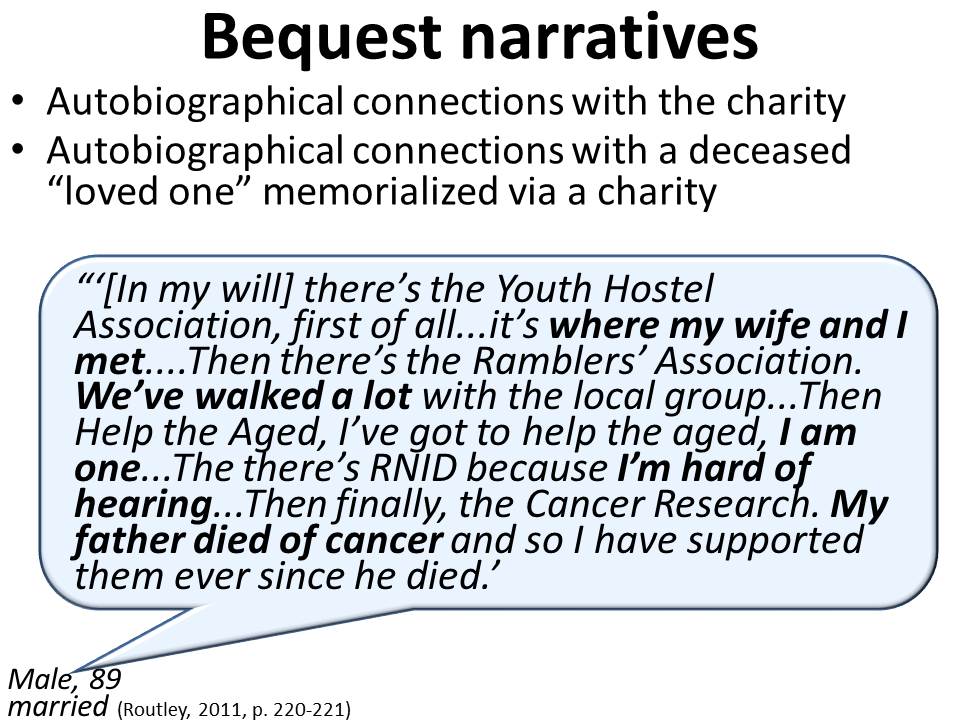
So what then is the practical connection between the neuroimaging results and actual charitable bequest decision-making in the real world? I think it is instructive to look at some of the statements from the in-depth qualitative interviews completed by Dr. Routley in her dissertation. To make this distinction meaningful, notice in the above quote where one participant describes his reasons for including various charities that the description is permeated with references to autobiographical connections. These autobiographical connections may be with the charity itself, or they may be with a deceased loved one who was being memorialized through the support of the charity.
In this simple description of motivations by this respondent, we have the practical realization of the neuroimaging findings in both of our studies. We have both the connection of bequest decision-making with a person’s life story and we have the use of memorialization to give to the charity as a way of honoring a friend or family member (thus, attaching the higher level of emotion and memory associated with the person to the relatively cold and impersonal corporate reality of the charity or charitable cause).
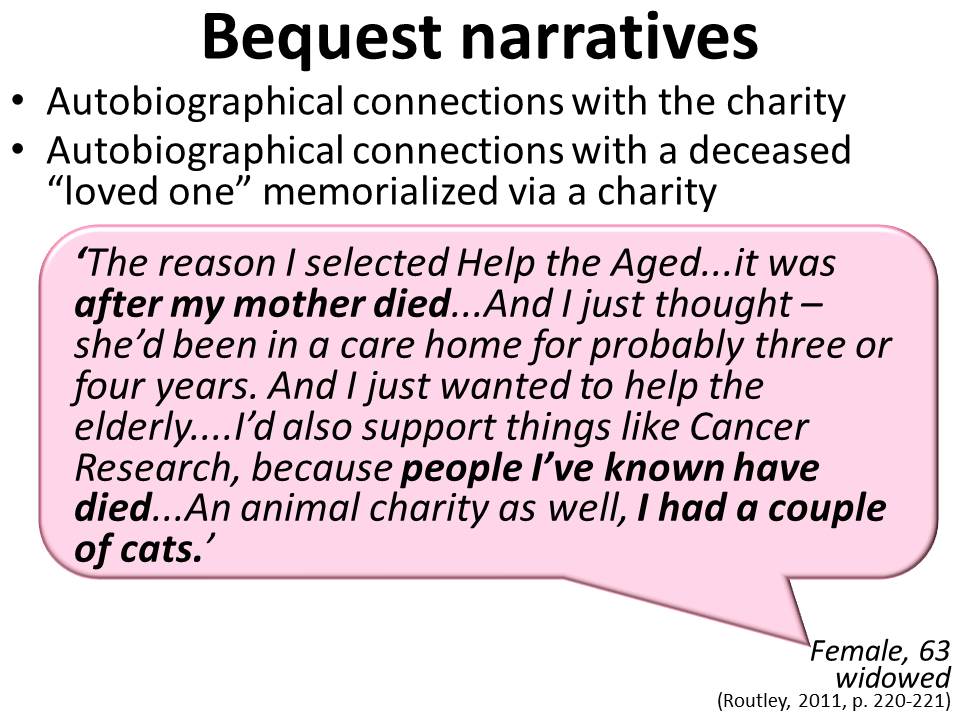
As another example, the above quote also demonstrates the pragmatic reality associated with the neuroimaging results from both sets of research. Put into purely personal, qualitative, and descriptive terms, these narratives correspond with the findings from neuroimaging.