To this point, we have looked at theories and results from a variety of different disciplines and approaches. Ultimately, however, the goal is to be able to make practical applications to fundraising. For the fundraiser who understands the theories and the results, the most powerful applications will typically be the ones that he or she develops himself or herself for his or her particular organization and donor base. However, there are some general principles which should apply to a wide variety of organizations. We will examine some of those general concepts and potential applications here. These applications are suggested by the theories, experiments, and results discussed previously, although not all of them have been verified with experimental lab test or field tests.
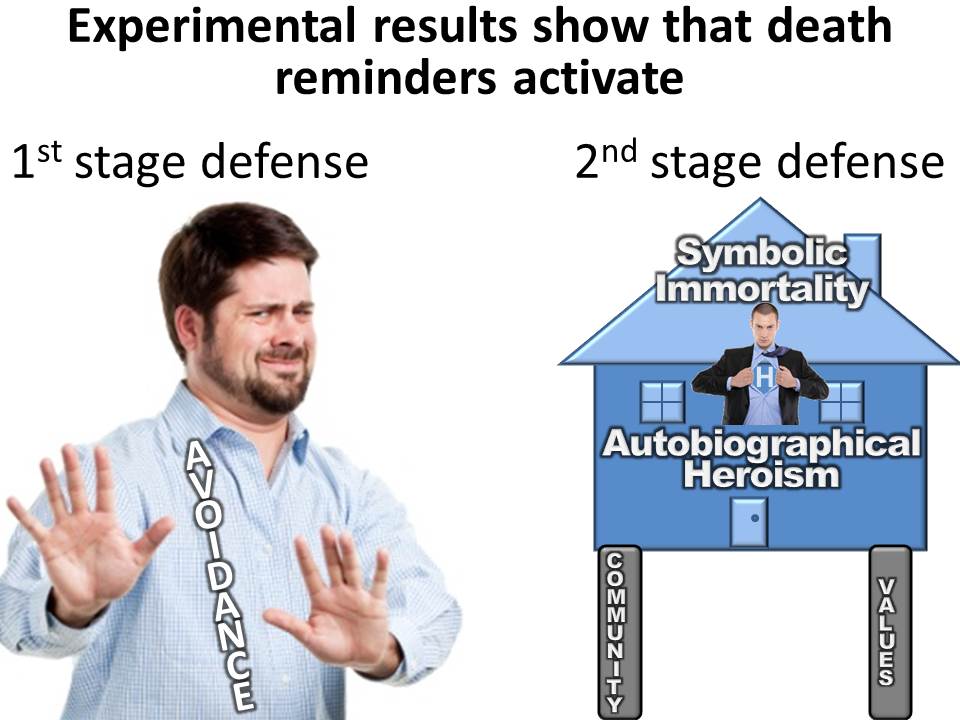
We begin with the basic concept taken from experimental psychology (terror management theory) which we summarize by describing the two stages of defenses to death reminders. The first-stage defense is avoidance of the death reminders (or the personal implications of the death reminders). The second-stage defense is pursuit of autobiographical heroism (the most extreme version of which is symbolic immortality) based upon support of one’s community and community values.
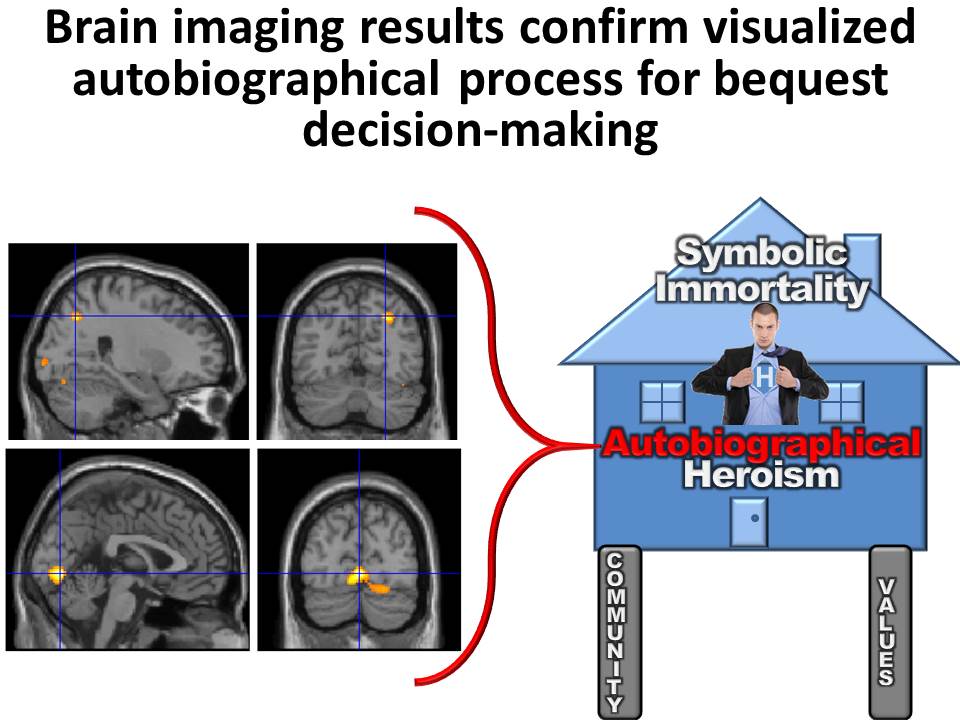
This framework from experimental psychology results in the field of “terror management theory,” was consistent with brain imaging results implicating visualized autobiographical processes for bequest decision-making. The alleged pursuit of autobiographical heroism could fit with neuroimaging results that are also consistent with autobiographical processing. In this case, psychological theory, experimental psychology results, and neuroimaging results, are all consistent with the proposed second-stage defense in the context of bequest decision-making.
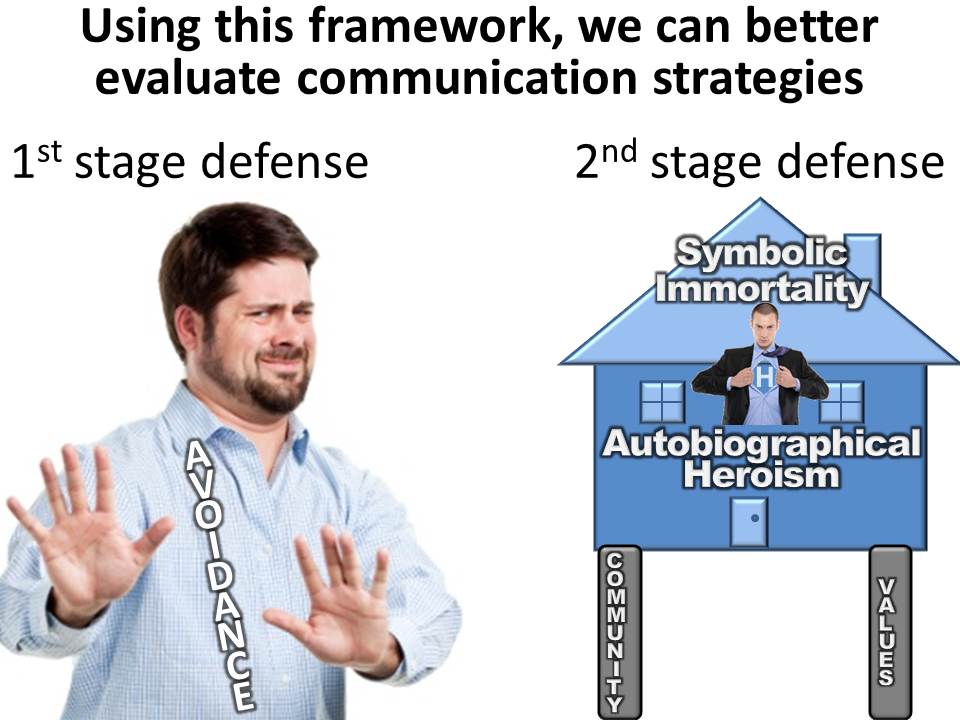
Finding evidence to support the existence of this particular psychological framework for bequest decision-making may be of intellectual significance for researchers, but it won’t impact of the daily work of fundraisers until we can use it in a practical way. It is possible. This framework, and the previous results, can be used to better evaluate our communication strategies on the topic of bequest giving. In other words, instead of just thinking, “How would I react to this marketing message?” we can think specifically about how each marketing message or approach would interact with the first-stage and second-stage defenses. These defenses will be relevant whenever we are attempting to communicate on a topic involving mortality salience such as estate planning and bequest giving.
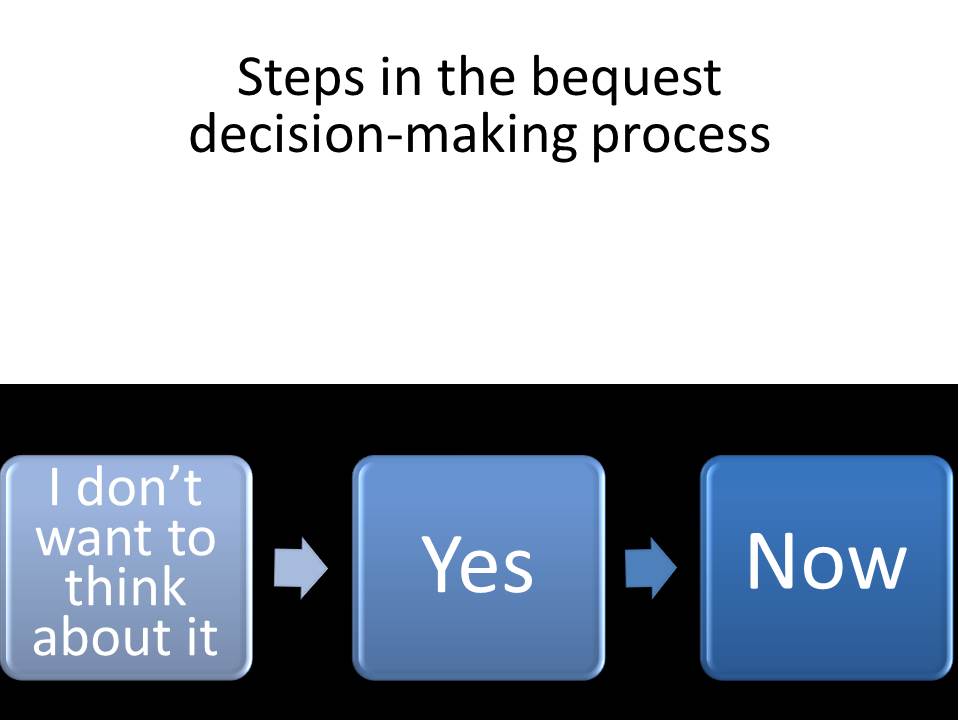
As we begin to apply these theoretical and experimental results, I think it is useful to keep in mind the sequential process for bequest decision-making. Unlike other areas of decision-making, bequest decision-making doesn’t start from a reference point of “yes” or “no” or even “I don’t know.” Instead, bequest decision-making starts from a reference point of “I don’t want to think about it.” This is the practical consequence of the first-stage avoidance defense whenever we are dealing with issues that create mortality salience.
Ideally we want to be able to move people from the typical beginning framework of “I don’t want to think about it,” to a new response of “yes.” However, this response of, “yes,” is not the end of the story. In bequest giving, because of the tremendous impact of procrastination (i.e., avoidance), an additional challenge remains in converting that answer of “yes,” into an answer of “now.” In other words, for encouraging charitable bequest gifts, the enemy is not usually “no,”. The enemy is “later.”
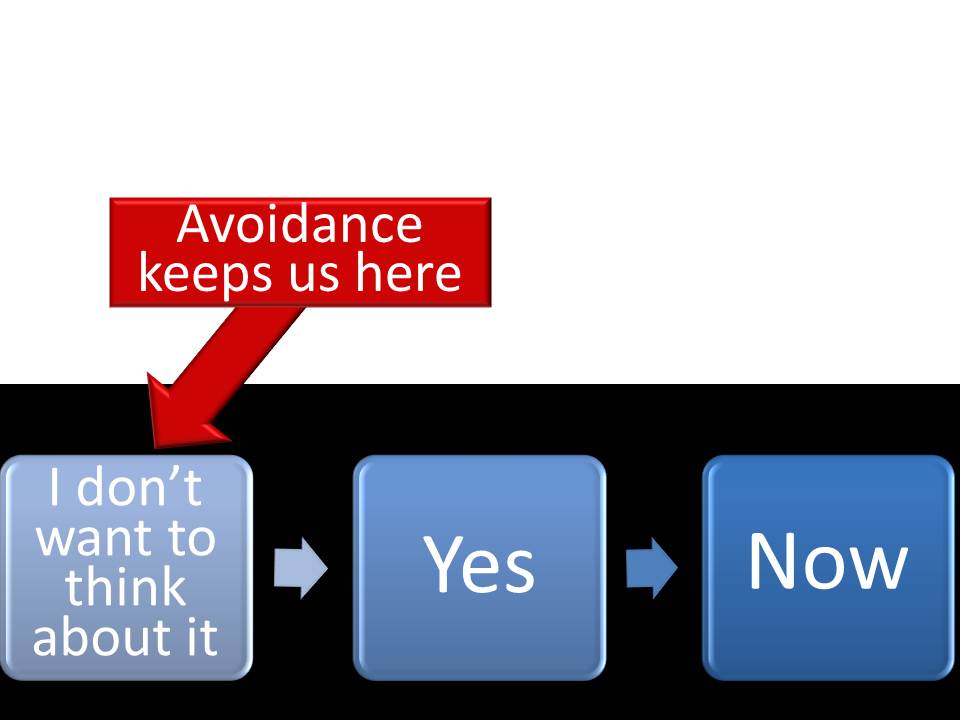
In the first step of the bequest decision-making process, we must recognize that the tendency to respond to mortality salience inducing activities by engaging in conscious or subconscious avoidance works to keep prospects at this first stage of “I don’t want to think about it.”
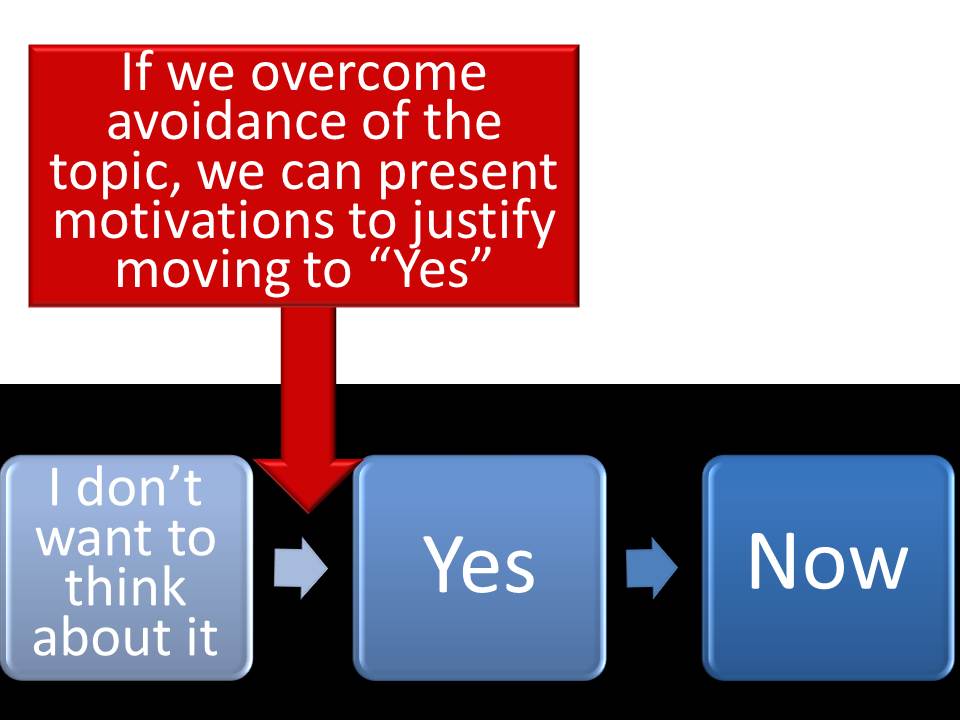
It is only after we can overcome the avoidance of the topic that we can then present motivations to justify moving a person to “yes.” In other words, we will never be able to convince someone, or to even open a conversation to convince someone, to move to “yes,” unless we somehow are able to successfully overcome the inherent avoidance defense to these topics.
Because overcoming this avoidance defense is central to reaching the vast majority of our supporting donors, we need to first think about how we can overcome the barrier of “I don’t want to think about it.” We need strategies that answer the fundamental question, “How do you reach an audience with a message that the audience, psychologically, wants to avoid receiving?”
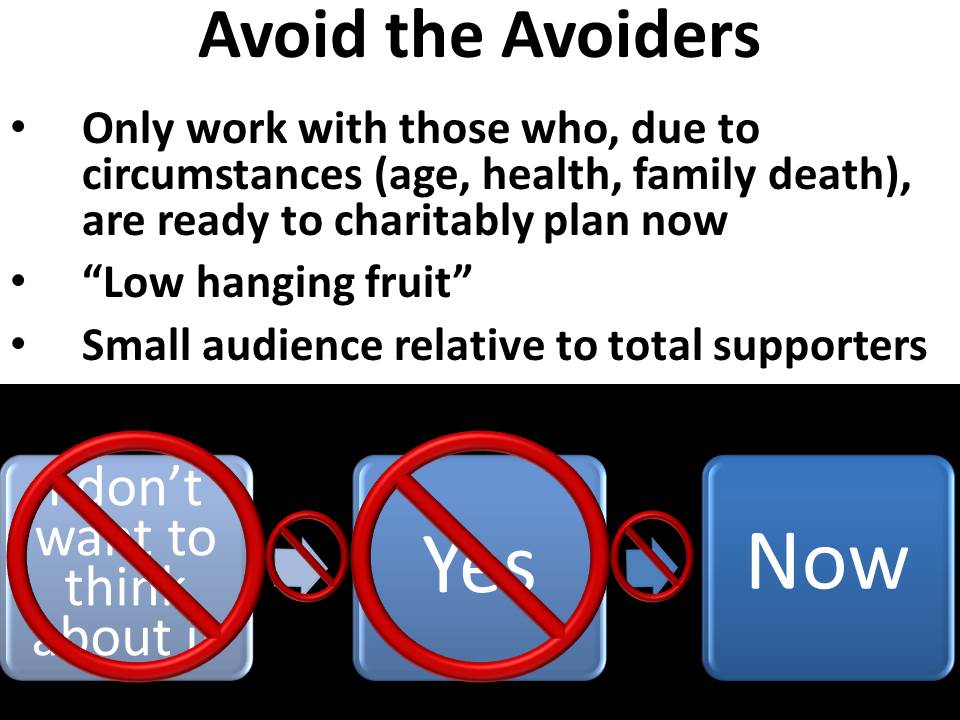
One approach to dealing with the avoidance defense is to simply ignore it. We ignore it by working exclusively with those individuals who have, as the result of outside occurrences, overcome their initial avoidance reaction to the topic. There are a wide range of external circumstances that can cause people to abandon the avoidance defense (i.e., where the avoidance defense is no longer psychologically protective). This can be caused by advancing age, declining health, or the death of a close friend or family member. It could be caused by plans for extensive travel or other activities that people perceive as including a substantial risk of mortality.
Indeed, research on the timing of changes to charitable bequest plans finds that the addition or deletion of charitable plans is often predicated by changes in the perceived risk of mortality or changes in family structure. (see James, R.N. III (2009) Health, wealth, and charitable estate planning: A longitudinal examination of testamentary charitable giving plans. Nonprofit and Voluntary Sector Quarterly, 38(6), 1026-1043.) These results suggest that people engage in estate planning through a process that might be described as “punctuated equilibrium.” In other words, estate planning is not something that people think about regularly, but only when some outside occurrence creates a shock related to mortality salience or family structure. Because mortality salience is aversive, and therefore estate planning is aversive, we intentionally avoid thinking about it on a regular basis, but instead ignore the topic until one of these outside shocks requires us to deal with the topic.
As a result of one of these outside shocks, simple avoidance is no longer a useful strategy to defend against mortality salience. These are the points of “punctuation” in which most estate planning occurs. Correspondingly, one approach is to focus on those individuals who are at a point of “punctuation” in which they will be most receptive to information related to estate planning. When you reach people during these critical “punctuation” points, avoidance is not a substantial barrier. Often at these critical points individuals are ready to act, and ready to act now. This is an ideal group to work with and clearly should be prioritized given their desire to act and act now. To the extent that we are able to learn of a life event, especially one related to mortality salience, such as diagnosis with cancer, heart disease, or stroke, or the death of a spouse, these “punctuation” points will typically correspond with an increased willingness to learn about estate planning options and complete plans. This is the “low hanging fruit” in estate planning and, as such, these individuals should be prioritized.
However, there are disadvantages to working exclusively with this audience. To begin with, the proportion of supporters who are at one of these “punctuation” points at any given time will be relatively small. Thus, the share of our audience that a message will impact may also be very small. This is consistently reflected in the response rates of mailings that offer free estate planning information, which often hover around 1% or less. The challenge here is that although the vast majority of people do go through punctuation points when they are open to engaging in estate planning, those points are rare, and sometimes brief.
If we were able to identify when supporters were going through such “punctuation” points, then we could simply wait until such events occurred and enter the picture at precisely the right time to influence a decision. However, this is not the type of information that we typically have for a large group of supporters. We are simply not able to be sufficiently involved with each supporter’s life, in such a way that would allow us to identify when these “punctuation” points occur.
This leaves us with the options of either (1) constantly communicating aversive messages that will be inapplicable to 99% of our audience, or (2) somehow learning how to overcome the avoidance barriers of the 99% so that we can convey information that will be helpful and influential during the inevitable “punctuation” points when estate planning decisions are made. Clearly, it seems more efficient when attempting to communicate to a large audience to learn how to manage or, ultimately, to overcome the natural avoidance defense to such topics.
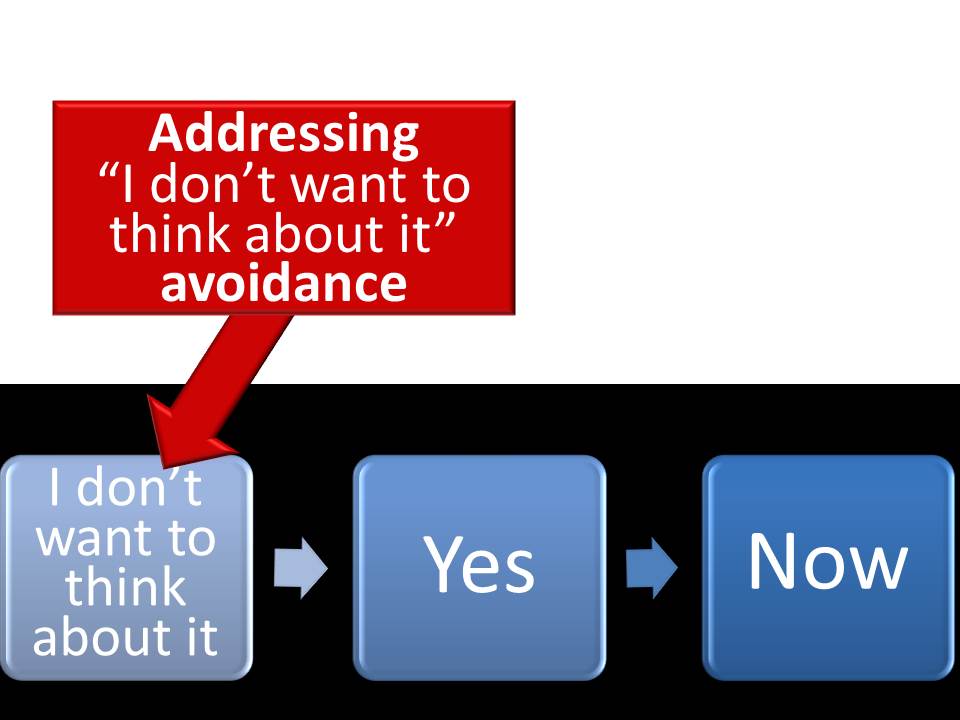
So let’s examine the question, “How do we go about addressing the ‘I don’t want to think about it’ avoidance response?”
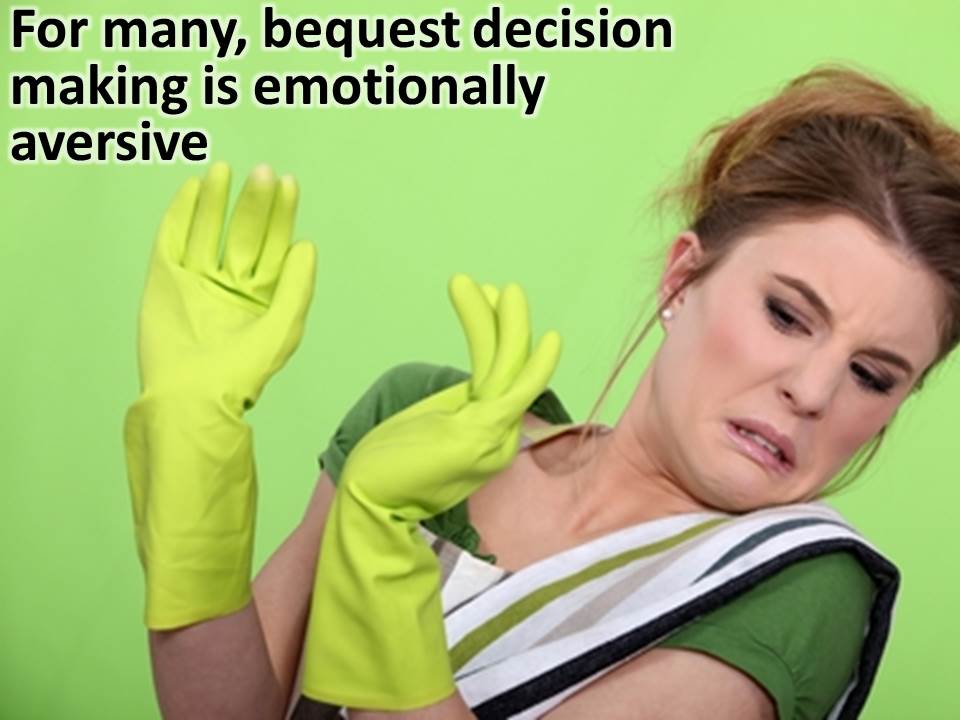
It is a significant and important first step in the process to recognize that the typical response to estate planning information is going to be avoidance. Simply put, if we understand that, for most people, bequest decision-making is emotionally aversive, it will help us to properly create marketing combinations that will more effectively deal with the problem. As we have already seen, this emotional aversiveness is both a conscious and a subconscious process.
It is not helpful to ignore the problem. (This can be a common mistake, because people designing the messages don’t necessarily find them to be aversive. First, people in the field are acclimated to the topics, and second, the messages relate to someone else’s death.) It is better to simply accept the unfortunate reality that this aversive reaction is not going to go away, it is deep-seated, and for approximately 99% of our audience, it makes the core message uncomfortable. This does not mean that we should despair in being able to effectively communicate this message, or that such communication is a lost cause for the 99% who are not currently in a “punctuation” point in their life. Instead, it simply means we need to recognize this challenge when we are creating our marketing messages.
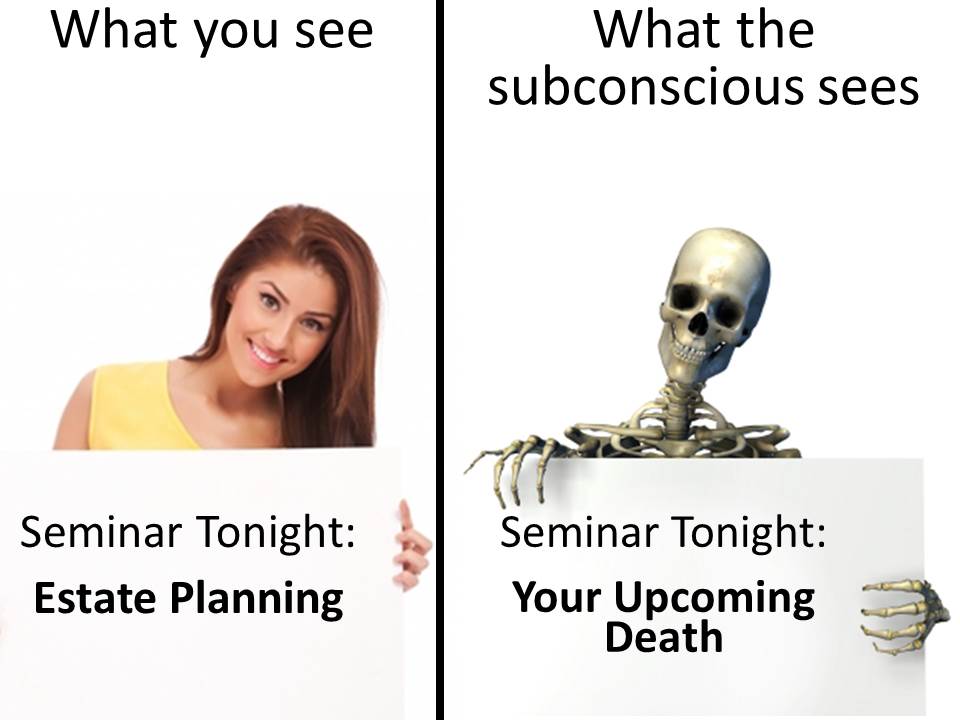
To begin with, the terminology that professionals have come to be comfortable with through repeated exposure is not necessarily the best language to use in a marketing context. When we talk about estate planning, we may be contemplating a range of legal, taxation, and document drafting topics. However, when addressing the topic of estate planning for non-practitioner audiences we are, at least at the subconscious level, presenting on the topic of the person’s upcoming death. The topic for the planner is not aversive in part because it isn’t focused on the planner’s own personal mortality, but rather the mortality of audience members. Additionally, practitioners tend to focus on charitable, legal, and tax implications of such planning. But, for the individual client or donor these issues are secondary to the reality that the plan is for his or her upcoming death. So if our core topic is fundamentally, even subconsciously, aversive to our intended audience, what can we do?
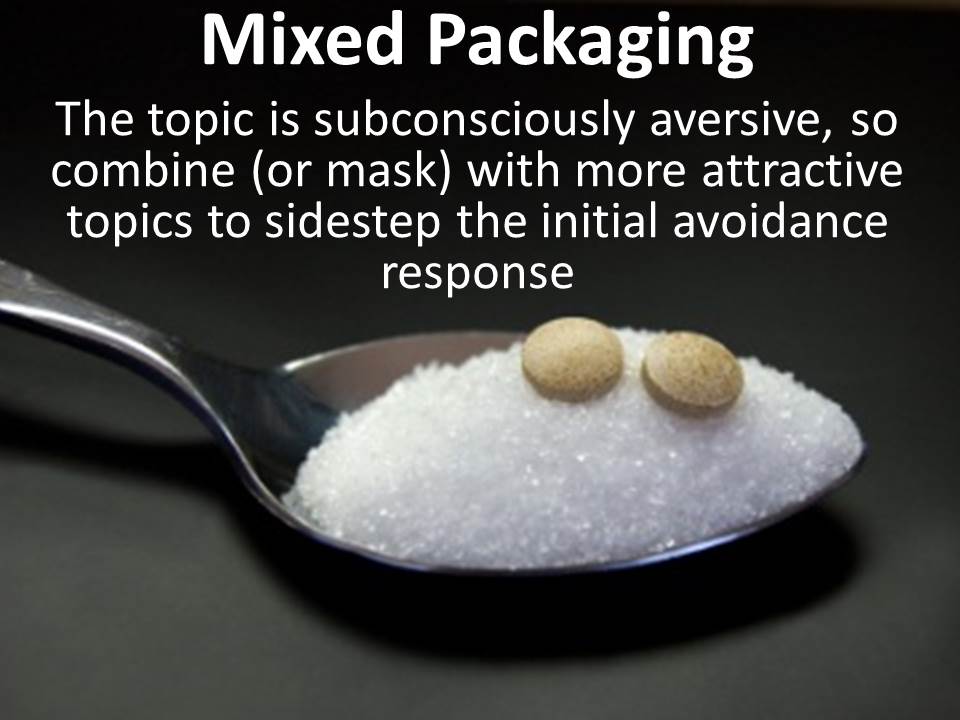
An initial approach to presenting an aversive topic, such as estate planning, is to mix it with other less aversive topics, so as to sidestep the initial avoidance response. This fits with the phrase from the Mary Poppins song that “a spoonful of sugar helps the medicine go down.” If we don’t recognize that the topic is consciously and/or subconsciously aversive, then we will simply present the aversive topic in a process that blatantly broadcasts the unpleasant nature of the information we have to present. Everything we know about this topic suggests that the “frontal assault” approach will fail to reach all but the 1% or so who are no longer using the first-stage avoidance response.
If we want better responses, then we need to think of creative and clever ways to engage in “mixed packaging.” These are ways in which we can communicate the necessary information so that the audience has the knowledge and tools that they will need during those future “punctuation” points in which these decisions will be made. But we may have to “slip in” this information as a minor part of some other communication activity in order to avoid the natural avoidance response that would otherwise block the communication as a whole.
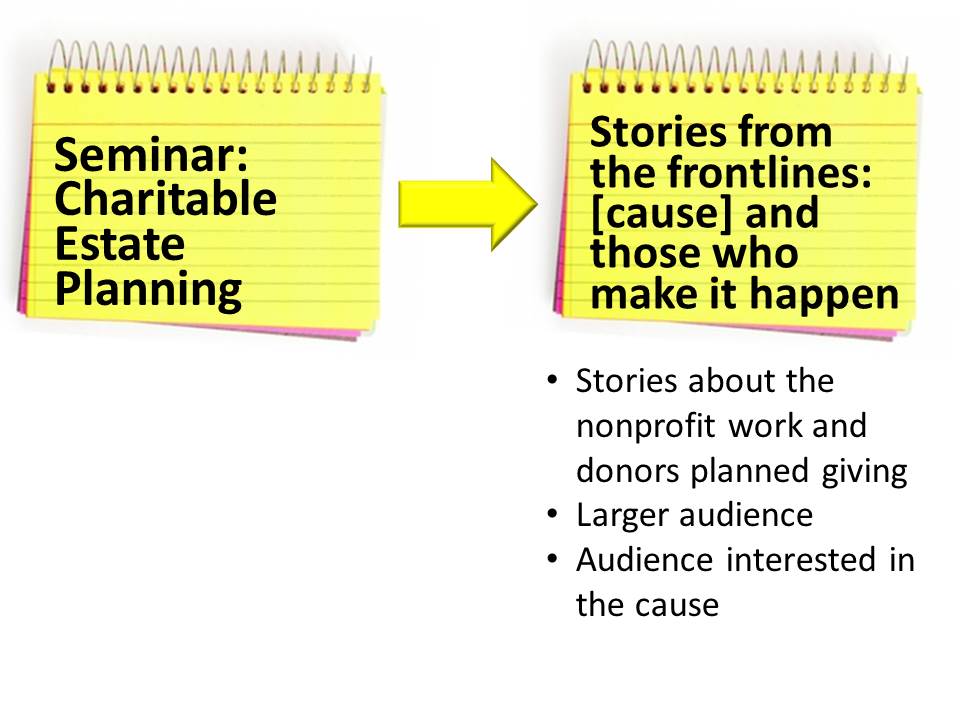
So how might this be done? First, we can look at this issue in the simple context of presenting an informational seminar. It is not uncommon to communicate about charitable estate planning by presenting informational seminars. If we simply label the seminar as one on estate planning or charitable estate planning, then we will likely reach only a very small segment of our desired audience. The aversive response to mortality salience will cause the great majority of our potential audience to avoid the seminar.
So how can we reach a larger audience? We reach a larger audience by engaging in “mixed packaging” where we combine the charitable estate planning information with more positive, interesting, and attractive topics. So instead of having a seminar on “Charitable estate planning,” we may have a seminar on “Stories from the front lines: Cancer research and those who make it happen.” The seminar would include stories about the work of the nonprofit (such as the cutting edge research conducted by cancer researchers supported by the nonprofit), but we would also include stories about donors who make the research possible. Within these stories about donors who make the research possible, we would include examples of donors who have supported the research through sophisticated planned giving or deceased donors who have supported the research through simple bequest giving.
Through these stories, we then communicate the information and techniques that will be helpful to the audience members when they engage in estate planning decision-making in the future. It is especially helpful whenever we can encapsulate this information in the form of a story. The human brain is specifically designed to capture, retain, and recall information in the form of stories. Further, the neuroimaging results suggest that the decision-making processes may be more “visualized autobiography” than, for example, number comparison or financial calculation related. Because many bequest donors will not involve the charity in their planning processes, it is critical that information is conveyed in such a way that it will be “sticky”, and consequently available during the future time when such decisions are made.
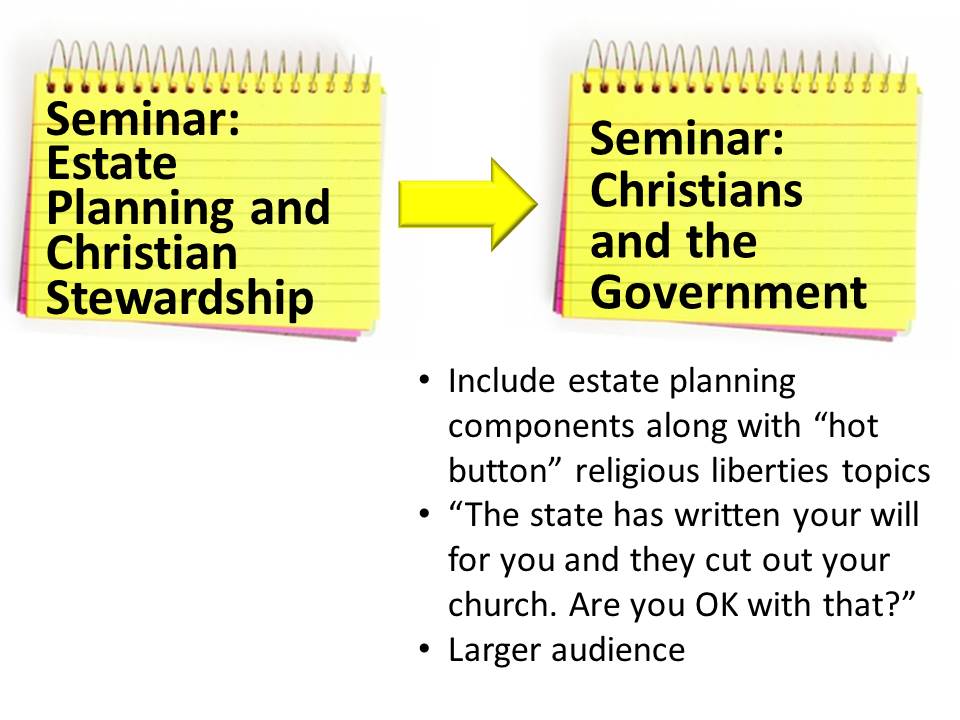
Here is another example of the importance of seminar titling taken from my own experience as a practitioner. For a number of years, I worked as the director of planned giving for a religious college that, among other things, engaged in training preachers, ministers, and missionaries. Thus, it was common for us to make presentations in local churches often on a Sunday afternoon or Sunday evening. Copying what had been done in the past I initially began making these presentations as “estate planning” seminars or perhaps “estate planning and Christian stewardship” seminars. I learned very quickly that this kind of presentation drew a remarkably sparse audience.
This result makes sense in the context of the current theory, because I was presenting an aversive topic by means of a “frontal assault.” My results changed dramatically when I changed the seminar title and content to be less aversive and more generically interesting. I could give a seminar on “Christians and the law,” or “Christians and the government” and get a much larger audience. Of course, this did alter the contents of the seminar substantially. We discussed a wide variety of religious liberties topics that were of great interest related to religious freedoms and current political controversies, but one-third of the seminar related to those government or legal issues relevant to estate planning. I was able to obtain dramatically larger audiences and simultaneously learned how to communicate the core pieces of critical estate planning knowledge in a more condensed, and probably more memorable, fashion.
This was only the first key to the dramatic increase in charitable planning that took place as a result of the seminar change. The second change dealt with the barrier (which we will discuss later) of moving people from “yes,” to “now.” This was addressed by creating an immediate deadline. People who were at the seminar had the opportunity to immediately sign up for an initial consultation timeslot for the following day and could receive a free simple will. However, the offer was only available if they signed up immediately. Thus, we created a deadline and a reason to shift from “yes,” to “now.” The one-shot deadline was critical in triggering action. Giving people more options and more choices led to much less action, whereas giving them a single “now or never” option produced exponentially greater compliance. But, of course, that very effective “now or never” immediate opportunity would not have had a substantial audience if the topic had not been presented in the context of attractive mixed packaging.
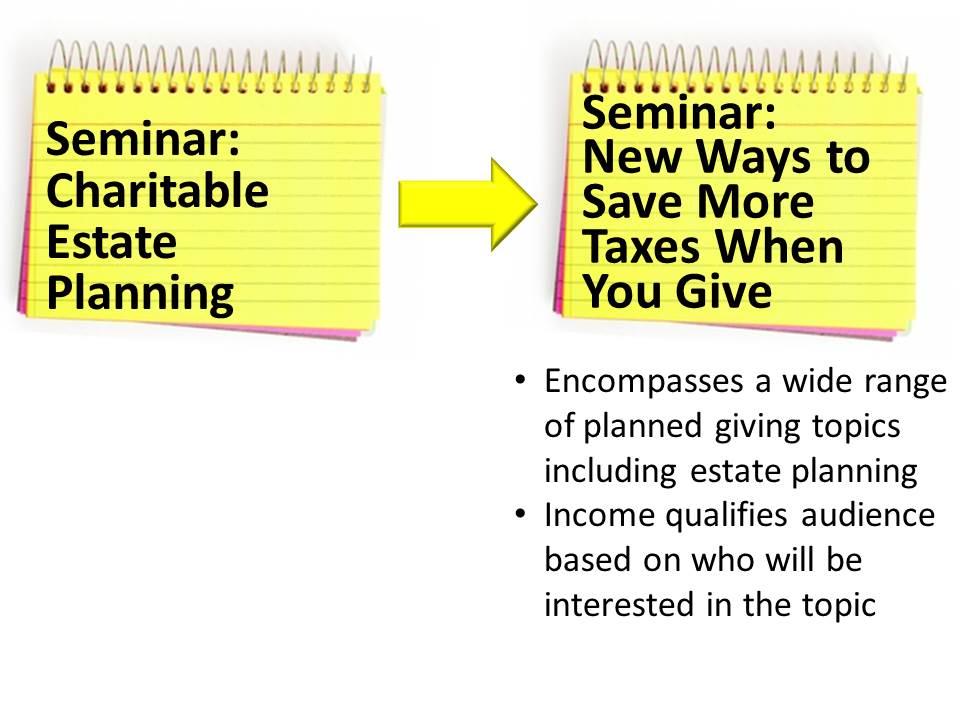
Another example of repackaging a seminar on charitable estate planning is to present a seminar on “New ways to save more taxes when you give.” Although tax benefits are rarely the primary motivator for donors, tax benefits are not an aversive topic. As a result, this is a subject that is of general interest among those who are financial supporters to an organization, and it does not highlight the death-related nature of some parts of the information. As before, the topic advertised is more broad. The contents of the seminar would also necessarily be more broad. The new seminar would encompass a wide range of current and planned giving topics. But, critically, it would include the important information related to estate planning.
The (potentially aversive) estate planning information is included in a way that, while being consistent with the topic, is not broadcasted by the title. This particular topic heading also has the advantage of speaking to a qualified audience, meaning an audience who both has interest in charitable giving and are at such an income/deduction level that additional tax deductions are of significant interest. Thus, we can prequalify an audience in a positive way but still retain a substantial group to whom we can present the (inherently aversive) estate planning information as part of a larger group of topics.
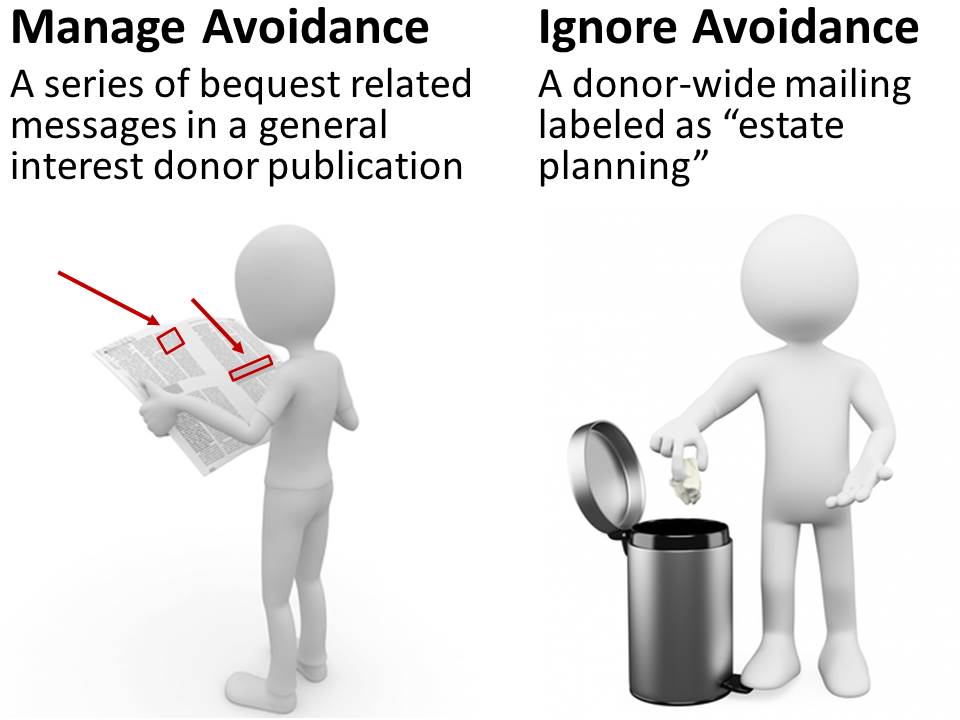
The concept of mixed packaging can be used in a variety of marketing channels. For example, if we recognize that the topics are aversive, we can add them in as minor components in publications that are of general interest to our target population. This, of course, means that the messages will need to effectively communicate key concepts in relatively few words. The goal is to include these sidebar brief statements without making the publication piece as a whole aversive to the larger audience.
If instead we ignore the natural avoidance response and use a donor-wide mailing prominently labeled as “estate planning,” we are more likely to have a complete rejection of the information being presented. Although we may send out a massive amount of mailings, if we don’t recognize the inherently aversive nature of the topic and mix it with more attractive pieces, we are likely to fail in the effort to ultimately communicate the necessary information to our audience.
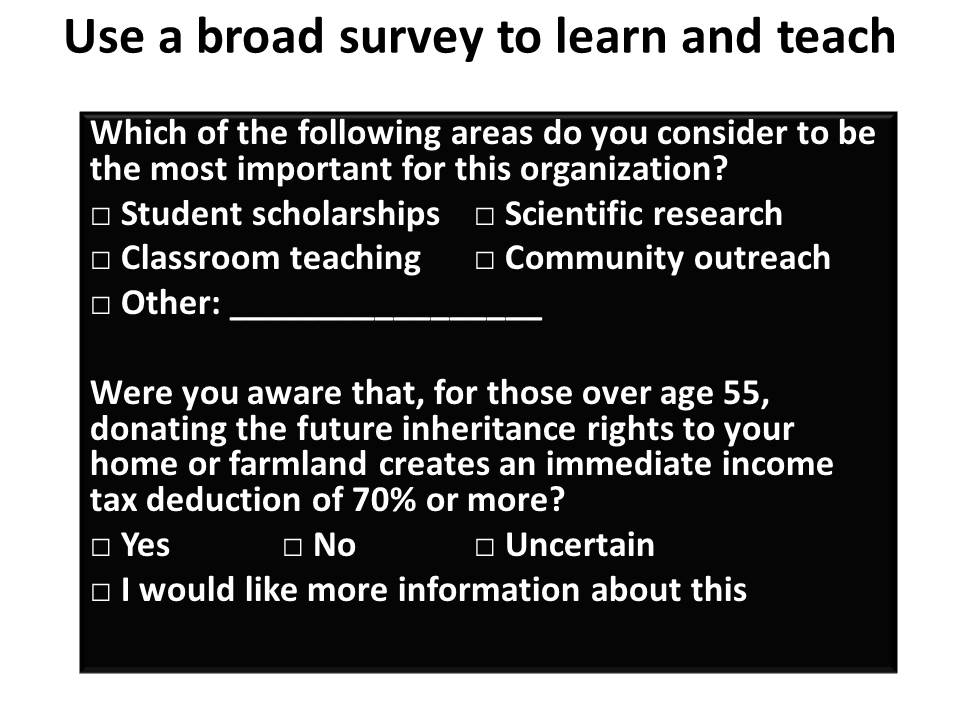
Another example of a piece that allows communication of planning information in the context of a larger communication piece with a separate, but related purpose, is the use of donor surveys. We begin with a survey for the purpose of learning the opinions and values of supporting donors. This survey must have its own separate (and organizationally-respected) purpose aside from communicating gift planning information. But, within the context of a broad survey intended to collect information about donor priorities, values, and interests, critical information-communicating questions can be included within the survey.
For example, if you are in a low interest rate environment with AFRs near 1% you might include a question asking, “Were you aware that, for those over age 55, donating the future inheritance rights to your home or farmland creates an immediate income tax deduction of 70% or more?” Here we are referring to the donation of a remainder interest deed in a home or farmland which is a relatively lesser known planned giving technique. By reading and responding to the question, the donor has received and understood the core planned giving concept that might motivate future action. But, the communication is done in the context of a broad survey on multiple topics, so as to not create an aversive communication vehicle. If instead we were to create a survey on “Your knowledge of charitable estate planning,” we would expect to see a very low participation rate, because we would have packaged the survey entirely as one about an inherently aversive topic (i.e., your death).
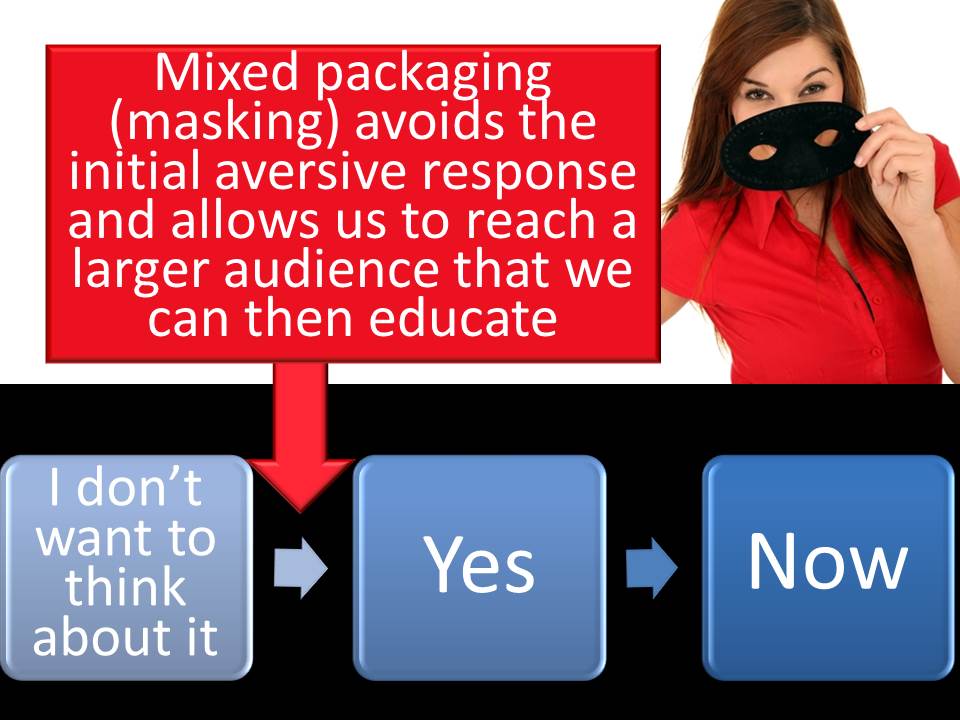
There are, of course, a wide variety of other potential applications of the “mixed packaging” strategy. How this might apply to your organization will differ from other organizations. Nevertheless, the basic concept is always the same. We engage in mixed packaging or masking of the aversive topic in order to reach a larger audience that we can then educate about bequest giving opportunities. Once we have the audience, we can – in brief and innocuous ways – communicate critical nuggets of information to that larger audience. Ultimately, the goal is to be able to move a larger number of people away from the base state of “I don’t want to think about it” to the desired state of “yes, that’s a good idea.”
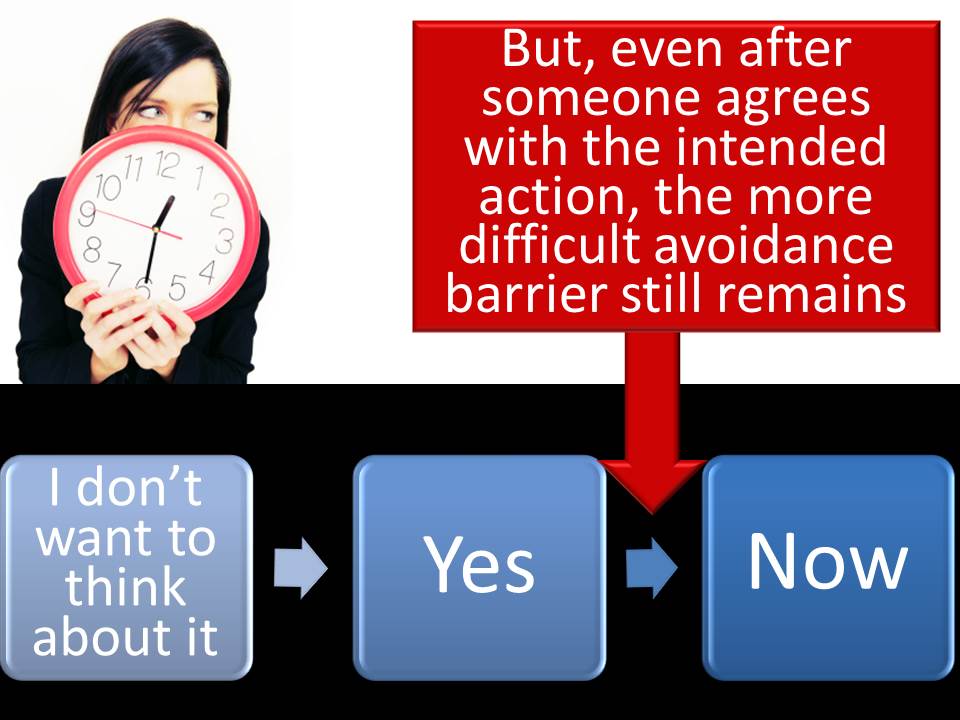
Moving people from “I don’t want to think about it” to “yes, that’s a good idea” is an absolutely critical goal. But it is not the end goal. To achieve cognitive assent to an idea is useful, but by itself it will not produce revenue for the organization. In other realms of marketing, there is not a substantial barrier between reaching “yes,” and generating action. However, in the context of estate planning, the barrier between “yes” and actual action is the most difficult barrier. Before we congratulate ourselves on reaching a larger audience and convincing that larger audience that they should engage in the action, we need to recognize that this is not the hardest step in the process. The hardest step in the process is moving from “yes” to “now.”
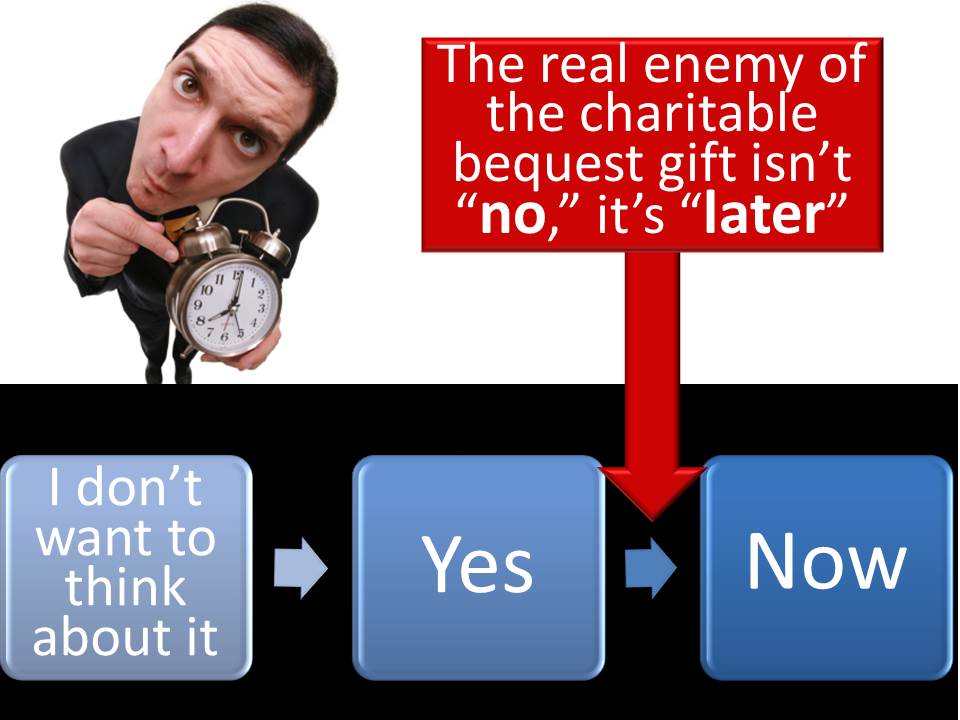
Another way to put this is to recognize that the real enemy of the charitable bequest gift isn’t “no,” it is “later.” A variety of surveys of charitable donors, or even the general population, show widespread agreement with a willingness to consider including a charity in a future estate plan. However, this relatively widespread agreement with the concept of, and even intention to engage in, charitable estate planning is not matched by actual post-death transfers. This difference can be on the order of a tenfold magnitude. For example, where maybe 5% or 6% of decedents actually generate charitable bequest transfers at death, it would not be shocking to see 50% to 60% agreement with a general willingness to consider including a charitable recipient in an estate plan to be completed at some point in the future.
This demonstrates the magnitude of this most difficult barrier of moving people from agreement with the concept of leaving a charitable bequest gift to actual behavior that generates a charitable transfer at death. How can we attempt to address this most difficult barrier to actual post-mortem charitable transfers at death? Let’s examine some of the considerations.
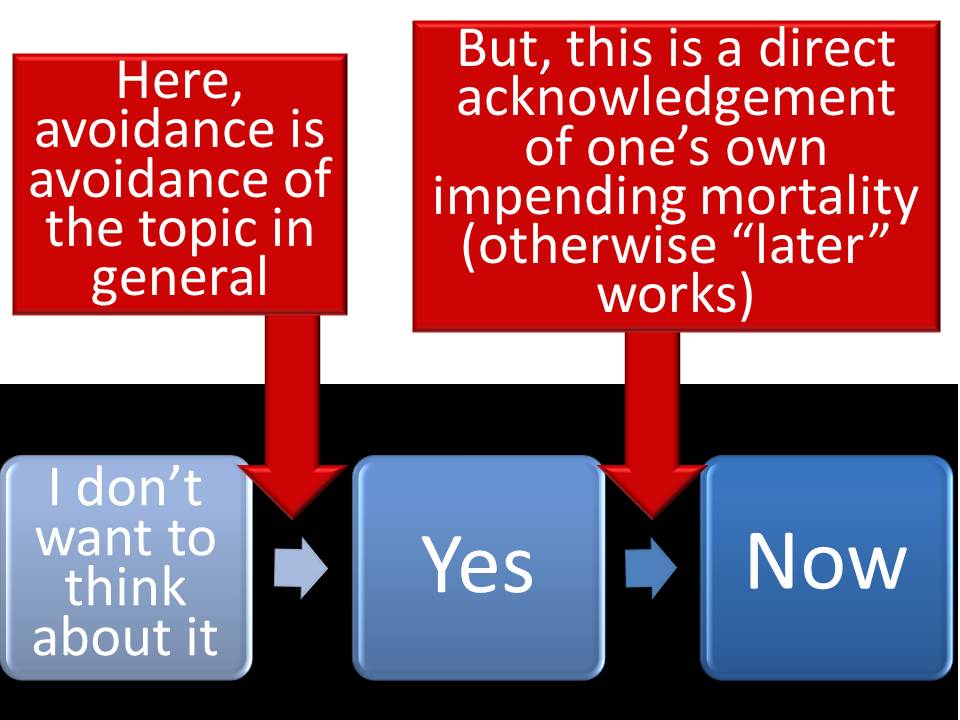
One of the reasons that this second step is so much more difficult is that it is more closely tied to personal mortality, in particular to impending personal mortality. It ramps up the aversive nature of the message. When we wish to communicate about estate planning concepts in general, we have to deal with the general aversiveness that relates to a death-related topic. But when we try to get people to complete final documents, we are dealing with the aversiveness of directly acknowledging one’s own mortality. Beyond this, we are often dealing with a necessary recognition of one’s own IMPENDING mortality. Why? Because if the risk of mortality was not impending, then it would be appropriate to respond by simply answering, “yes, but later.”
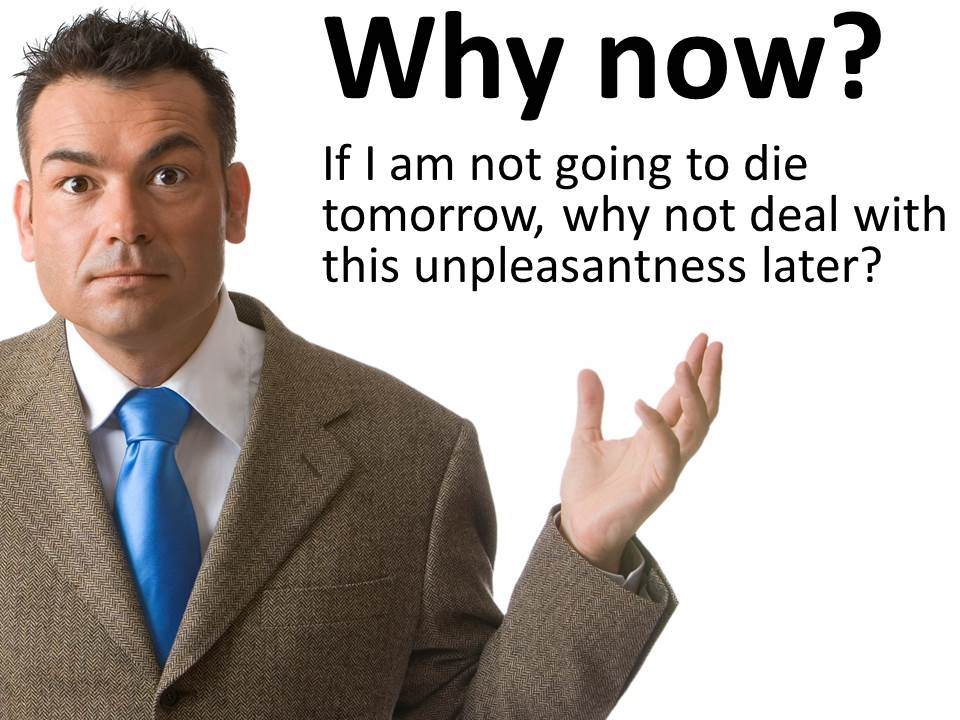
The critical issue is simply this: if I am not going to die tomorrow, why not postpone this unpleasant activity? Logically, we have to be able to answer the question of “Why now?” If moving from “yes” to “now” is an inherently highly aversive process, we have to justify why the action should not be completed later. The enemy of the bequest gift is not “no.” The enemy of the bequest gift is “later.” And “later” is always a logical response if I am not going to die tomorrow. So how can we deal with this seemingly appropriate and logical objection?

A common initial response is to point out the obvious statistical reality that impending death is always a possibility. We might be tempted to respond to the issue by saying, “But, you might get hit by a truck tomorrow.”
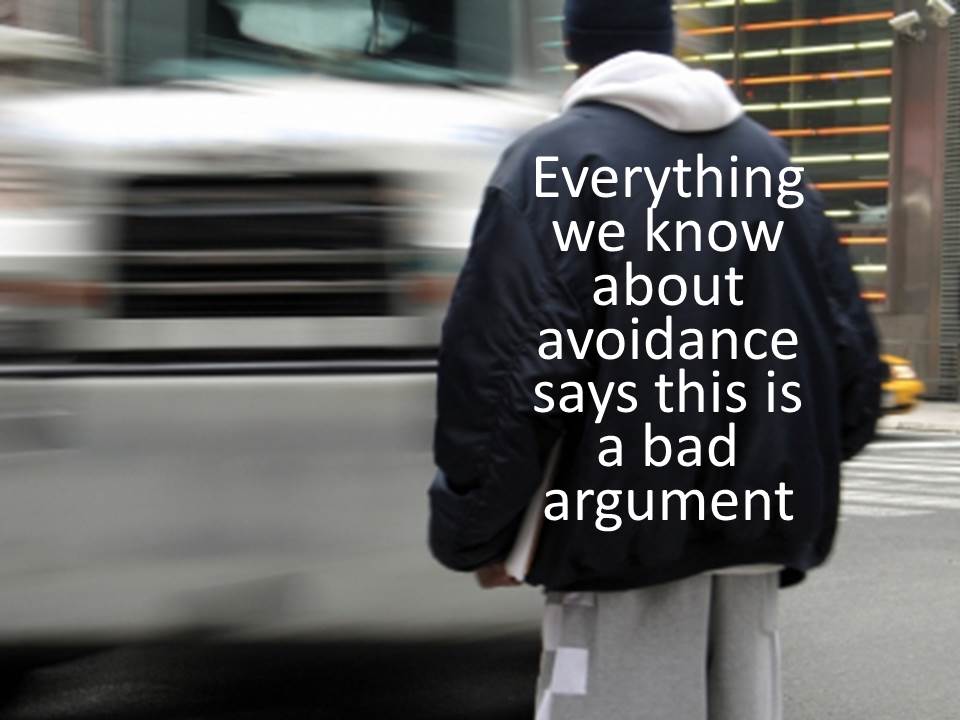
As natural as that response may seem, everything we know about the avoidance defense suggests that this is a bad argument. It is not that the argument is statistically invalid. Rather, it’s that the natural avoidance response to mortality salience will cause a rejection of the suggestion, regardless of its statistical validity.
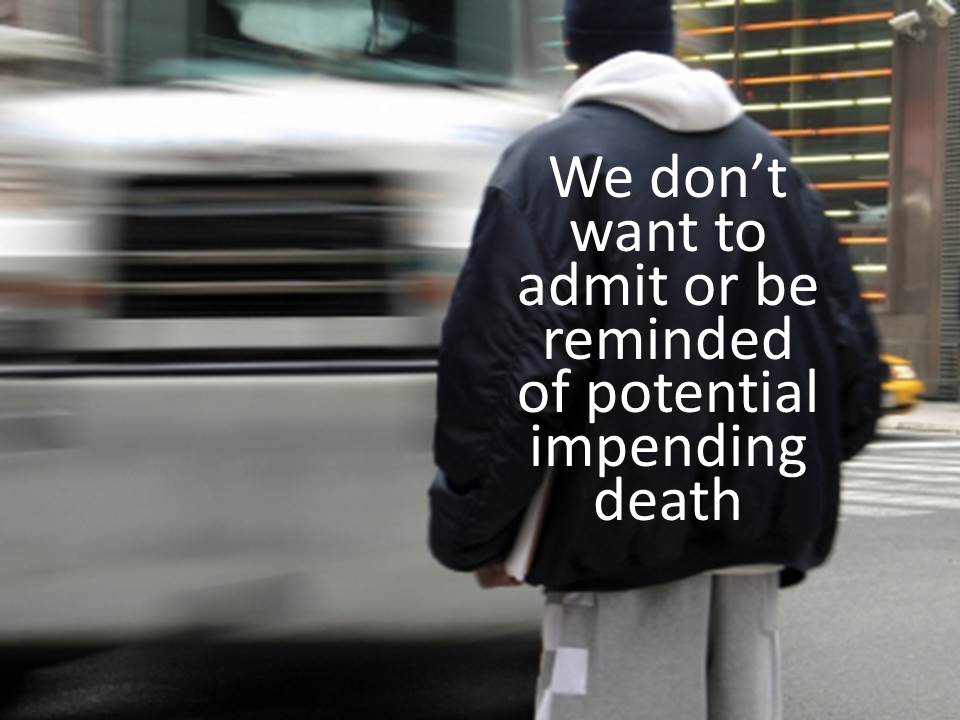
People simply don’t want to admit, psychologically, the potential for immediate mortality. Such an admission is psychologically painful and people will not be inclined to truly accept such arguments. Just as we saw with experimental psychology results where participants altered their statistical analysis when the predictions related to their own risk of mortality, if we make the same argument here, we are working against the natural biases that we know exist in humans. We make the type of argument that is specifically designed to be ineffective when we approach the issue by emphasizing the potential for imminent mortality.

Further, this bias towards delay – driven by the highly aversive nature of the action and the lack of necessity for the action in the absence of impending mortality – is repeatedly confirmed by that the fact that the client did not die yesterday. Their lack of death means that they did not need to have previously engaged in planning, and postponement was completely appropriate.
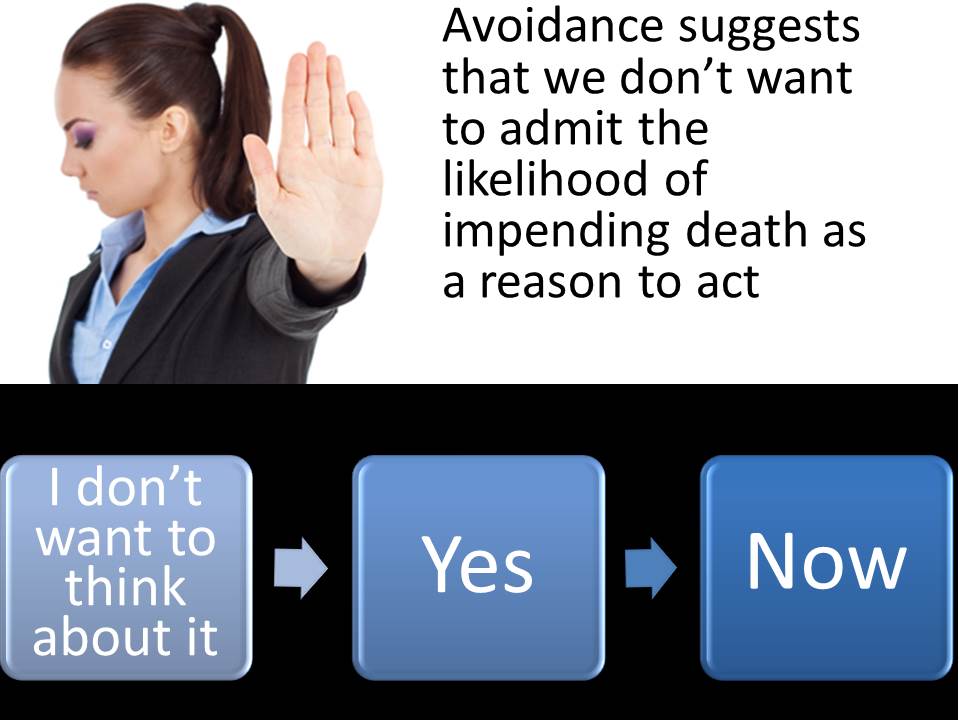
People operate with a clear bias that is consistently confirmed in experiment and practice. We want to move people from “yes” to “now,” but the argument about the risk of immediate death will be largely ineffective. So what do we do?
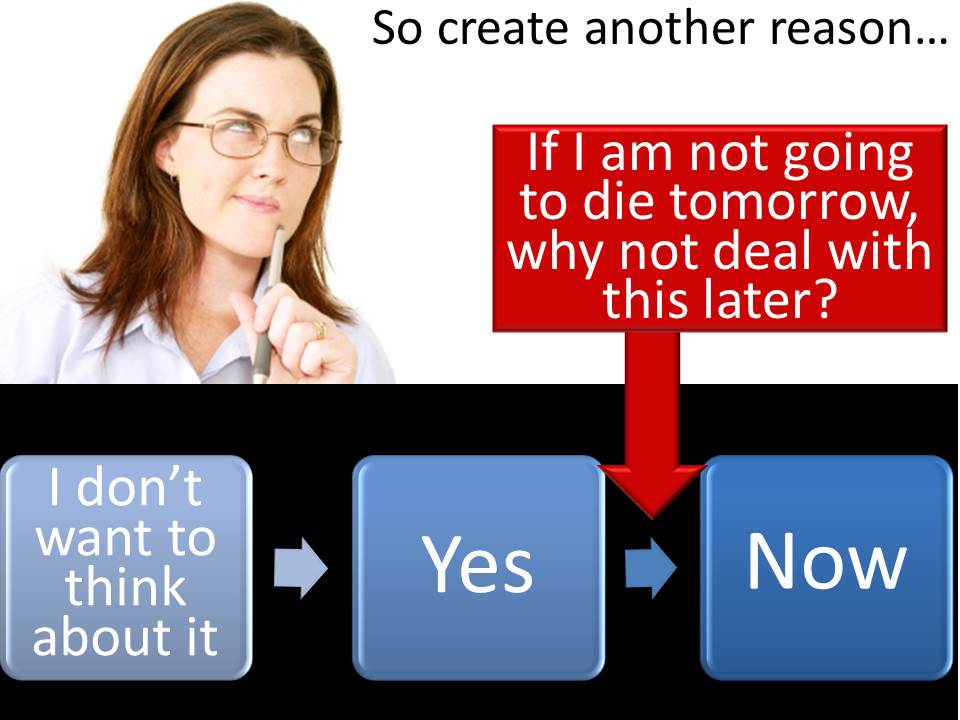
If the argument against delay based upon the risk of immediate mortality is not going to be successful, then we need to create another reason for action. We need to have a response to the question, “If I am not going to die tomorrow, why not deal with this later?” How might we do this?
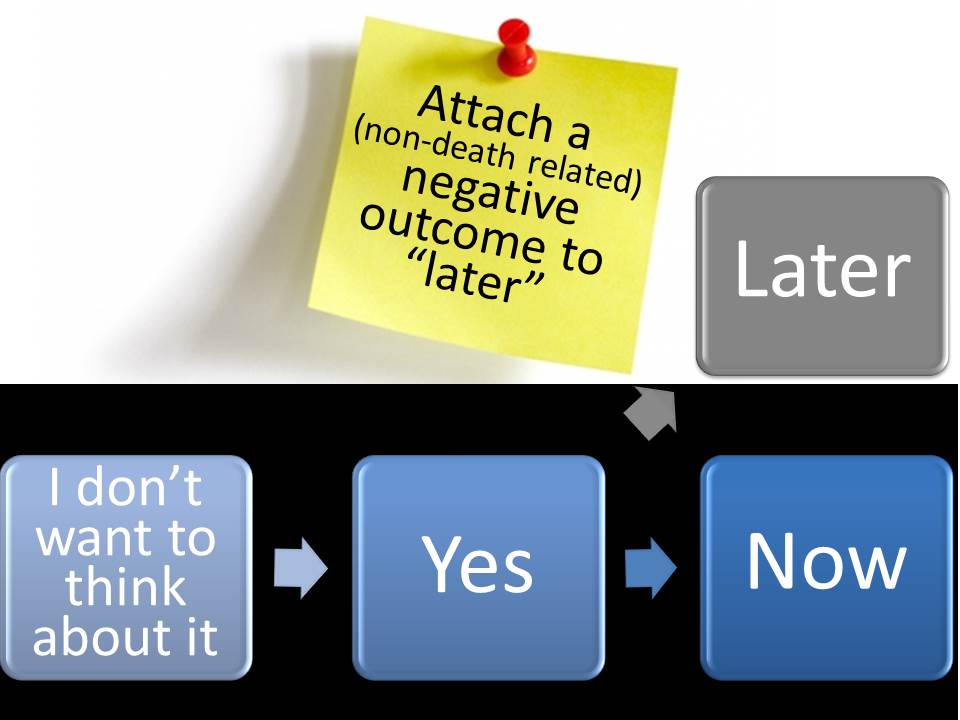
In order to deal with the tendency to choose later rather than now, we must be able to attach a negative outcome to the choice of acting later. In particular, we would like to attach a negative outcome to the choice of acting later that is not related to the risk of immediate mortality (because we know that such arguments will naturally be rejected at both the conscious and subconscious levels). We can do this by either attaching a negative outcome to choosing later, or by attaching a temporary positive outcome to choosing “now,” (which consequently makes the “later” option relatively negative). What are some examples of this?
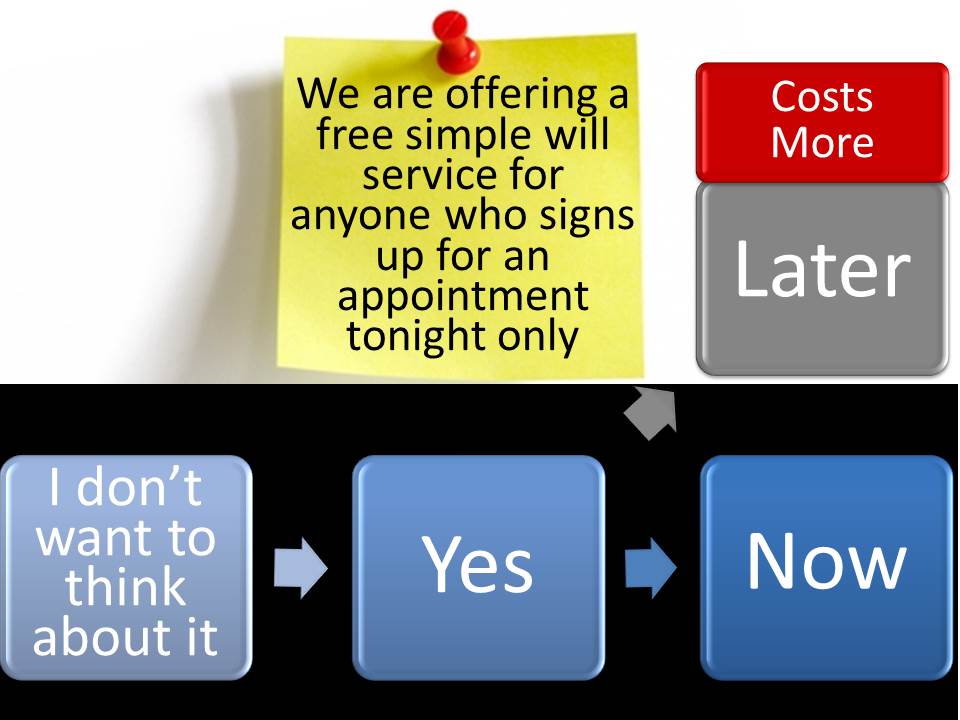
As discussed previously, one method that I used successfully over a number of years was to offer a free simple will service for anyone who signed up for an appointment immediately following the seminar. While the offer of a free simple will was, perhaps, in and of itself attractive, this was not the critical component of the offer. The critical component was that the opportunity was available only for immediate action. The service could not be accessed later. If instead the participants had been offered a free simple will consultation available any time at their convenience, the response rate would have been much lower. The open-ended offer would not address the question of, “Why not do it later?” If there is no difference in opportunities between now and later, prospects will tend to choose later. (This returns us to the situation where the only advantage of engaging in the unpleasant activity now is in the event of unexpected imminent death, which is an occurrence that people naturally discount.)
In this sense, the offer attaches a relatively negative outcome to the “later” choice. The negative outcome to the “later” choice is that will preparation will be more expensive when choosing “later” rather than “now.” This negative result of the “later” choice is easy to accept, because it does not rely upon recognizing the immediate risk of personal mortality.
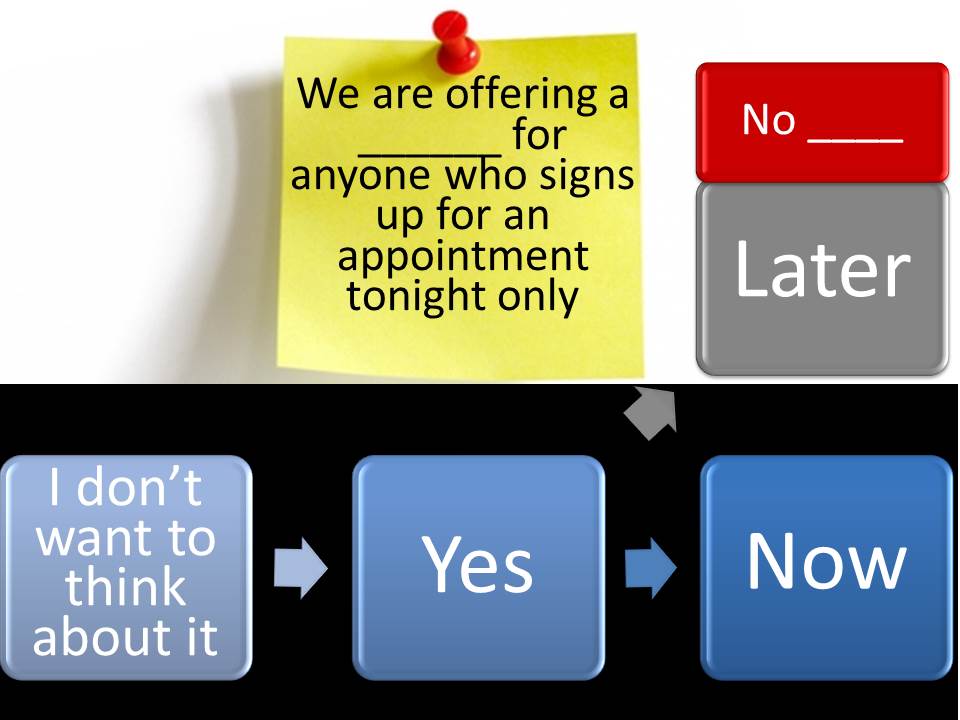
The critical key to the effectiveness of the previous strategy was not just that it provided a free service related to estate planning, but that it attached a negative consequence to postponing the estate planning. In a similar way, if we were to offer any type of benefit or service for an individual who agreed to act immediately, we might expect positive results. The idea is to intentionally attach a (non-death related) positive outcome to acting now that will not apply to acting later. This provides a motivation to act that does not require a conscious acceptance of the probability of immediate death.
The benefit need not be attached to signing documents, but simply attached to signing up for an appointment and arriving. Of course, signing up for an appointment is not the end goal. The goal is to generate a post-death transfer, which requires signing a legally enforceable document. But, signing up for an appointment begins that process. More importantly, that first appointment can then be tied to an additional appointment (ideally a signature appointment) so that postponement means missing an agreed upon appointment. In this way the process takes on an inertial force, with social costs for breaking the process.
Of course, if we attach a benefit to signing up for an appointment and that appointment then does not result in a subsequent meeting to either sign or otherwise advance towards signature of a plan, then the problem of persistent postponement (“later”) will arise again.
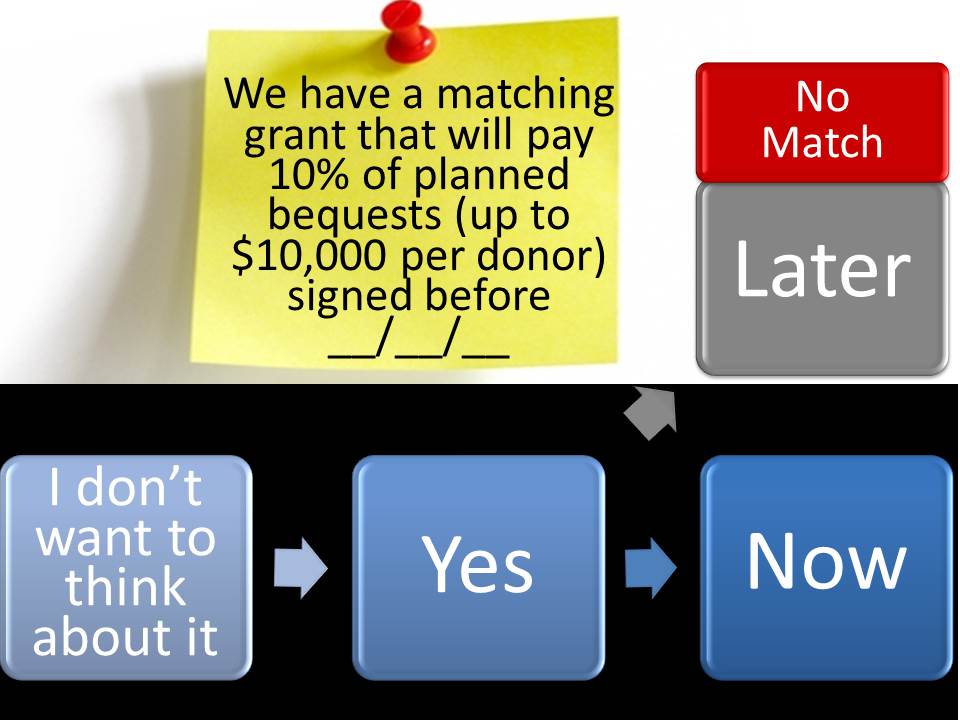
One attractive way to consider attaching a relatively negative outcome to postponement is to create a matching grant. For example, a charity might advertise a matching grant that will pay 10% of planned bequests, perhaps limited to $10,000 per donor, signed before a campaign deadline date. Obtaining the funds for such a matching grant proposal would not necessarily be difficult when working with a donor who was in the process of making a gift of this magnitude anyway. Showing the donor the potential multiplicative impact of the gift when established as a matching fund to encourage charitable bequest planning in others could be compelling.
Certainly, a signed revocable document could be changed. There is no guarantee of the ultimate impact of the matching fund. But, if the donor was going to give the large sum of money in either case, then the risk that some of the signed bequests would ultimately be changed should not be a problem. (Any additional bequest gifts are preferable to no additional bequest gifts.) An explanation of this type of matching approach can be found in Michael Rosen’s book Donor-Centered Planned Gift Marketing.
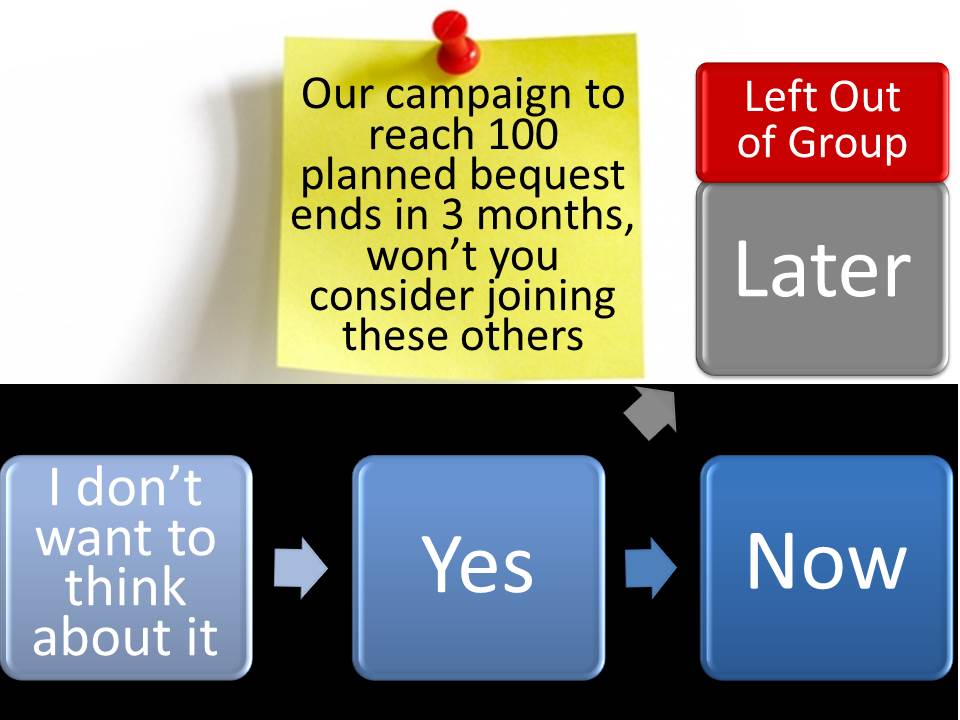
How else might we attach a positive result to acting now, and a negative result to acting later? The idea of creating deadlines and attaching them to fundraising goals is central to most fundraising campaigns. We can use this same methodology to create goals related to reported gift planning. For example, one organization I worked with created a two-year campaign to reach 100 planned legacies. This campaign created a deadline and a goal. It was followed by a celebration dinner honoring those who had participated in the campaign. This presented an opportunity to communicate about the success of the campaign through regular updates in general interest donor publications. Additionally, it created a reason to bring up the topic when visiting with donors for other purposes.
By creating a goal and a deadline, this approach attached a relatively negative consequence to planning later. Planning later meant that the person would not help the organization to reach the goal and would be left out of the group that made the goal happen. Subtly, it may have also suggested that postponing beyond such a long window of opportunity was tantamount to a refusal rather than simply a delay.
Such a campaign-related opportunity could be especially influential for those in leadership such as board members. Such leaders often recognize, or can be made to understand, the importance of their role in setting a high standard to encourage others in supporting the organization. They can participate as a way of influencing others. Further, the argument does not rely upon an acceptance of the risk of immediate personal mortality. Although people may resist recognizing the risk of their own immediate mortality, they are quite rational in recognizing the probabilities for mortality in others, such as those donors whom they can influence through exemplary behavior.
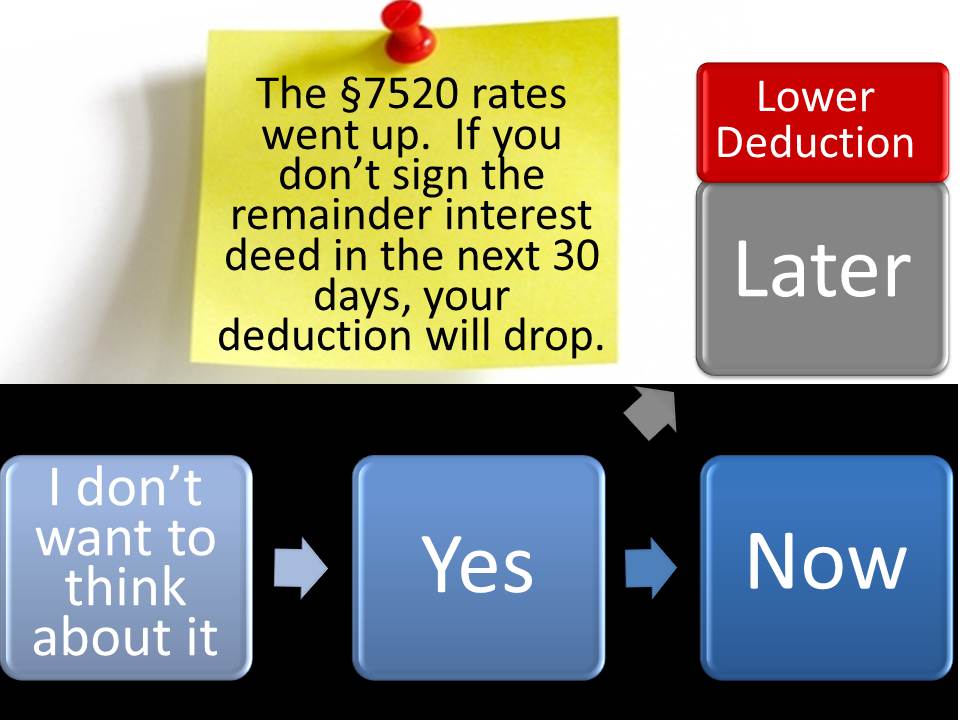
In addition to these self-created deadlines and opportunities, there are similar deadlines and opportunities that may be created from the environment. For example, the section 7520 rates change monthly and these rates influence the deduction available for certain types of planned gifts. For those prospects considering such planned gifts, the change in the 7520 rate might be used to encourage immediate execution of a gift. Typically, the donor can use the 7520 rate from the current or the previous two months. This creates a natural “expiration date” for attractive rates. For example, if the rates were 2.5% for the current month, 2.4% for the previous month, and 2.3% for the month before that, this creates a situation where the low rate of 2.3% will be available only for a few more days.
This expiring rate can be used to create a natural deadline for completing a planned gift by pointing out the penalty for delay (i.e., the lower tax deduction). For example, if a donor is interested in leaving a bequest gift of an interest in a home or farmland and wishes to leave that bequest gift in such a way that generates an immediate tax deduction, the donor would be considering signing a remainder interest deed. The deduction available for signing that deed is greater to the extent that the 7520 rate is lower. Consequently, the sequence of 7520 rates can be presented as a disappearing opportunity with an immediate deadline as a way of motivating the donors to immediate action.
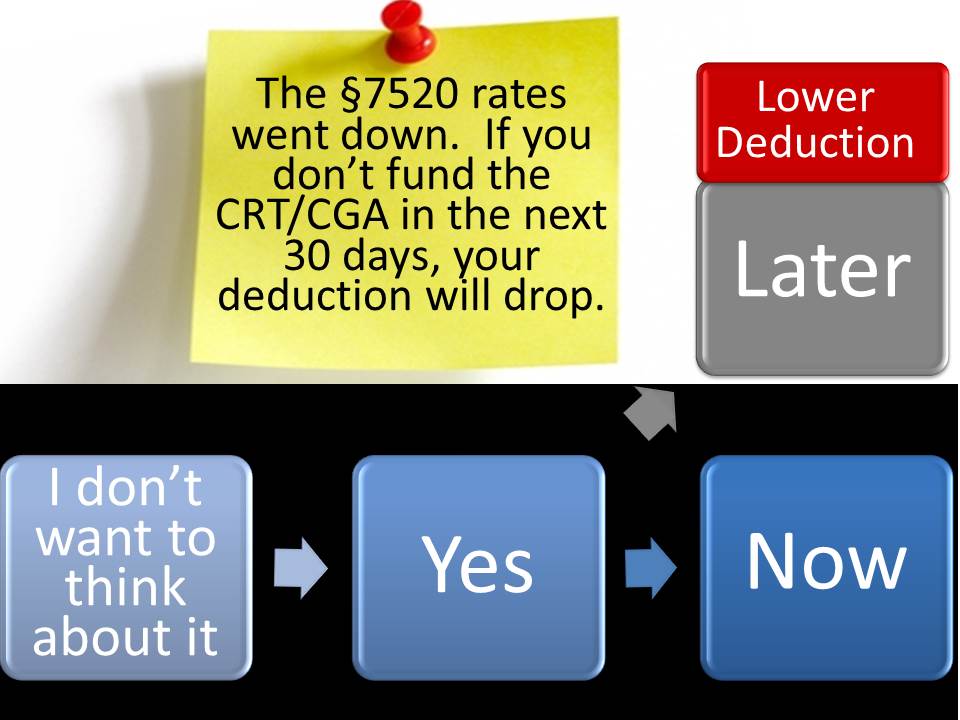
Conversely, other planned gifts result in a higher deduction when the 7520 rates are higher. (For example, a Charitable Remainder Trust is presumed to earn interest at the 7520 rate for the lifetime of the trust. A higher presumed earning rate for a trust paying a fixed annuity, would leave a larger amount for the charity at the expiration of the trust.) In either case, the goal is to emphasize the importance of acting now because of the negative outcome of acting later (such as a lower deduction). Ultimately, the goal is simply to motivate immediate action.
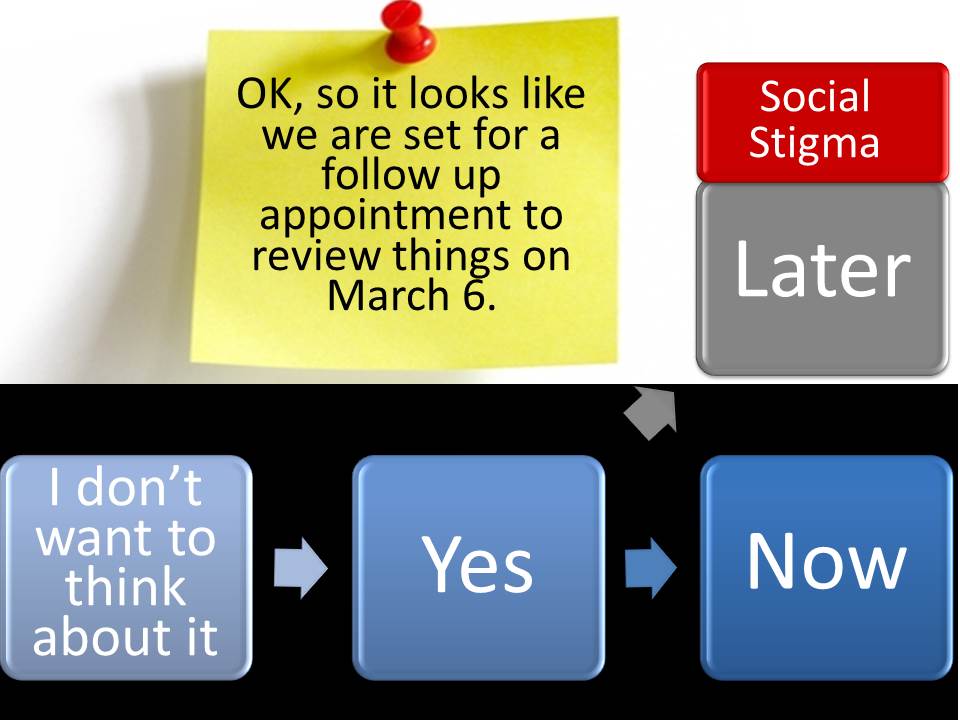
Attaching a negative result to postponement may be as simple as setting an appointment. If a prospect agrees to meet with a fundraiser to review completed documents at a specific date, then failing to complete those documents means that he or she will either have to cancel the appointment or keep the appointment and admit that the intention to complete the documents was not achieved. Either of these options has a limited amount of social stigma attached to it. Consequently, simply establishing an appointment date with expected completion of a goal attaches a negative outcome to delaying planning beyond the appointment date.
Essentially, this creates a deadline. To the extent that a fundraiser can be successful in establishing additional appointment dates during each meeting, he or she can attach deadlines (with minor social consequences) for each step in the estate planning process that ultimately leads to a signed enforceable document.
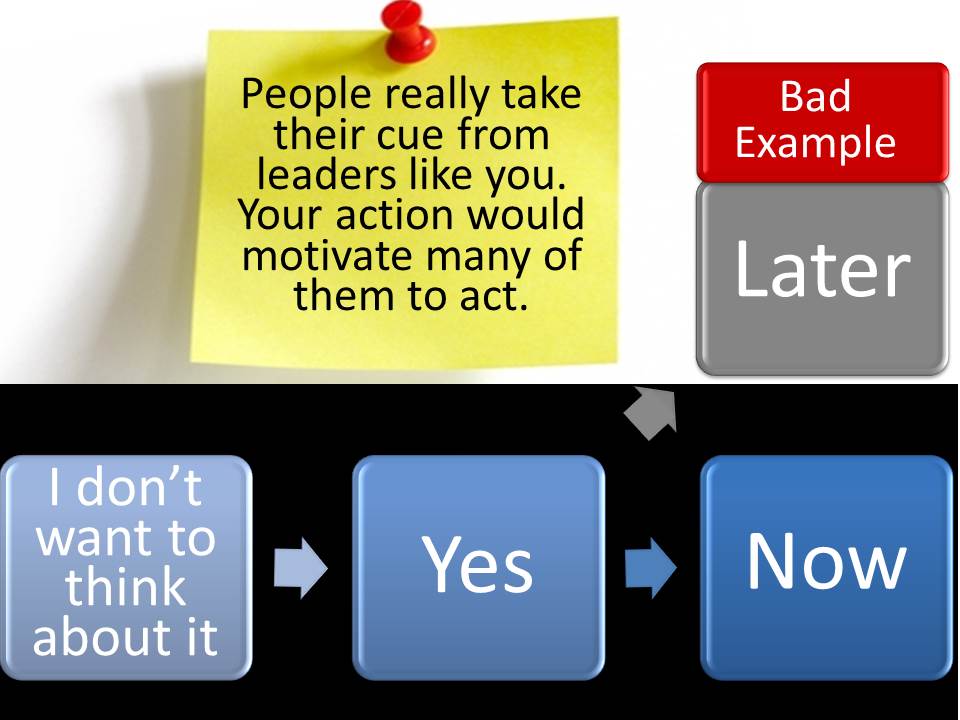
If we attach a campaign deadline to making a bequest commitment, this can provide a special opportunity for those in organizational leadership (such as members of the Board of Directors) to commit to engaging in bequest planning, simply as a way of influencing others to engage in the activity. Conversely, if the leader chooses not to participate in the campaign, it may be viewed as setting a bad example, thus attaching a negative consequence to the decision to delay engaging in the planning. Again, what is important is that postponing planning beyond a specific date creates negative social stigma, which serves as a negative outcome unrelated to one’s personal risk of immediate mortality.
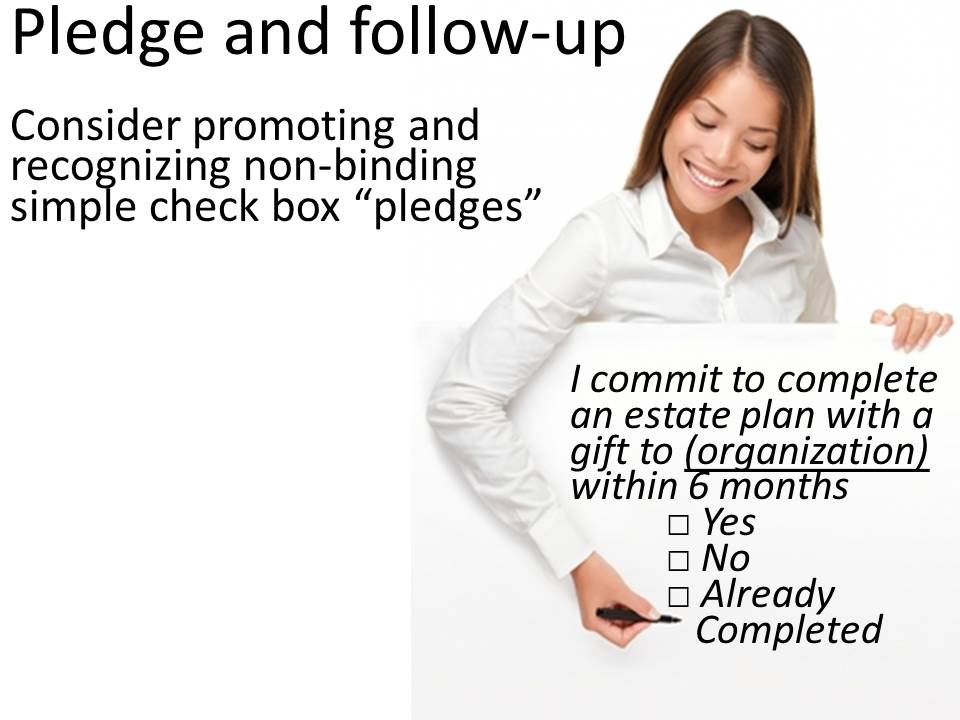
Such social stigma can be enhanced through the use of simple non-binding pledges to act. Pledges can be successful for a couple of reasons. First, the pledges create a scenario where a person must physically act in order to report an intention to postpone the planning. Recall the results discussed earlier showing the massive behavioral differences in organ donation depending upon whether the system was structured in an “opt-in” or “opt-out” framework. We take advantage of this understanding by using the pledge checkbox to attach a positive action to saying no (or even “later”) in response to a request to complete a charitable estate plan.
Of course, unlike the organ donation context, simply checking a box has no legal consequence. But the non-binding pledge is the critical first step in the pledge and follow-up process. Once the prospect has made a commitment to complete the charitable bequest plan prior to a deadline (in this case six months later), postponing planning beyond that deadline is attached with the negative social consequences of failing to fulfill a personal commitment. The attention paid to this negative consequence can be enhanced by subsequent follow-up.
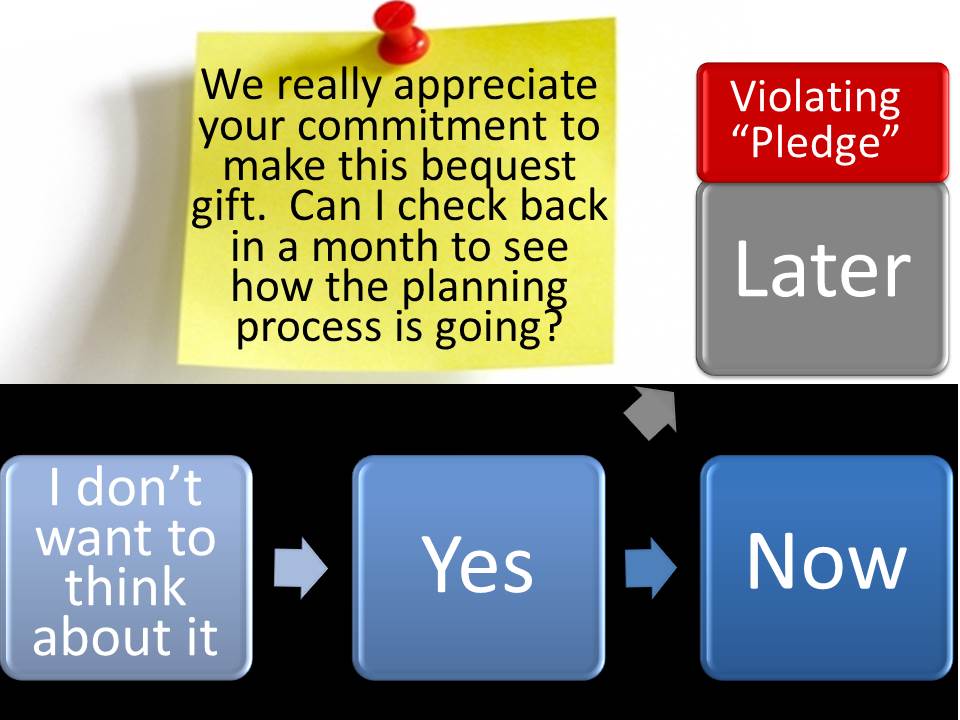
For example, following such a commitment, the prospective donor could be contacted to inquire about the status of his or her planning. In a very pleasant way, the fundraiser could
Thank the prospective bequest donor for his or her commitment.
Emphasize the importance of that commitment, both for the organization and potentially for influencing the action of other prospective donors
Simultaneously check on the progress of the planning process, thus attaching a mildly negative social consequence of having to admit a lack of success on the intended action.
Such a contact would be difficult, or perhaps even inappropriate, in the normal setting. But, because of the previous pledge of planned activity, the reminder contact becomes appropriate and acceptable. Thus, rather than creating a commitment to immediately complete a process, the pledge creates a commitment that is initially relatively agreeable because of the distant completion date.
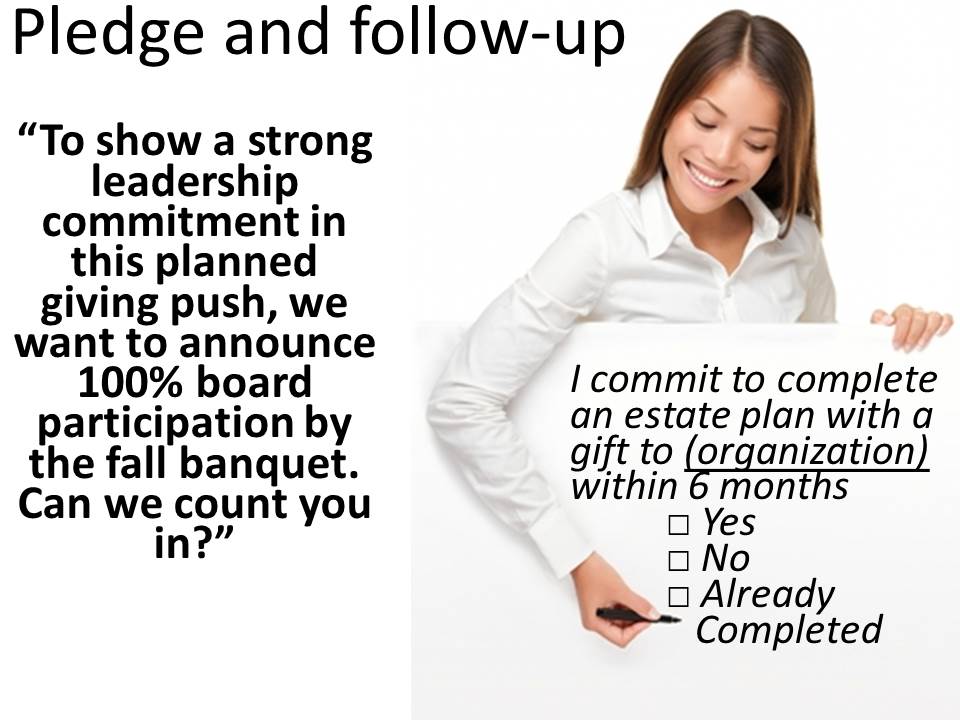
Such commitments can be enhanced when they are presented as a component of organizational leadership, especially when they are presented as a way to create an example that would be followed by others. Thus, the reason for requesting the commitment could be to demonstrate the importance of the behavior to other supporters. As mentioned before, this is helpful because it is a reason to engage in planning that has nothing to do with personal risk of immediate mortality. Thus we might combine a commitment card with an ask such as “to show a strong leadership commitment in this planned giving push we want to announce 100% board participation by the fall banquet. Can we count you in?” This creates a deadline, a motivation, and social benefits attached to the commitment.
Of course, the simple checkbox commitment is not the end of the story, but it creates the opportunity to engage in regular follow-up to ensure that the initial commitment is completed.
As mentioned before, the power of defaults in death related decision-making is particularly strong.
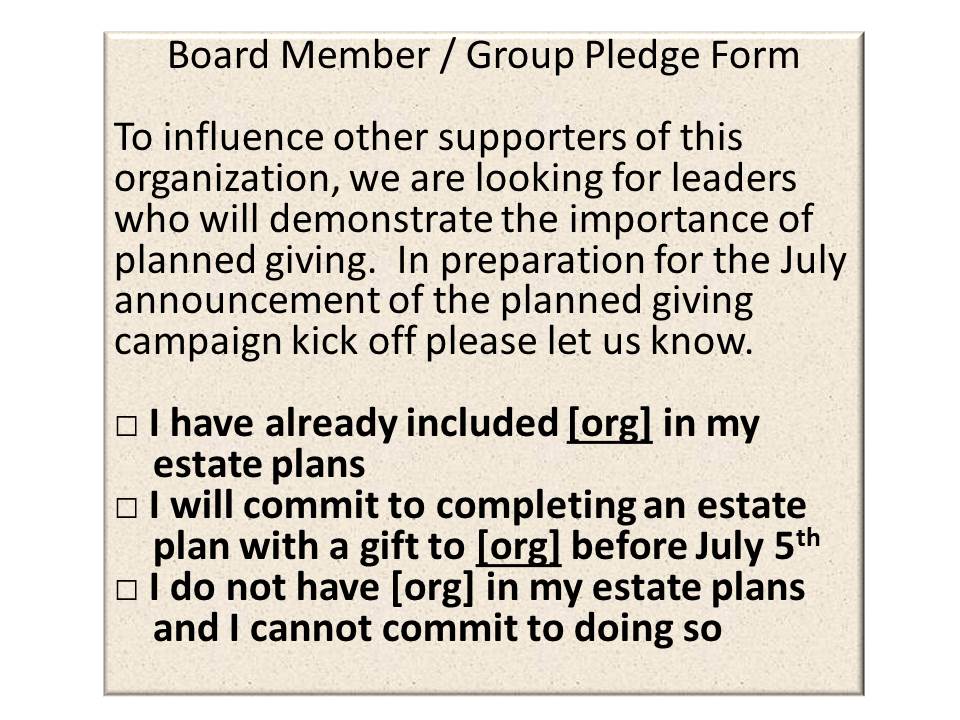
The use of a pledge form which has options for “yes,” “no,” and “already completed” means that inaction is not an appropriate response. Supporters, especially those in leadership, often do not want to intentionally state that they have no interest in supporting the organization through a bequest plan. Such a negative statement is undesirable and may conflict with the way that they perceive themselves. Even though engaging in estate planning may be aversive, if the aversive act is sufficiently far into the future then the it is much more attractive. In other words, the checkbox option of agreeing to complete a charitable estate plan by some date substantially in the future feels like the desirable “later” response, but the difference is that this “later” response is not generically later (leading to eternal delays), but rather is a specific “later” response with a deadline.
It is the commitment to a deadline that then allows the fundraiser to engage in a series of follow-up communications. The follow-up contacts become more powerful, because people have a natural desire to act consistently with their stated commitments.
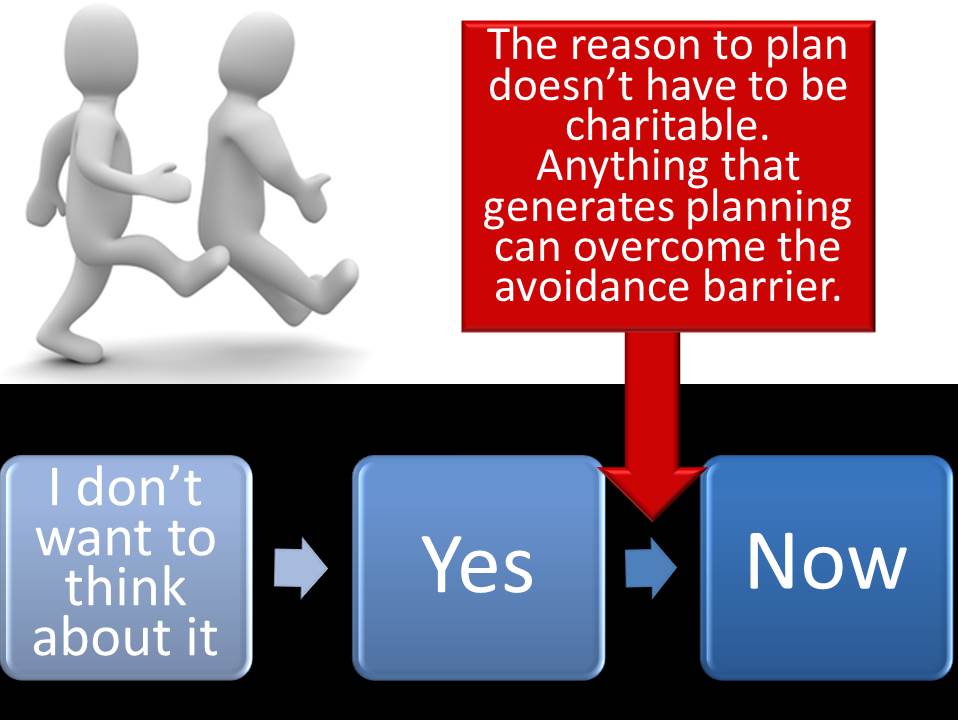
Although the barrier from of moving from “yes” to “now” is substantial, it does not have to be overcome by strictly charitable motivations. In fact, it is probably most often the case that this barrier is overcome as the result of factors completely unrelated to charitable intent. Anything that generates planning activity will, by itself, overcome the avoidance barrier. If we have a prospect with an underlying interest in leaving a bequest gift, we can use any type of planning motivation to get them to engage in the planning process. What matters is not whether the motivation relates to the charity, but simply whether or not it causes the planning activity.
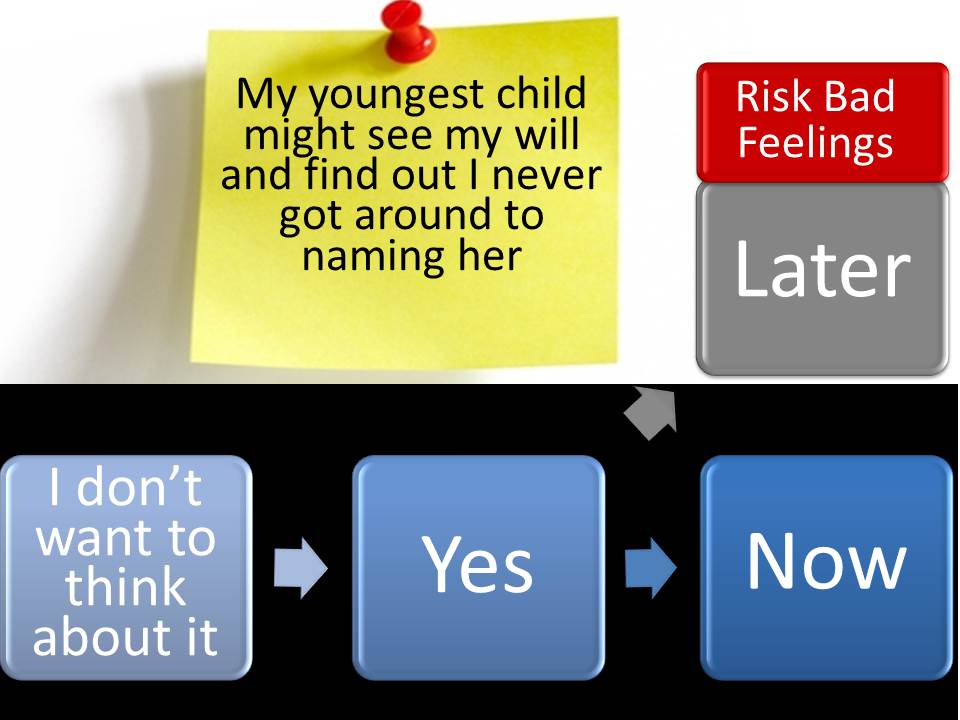
For example, a person might desire to update his or her estate plan because a family member is not named in the estate plan, due to the age of the document. Although it may be of no particular legal consequence, the person might believe that the youngest child who was not named in the document might have bad feelings if he or she learned of this. Postponing updating the will thus has a potential negative consequence associated with it that is unrelated to the risk of death. (Here the risk is that the unnamed child might learn the details and resent that the older siblings were named and that he or she was not.)
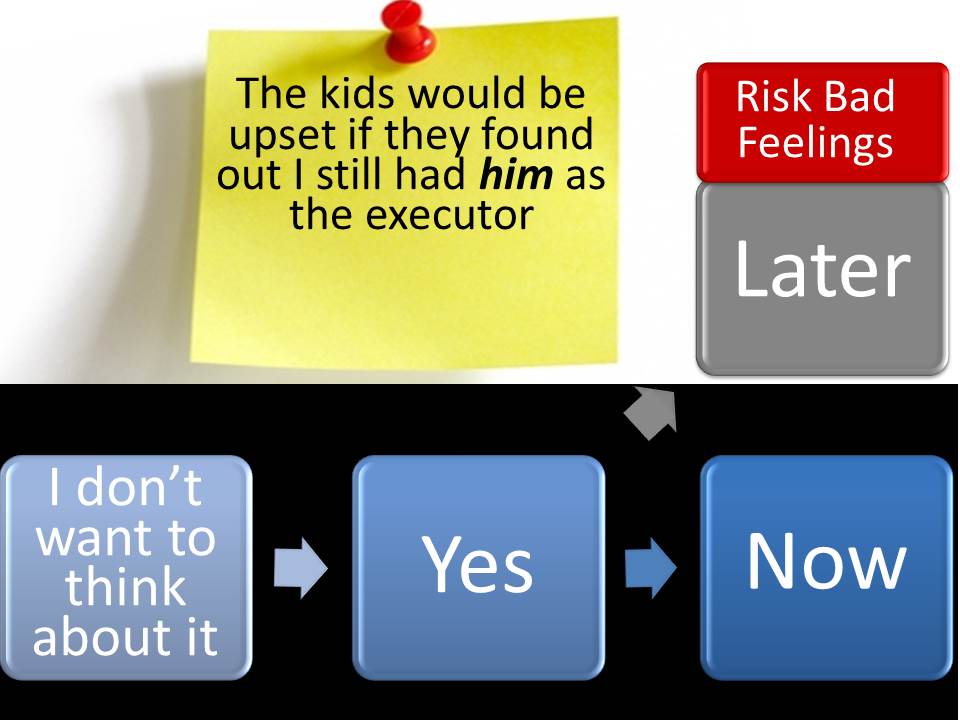
Similarly, a client might risk negative feelings if the children found out that someone else was named as executor. This discovery could occur even prior to death, and so doesn’t necessarily have to be attached to the risk of immediate mortality. Again here, people are psychologically more willing to accept the risk that the document might be inadvertently read by another person than that they might experience near-term death.
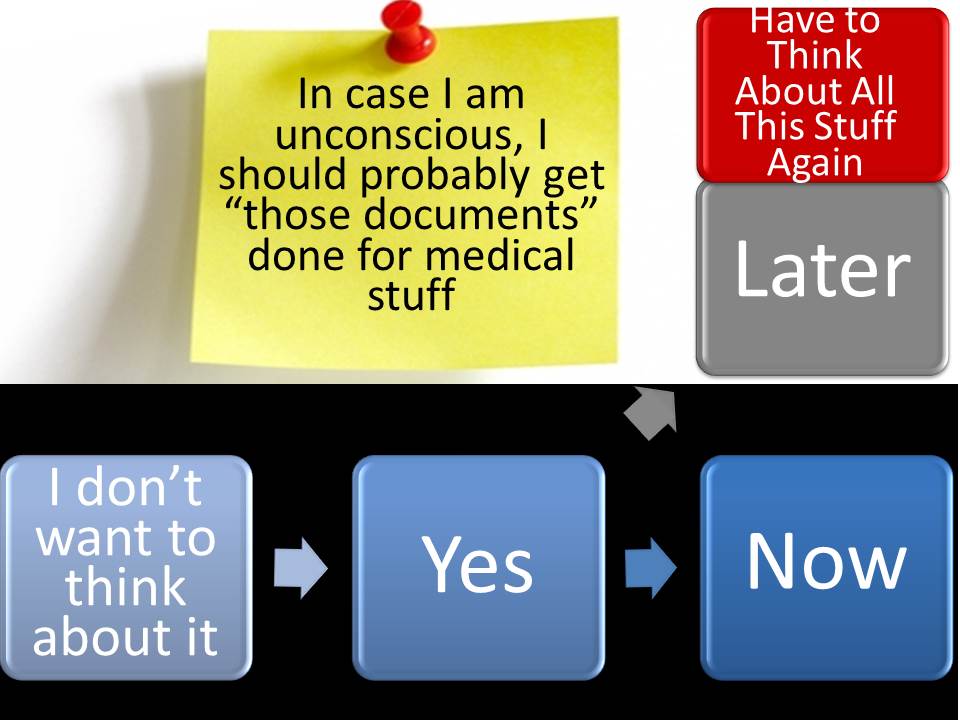
This motivation to plan for noncharitable purposes could also be generated by the need to complete other death-related planning documents for medical purposes. For example, if a person preparing for surgery is encouraged to complete a living will or medical power of attorney, he or she might be convinced to engage in updating all estate planning documents simply as a way to get through all of the unpleasant death-related planning at once. In this way, the aversive nature of the documents is used to justify their completion all at one time. In other words, if we are going to have to complete some death-related documents (which is unpleasant), we might as well complete them all, so that we don’t have to think about it again for a long time.
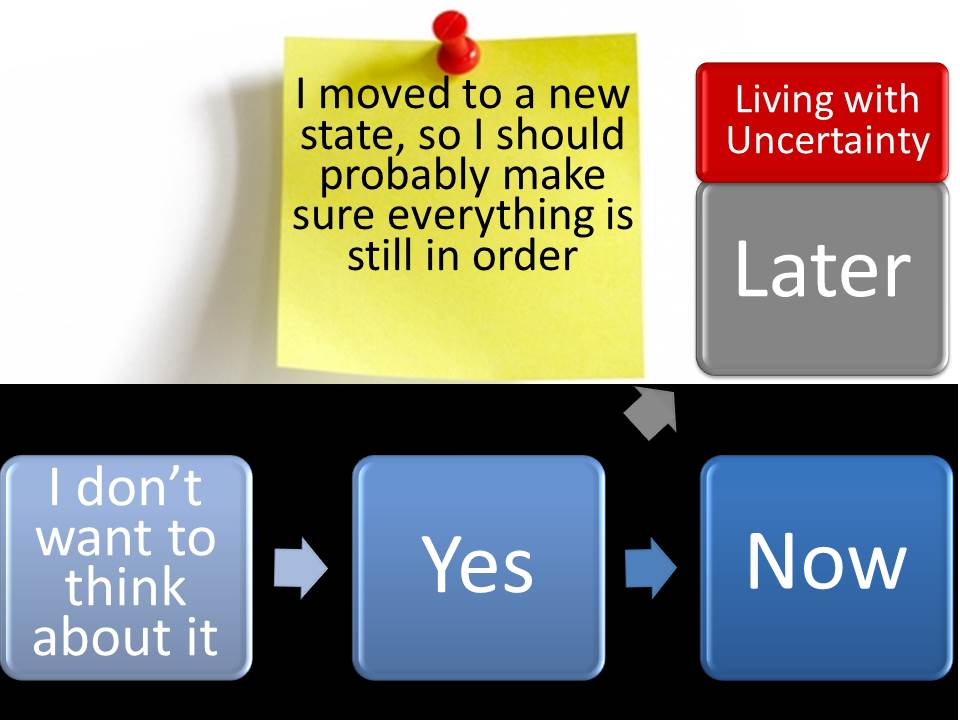
Other factors can motivate engaging in estate planning, such as simply moving to a new state. In that case, if I postpone planning, then I have to live with the uncertainty of not knowing if my previous documents would be treated the same in my new state.
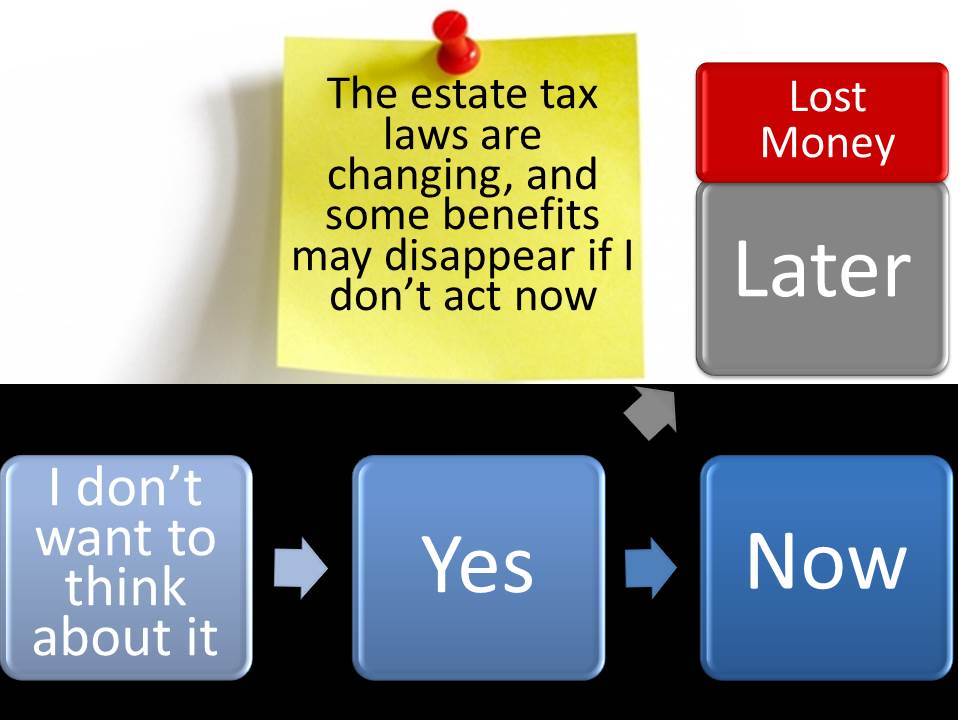
Similarly, as the tax laws change, there may be scenarios where some estate tax benefits could disappear if no action was taken. This appeared to be the case at the end of 2012 when the estate tax exemption was scheduled to drop substantially, thus encouraging gifting that would take advantage of the higher exemption amount prior to its expiration.
It’s also useful to consider that not all planned giving options work against the natural tendency to avoid recognition of the potential for immediate personal mortality. Those options which provide a lifetime income to the donor, either through a charitable gift annuity or a charitable remainder trust, may be particularly attractive to the extent that prospects perceive that they are going to live a long time. In that sense, these options are much more attractive psychologically because they are not necessarily viewed as death planning documents.