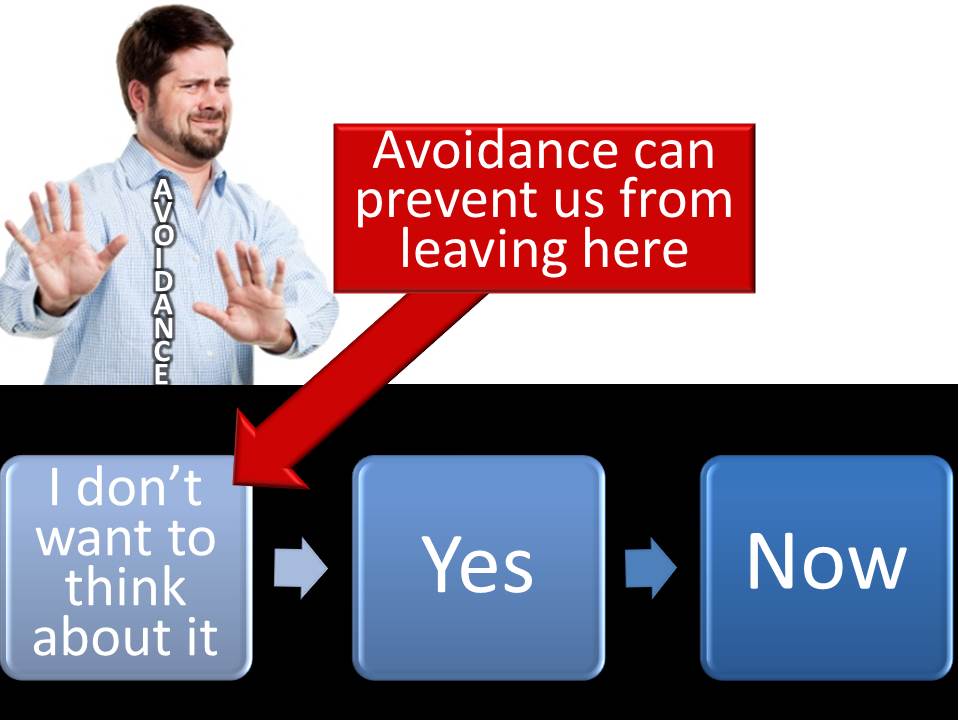
To this point we have focused on dealing with the first-stage defense of avoidance. Avoidance initially can prevent prospects from leaving the “I don’t want to think about it” stage.
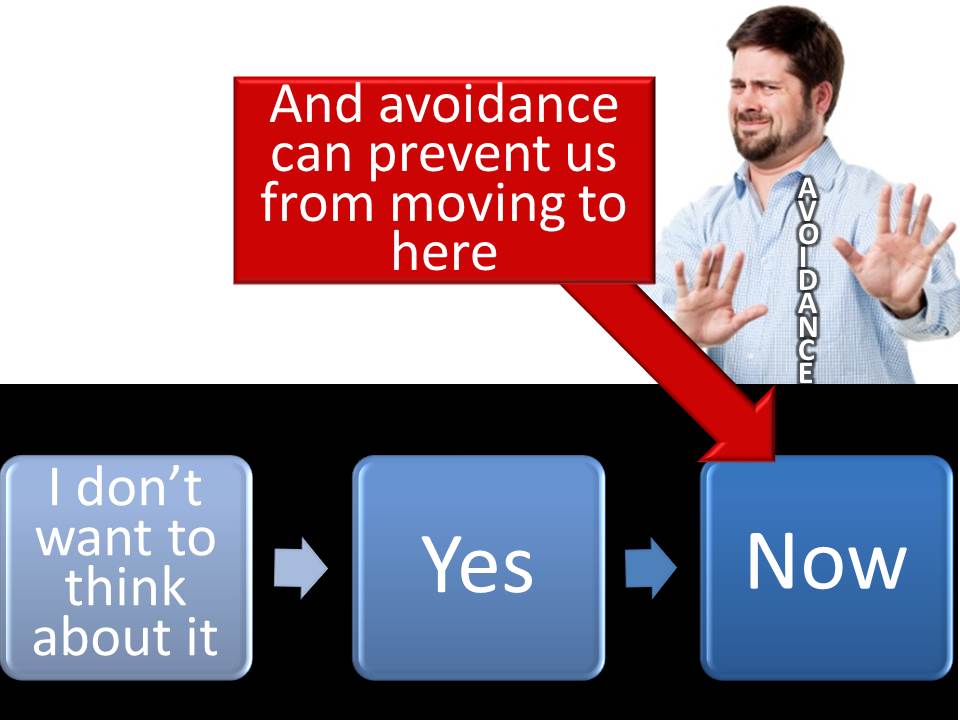
Additionally, avoidance can prevent prospects from moving from the “yes” stage to the “now” stage. Instead, avoidance suggests that the preferable response is not “now” but rather “later.”
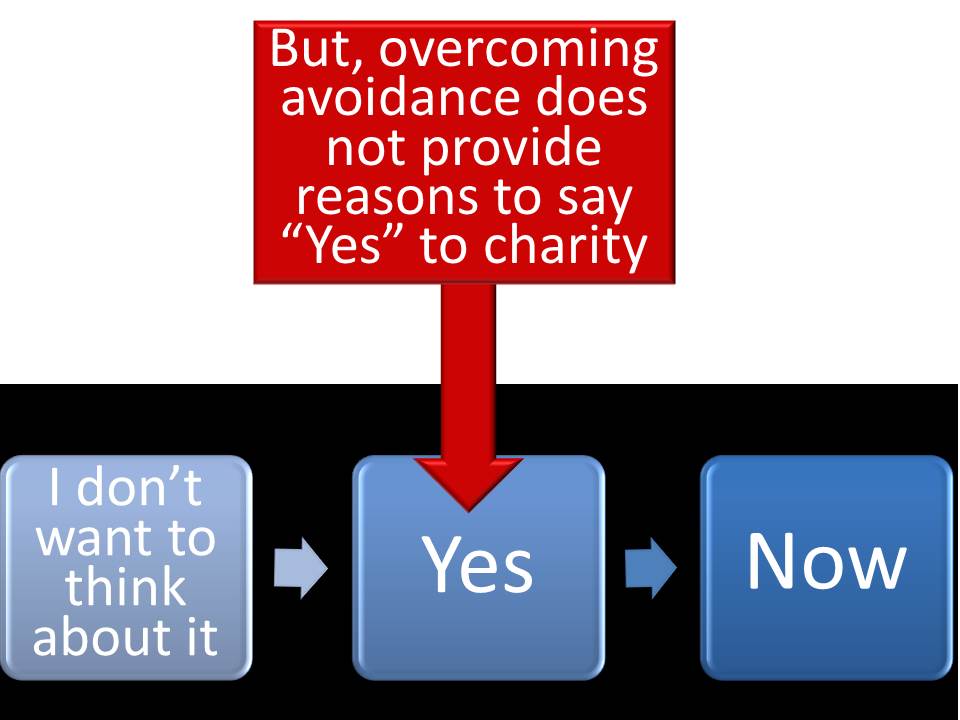
The strategies we’ve examined so far have looked at how to overcome these two avoidance barriers. Avoidance can keep prospects from leaving the “I don’t want to think about it” stage and prevent prospects from moving from the “yes” stage to the “now” stage. But, overcoming the avoidance barrier does not provide any motivation to say “yes” to charity. Overcoming avoidance can get people to think about the topic, and it can get them to act upon their desires. But, overcoming avoidance does nothing to encourage a person to have charitable bequest desires.
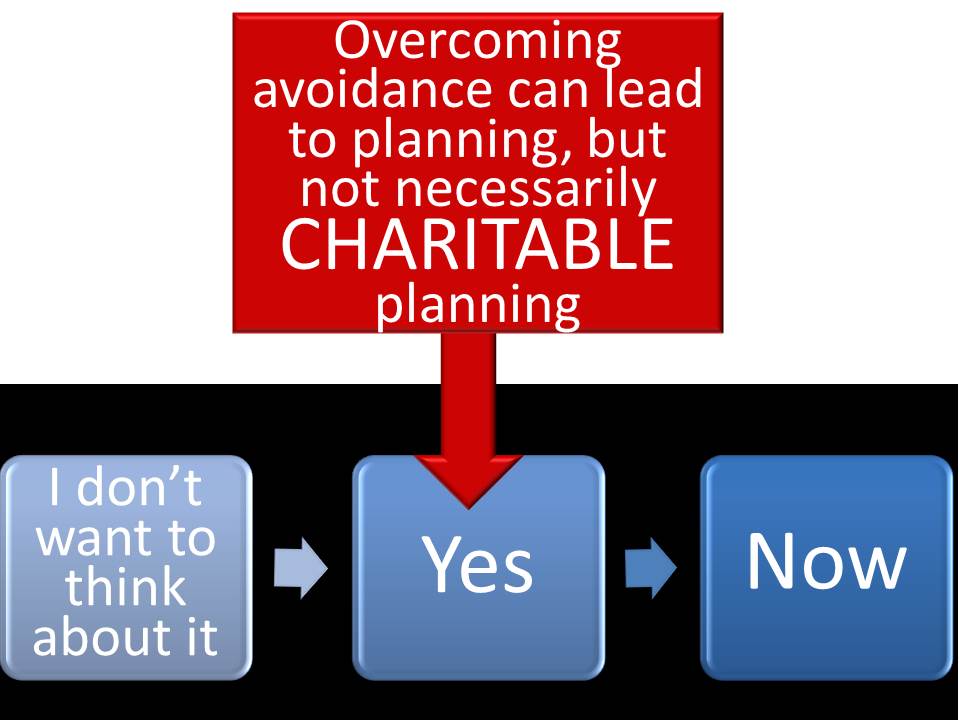
Overcoming avoidance can clearly can lead to estate planning. But it does not necessarily encourage charitable planning, except to the extent that prospects have pre-existing charitable bequest desires. Can we do more than that? Can marketing go beyond simply encouraging planning and actually encourage charitable planning? Can we present charitable options that are motivating to prospects beyond their generic interest in the charity itself?
Some might suggest that the answer is “no.” Perhaps the only goal in charitable bequest marketing is to motivate those with pre-existing charitable intent to complete plans. This is certainly a reasonable idea. If we could wave a magic wand that compelled all of the donors to a particular organization to complete their estate plans, that by itself would dramatically increase the ultimate bequest dollars transferred to the charity. It is clearly an important goal (and it could be the only goal). But even more can be achieved if we move beyond simply getting everybody planned and instead consider how to increase charitable desires, perhaps even creating new charitable products that are inherently attractive to significant segments of donors.
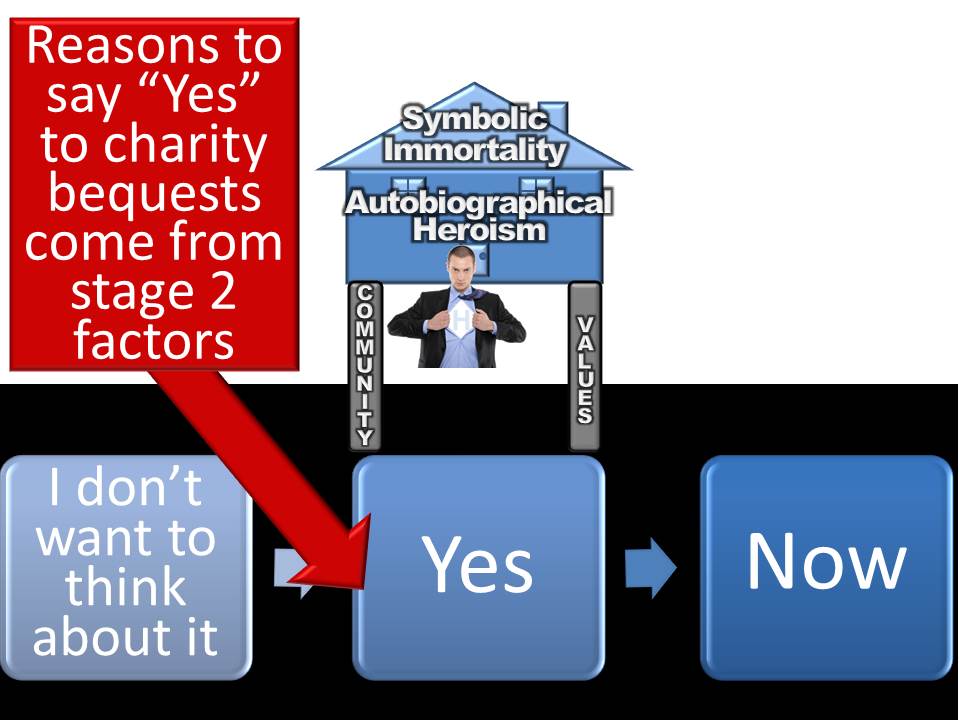
So where do we find these motivations to say “yes” to charity in a bequest context? These motivations come, not from the first-stage avoidance defense, but from the second-stage factors. Avoidance is something to be managed, something to be overcome. But avoidance is not motivational. What motivates the bequest gift (in the context of death-related decisions) are these second-stage factors of symbolic immortality and autobiographical heroism based upon one’s community and community values.
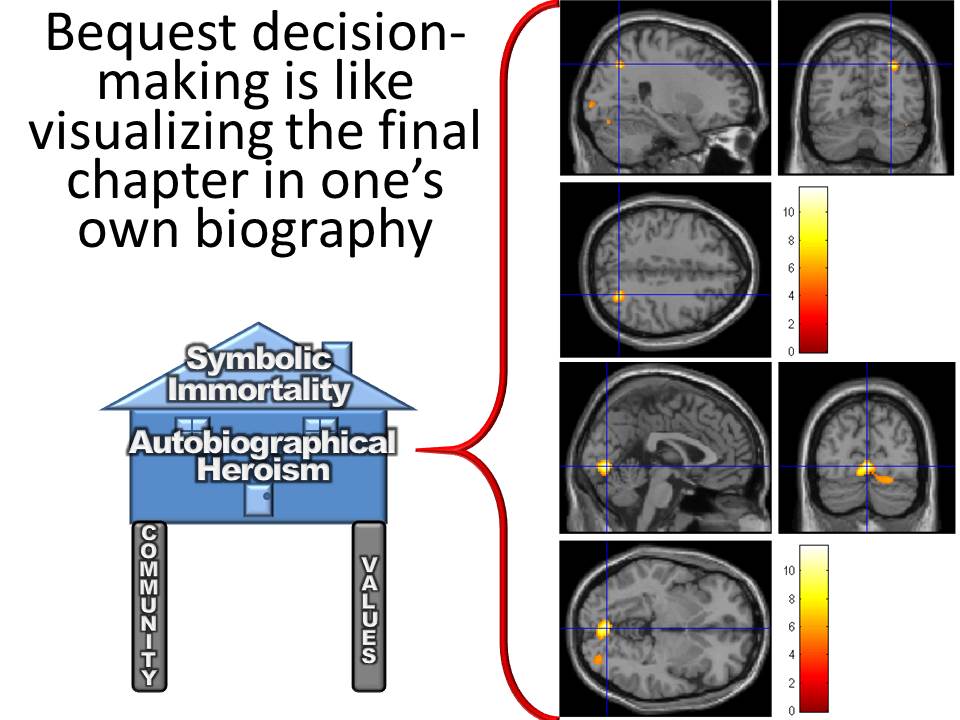
What do we know about these motivational factors? We know from the neuroimaging results that bequest decision-making could be analogous to visualizing the final chapter of one’s own biography.
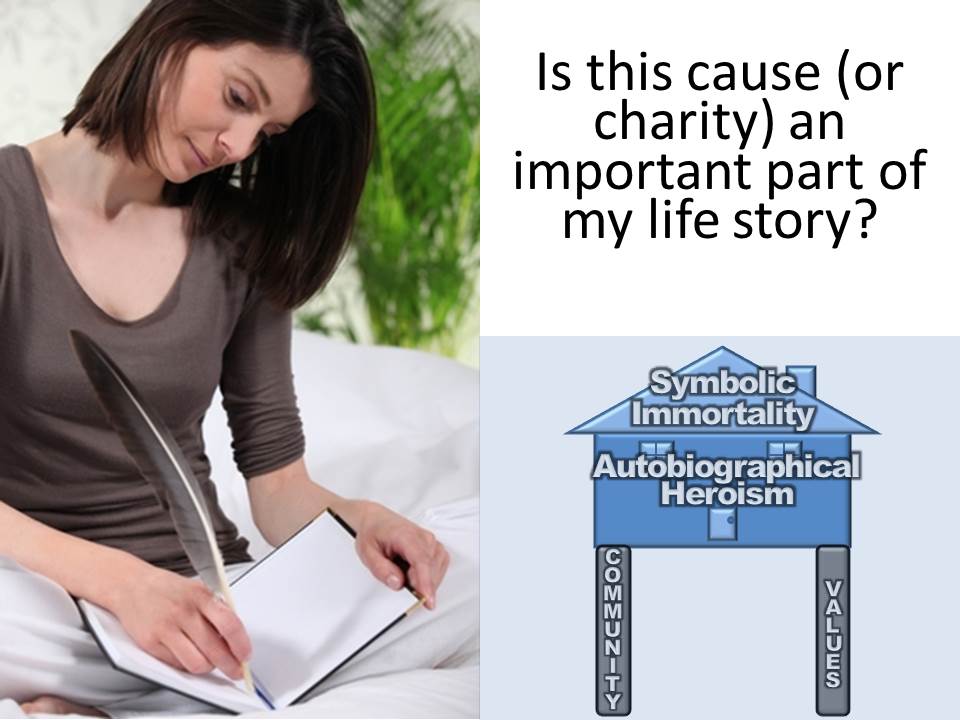
This result suggests that a key question in considering whether to include a particular charity will relate to the prospect’s own autobiography. In other words the prospect asks, “Is this cause or this charity an important part of my life story?” If the cause or the charity is not an important part of the prospect’s life story then it doesn’t belong in the final chapter of his or her autobiography.
Given the importance of connections with prospects’ life stories in motivating a charitable bequest, what can we do to emphasize these connections? Obviously, different options will be available to different kinds of charities, and the best will depend upon the creativity of the individual organization’s fundraisers. However, let’s look at a few examples that might help to generate some creative ideas.
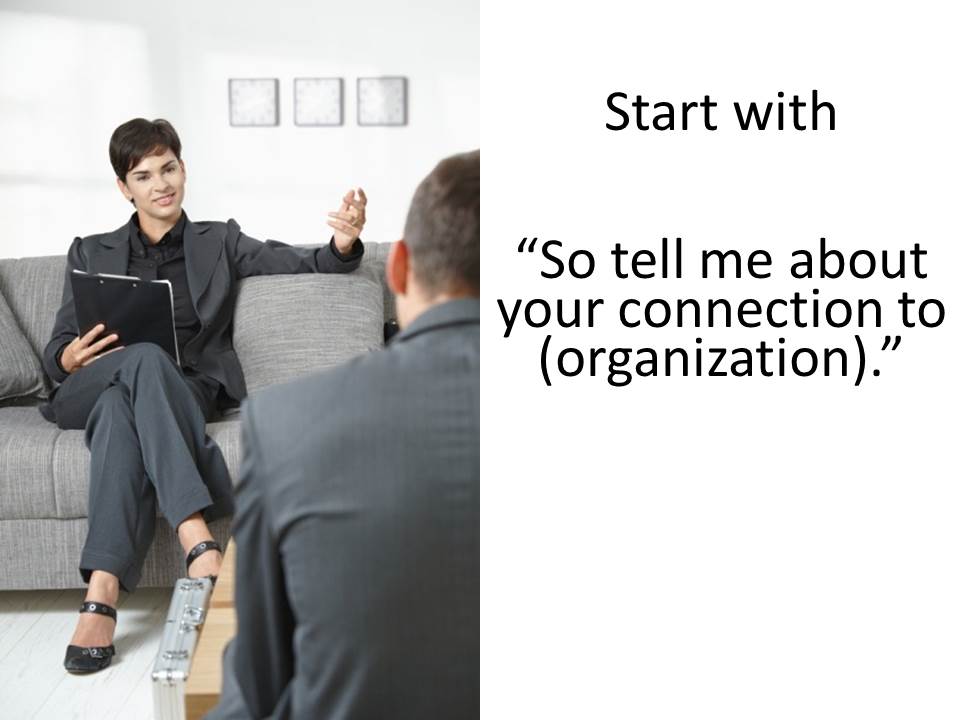
When speaking with donors, we want to begin with statements or questions that encourage them to think about their life story connections with the organization or the cause.

Although we may ultimately get into complex planning techniques including a wide range of tax benefits, this is unlikely to be the best starting point for a conversation. The bequest decision-making processes appear to differentially engage autobiographical processes not mathematical processes. This means that the decision to benefit a charity will relate to the prospect’s own visualized autobiography. The technicalities of the plan come only after the decision has been made to benefit the charity in an estate plan. Thus, we start by emphasizing autobiographical connections, “So tell me about your connection to the organization,” and not “I’ve got some great ways to get you some huge tax deductions.” This doesn’t mean that taxation-related topics will not ultimately be of interest, but it means that these are not typically going to be the factors that determine the desire to leave a charitable bequest gift.
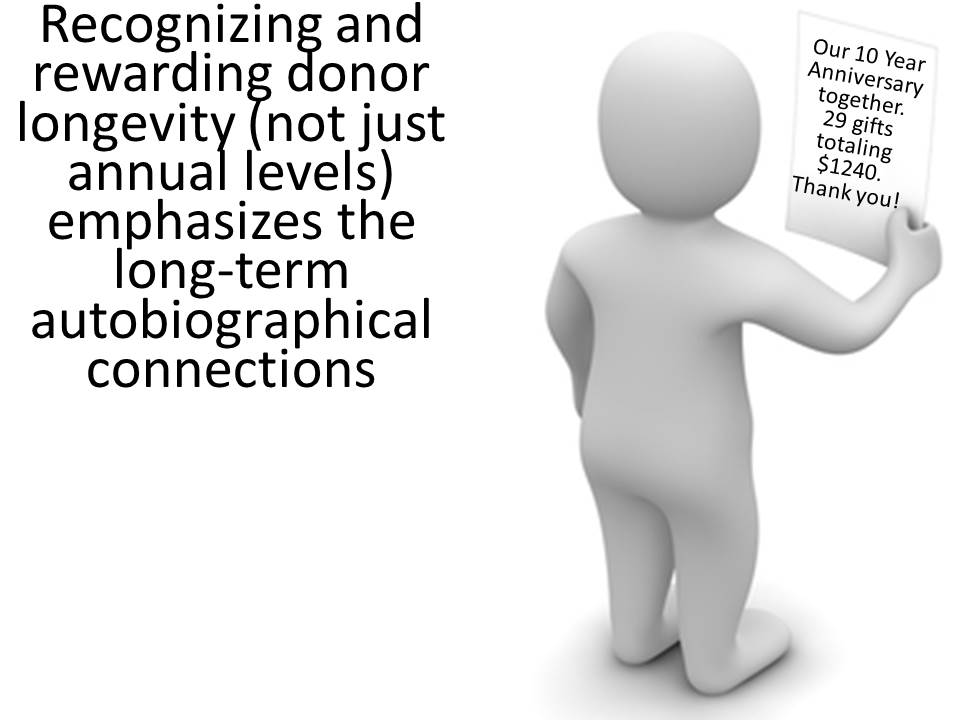
Understanding donor motivations related to autobiography also suggests how we might want to recognize our donors. For current giving purposes, it is a common and appropriate practice to recognize donors for their annual giving level. However, a different emphasis may be appropriate to encourage bequest giving.
Recognizing donor longevity (rather than the previous year total amount) emphasizes the long-term autobiographical connections of the donor with the organization. A longevity recognition could be for the number of years, in total, in which a donor has made a gift of any level to the organization. The years not need not necessarily even be consecutive, because the point is to emphasize the “life story” connection with the donor. Recognizing donors for having given for 5 years, 10 years, 15 years, or more, presents clear evidence of the autobiographical connections between the donor and the charity. The recognition helps to solidify that the donor’s identity and life story are defined, in part, by his or her long-term commitment to the organization. In this context, it doesn’t matter if those gifts were $10 gifts or $10,000 gifts. What matters is consistency in support over a long period of time, which makes the charity part of the donor’s life story.

Alumni magazines for universities that dwell on “the good old days” can be particularly useful and effective at emphasizing the autobiographical or “life story” connections between donors and the organization. While these may not provide an immediate appeal for writing a current gift check, they build the life story connections that are essential when decisions are made regarding bequest giving. The presence of nostalgia may be a critical motivating factor in one’s attachment to the charity, especially given what we know about the visualized autobiographical processes involved in charitable bequest decision-making.
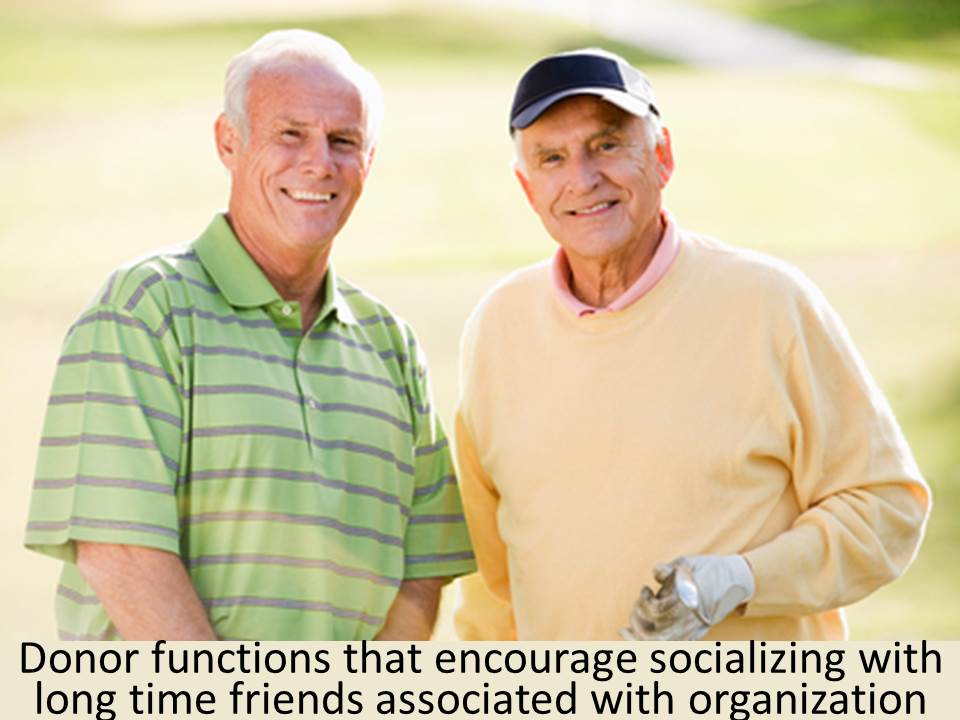
Similarly, donor functions that encourage socializing with friends who are also associated with the organization emphasize the autobiographical connections between the donor and the organization. To the extent that one’s social circle (community) is integrated with the charity, then bequest gifts that support that community and social circle will be particularly attractive. As discussed previously, in the presence of death reminders (as in estate planning), interest in supporting one’s community and community values increases. To the extent that a donor participates in a community which has the shared values of supporting a particular charitable cause, the likelihood for charitable bequest gifts should increase.
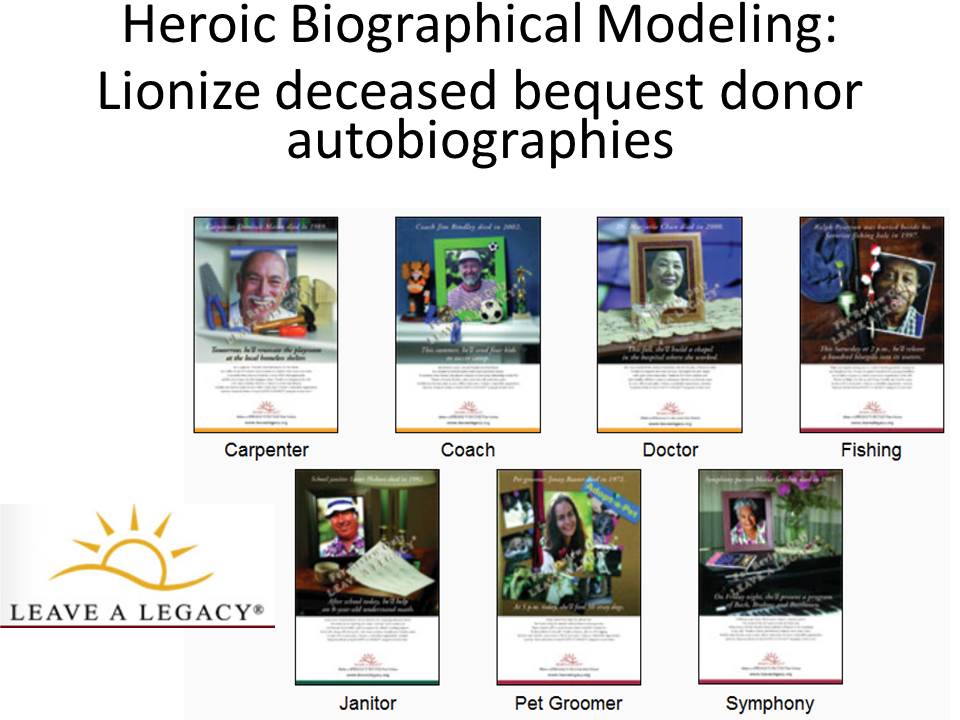
Recognizing that donors engage in this decision-making process using visualized autobiography suggests the potential power of other donor autobiographies in motivating action. Of course, we don’t have to speculate on this, as the previously discussed experimental results strongly confirmed the particular power of donor biographical stories in influencing intentions to leave a charitable bequest.
Offering donors the opportunity to leave gifts with permanence can increase the motivation to leave bequest gifts.
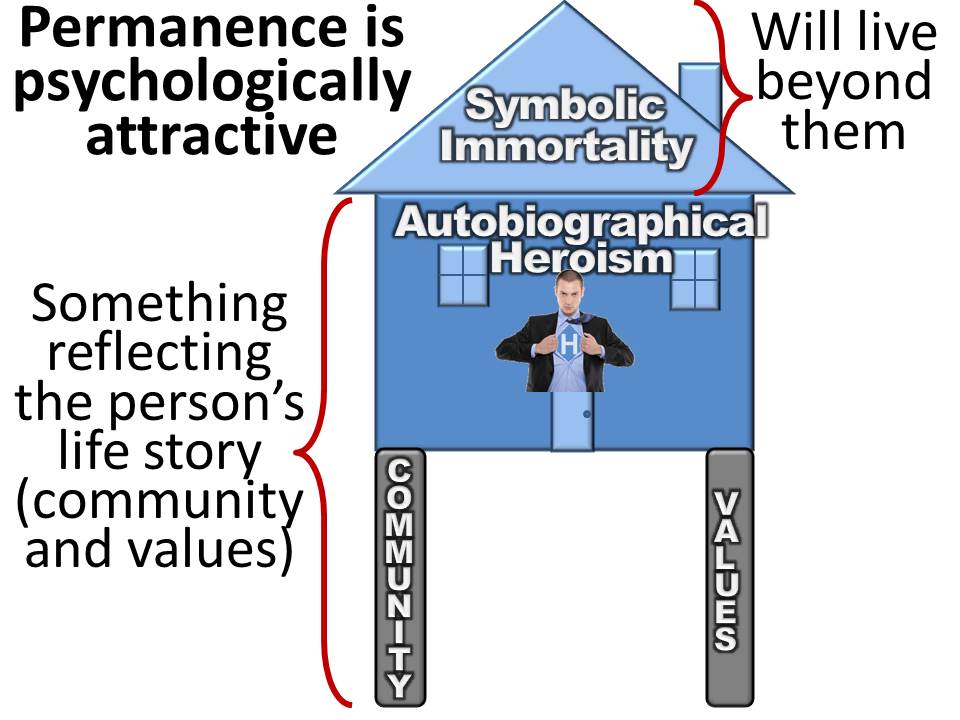
Permanence is psychologically attractive, given an underlying idealized goal of symbolic immortality. The idea of symbolic immortality is simply that something reflecting the person’s life story, their community and their values, will live beyond them. To the extent that we can create giving opportunities which themselves have permanence, it increases the donor’s ability to achieve some form of symbolic immortality.
Recall that, in the previously discussed experimental results, the impact of sharing data regarding rapid expenditure of inheritances by non-charitable heirs was particularly influential on the bequest decisions of those over age 50. People don’t like the idea that when they die, this world will not be any different than it would have been if they had never lived. This thought is psychologically unpleasant. As a defense against this psychologically unpleasant prospect, it is natural to desire that something reflecting one’s life story, one’s community, and one’s values will live beyond one’s personal death.
When a charity provides the opportunity to make a bequest gift that will continue to have an impact, not just immediately after the death of the donor, but for many years to come, the charity provides an opportunity that is psychologically very attractive (especially in a context where a donor is contemplating his or her own inevitable personal mortality). This was also supported by the previous experimental results showing that respondents who expressed a difference in their preference desired more permanence for bequest gifts than current gifts by approximately a two-to-one margin. There is something special about bequest gifts that creates a relatively greater desire to make a lasting impact.
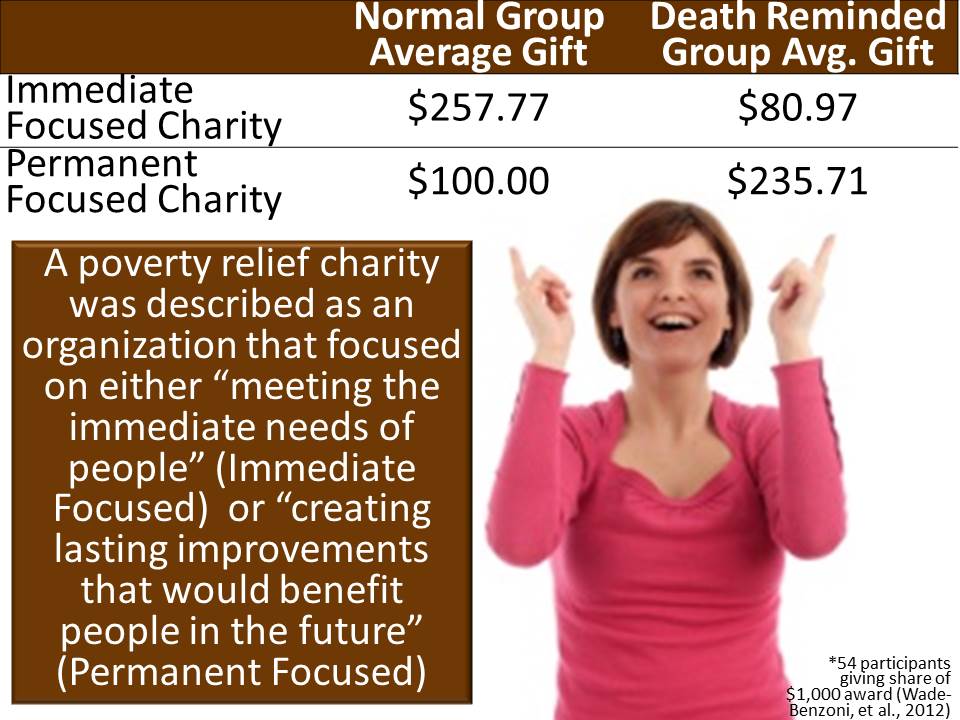
The above slide displays results from a recently published study by Dr. Kimberly Wade-Benzoni at Duke University and colleagues. In this experiment, participants were all entered into a lottery to win $1,000. Participants were told that they could pre-commit to share part of the $1,000 with a charity, if they happened to win the prize. The charity was the same for all participants, but for half of the participants the charity was described as “meeting the immediate needs of people,” and for the other half it was described as “creating lasting improvements that would benefit people in the future.” (The idea here was to emphasize either immediate impact or permanent impact.) In the first two groups (which read an unrelated newspaper article before making these choices), those receiving the immediate impact description committed, on average, to give $257.77. However, those reading the permanent impact description committed only $100.00 on average.
A second set of groups completed the same choice. However, before they completed the choice, they read a death-reminder article about a recent tragic airplane accident that had resulted in death. The impact of permanence switched in this death-reminded group. Specifically, the death-reminded group receiving the immediate impact description of the charity pledged only $80.97 on average. However, the death-reminded group receiving the permanent impact description of the charity pledged $235.71.
The results suggests that preference for permanent gifts dramatically increases after exposure to a death reminder. The researchers concluded, “death priming leads individuals to be concerned with having a lasting impact on other people in the future”(Wade-Benzoni, et al., 2012, p. 704). This is a dramatic experimental demonstration that in a decision setting with high mortality salience – like estate planning – permanent gifts will be particularly attractive.
As a result of this underlying desire for permanence (potentially related to the pursuit of symbolic immortality) certain types of gifts and certain types of organizations may be particularly attractive. Lasting gifts such as endowments, named buildings, or scholarship funds made to organizations that are perceived to be stable provides an excellent opportunity for achieving some measure of symbolic immortality. If a donor makes a gift that results in a named building at Harvard University, he or she will have a high level of confidence that his or her name will continue to be on that building when children, grandchildren, great-grandchildren and so forth would happen to visit the campus. The donor reasonably believes this because of a high confidence in the stability of the organization.
However, donors may achieve this same level of permanence, or in reality an even greater level of permanence, by giving money to a named endowment or permanent fund. A donor can feel confident that this named fund will continue to accomplish important goals aligned with the donor’s community and values long after the donor has died. This is an ideal type of gift to address the psychological difficulties associated with focused contemplation of personal impending mortality.
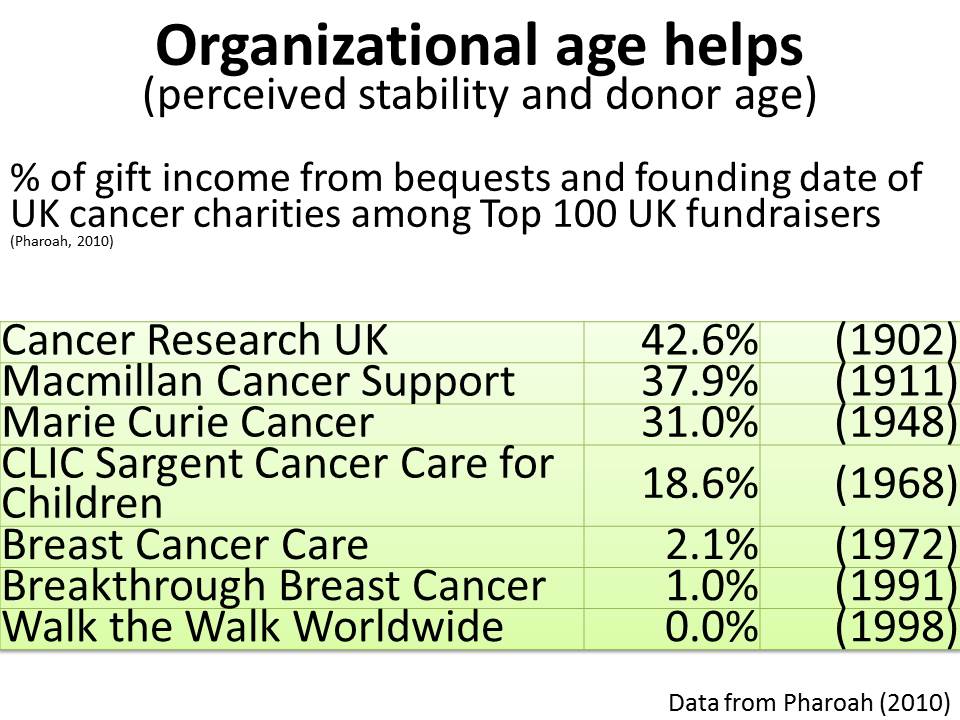
Related to this notion of organizational stability is that bequest donations may be relatively more common among organizations that are older. The relationship between bequest gifts and organizational age could come from perceived stability as well as from the age profile of the donors supporting the organization. Older organizations may be advantaged because they are seen as being more likely to exist for a long time in the future. Older organizations may also be advantaged because of the long-term relationships with older donors.
Although there are no statistics in the United States from multiple types of nonprofit organizations to compare the dollars raised from current gifts to the dollars raised from bequest gifts, that information is available for charities within the United Kingdom. The previous table shows the percentage of gift income from bequests for each United Kingdom cancer charity listed among the top 100 United Kingdom fundraising organizations. In looking at the percentage of gift income from bequest gifts, we see a clear relationship between the age of the organization and the share of gift income that comes from bequest gifts.
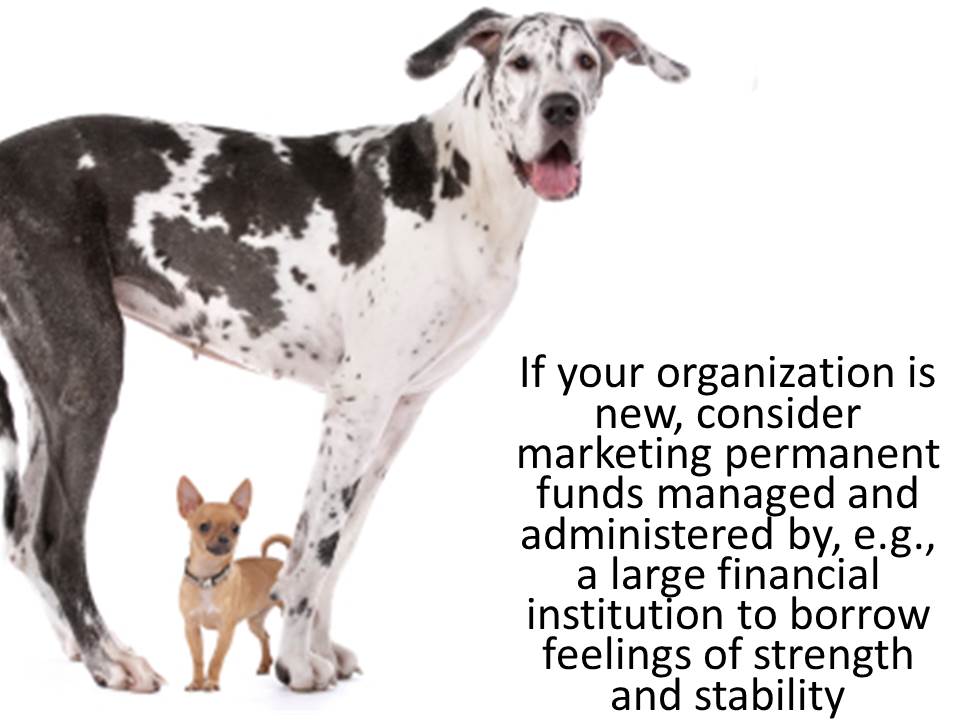
The previous result should not be interpreted as suggesting that younger organizations should not be concerned with bequest gifts. Every revenue stream is essential to accomplishing the mission. The bequest income coming to a younger organization does not become less important simply because an older organization receives a larger percentage from its bequest gifts. But it could suggest that newer organizations might want to consider emulating the characteristics of older organizations in terms of perceived stability and, where possible, the age profile of donors. One possibility to consider for a new organization is to market permanent funds that are managed and administered by a large community foundation or financial institution in order to borrow feelings of strength and stability from those older and larger organizations. Even if a nonprofit is relatively new, it can market the establishment of endowment funds managed by a large community foundation. In this way, even if the organization doesn’t project a sense of tradition, stability and longevity, it can still borrow that sense of stability and longevity from another organization. Even if the newer charity closed, the fund itself could still continue supporting similar goals.
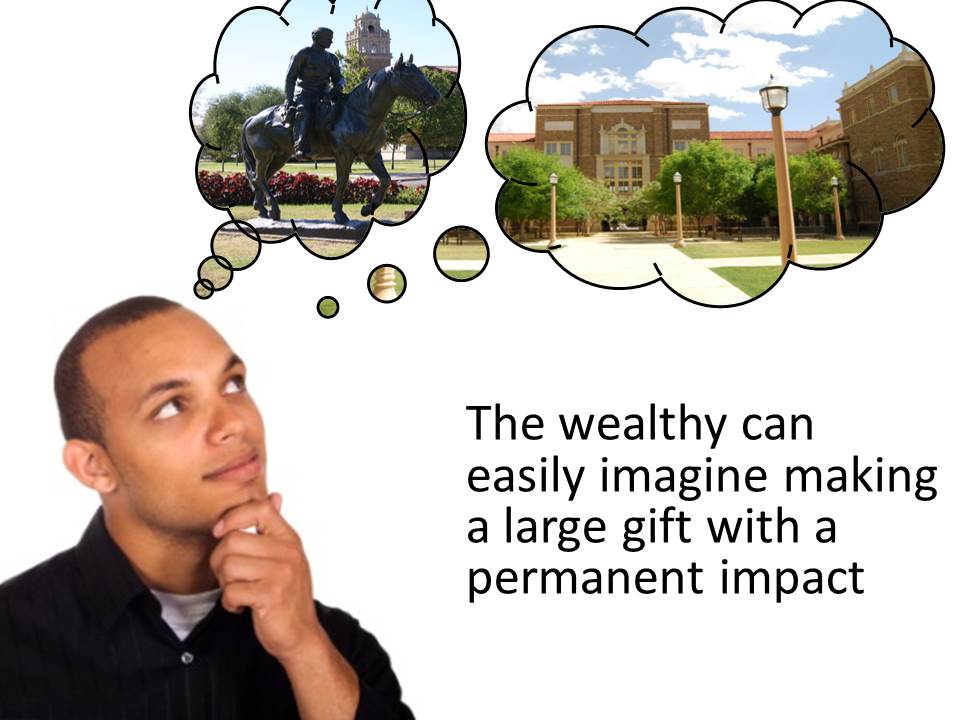
When considering the importance of permanence in bequest giving, it is useful to consider that for the wealthy, imagining making a large gift with a permanent impact is relatively easy and natural. It is easy to think of permanent gifts available to someone willing to transfer millions of dollars. From buildings to endowments to private family foundations, the options are varied and often obvious.
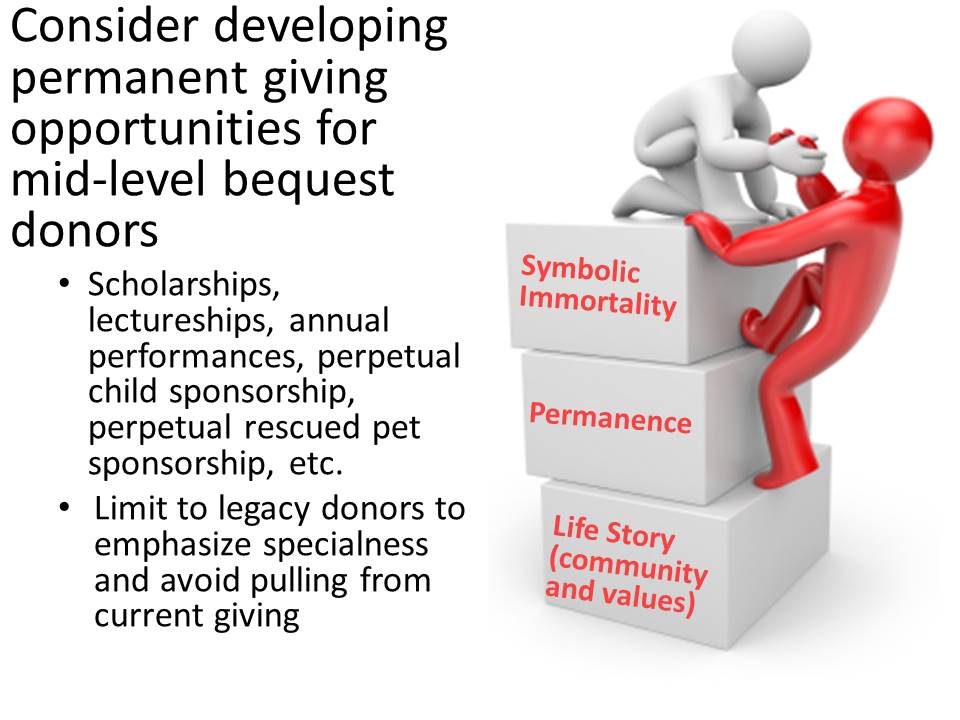
However, one potentially critical role for the fundraiser is in developing permanent giving opportunities for the mid-level bequest donor. It is easy for a donor to think about permanent giving opportunities if he or she can pay for an entire building or an entire new wing added to a hospital. But for the mid-level donor without the ability to transfer massive sums of money, such permanent opportunities will depend more on the ability of the nonprofit organization itself to create and market them.
A permanent giving opportunity may be something as simple as agreeing to accept and manage permanent endowment funds. The charity need not market these as endowment funds. They could be labeled based upon the purpose for which the funds are going to be used. For example, various charities could market a perpetual child sponsorship fund, or a perpetual rescued animal sponsorship fund, or a permanent lectureship fund, or a permanent scholarship fund, and so forth. The purpose for a fund will relate to the individual charity’s cause.
But, these are the kinds of permanent giving opportunities that are often particularly attractive to donors who are making these decisions in a context of high mortality salience. In other words, these are the kinds of opportunities that give donors the chance to achieve some slice of symbolic immortality that fits with their chosen community and community values.
In some organizations, marketing permanent endowment-type funds may appear at odds with the desperate need for immediate dollars. One potential resolution of this conflict that particularly encourages charitable bequest giving is to create permanent fund opportunities that are available only for bequest donations. Thus, an organization can market and attract mid-level permanent funds without fearing that current giving dollars are going to be diverted away from much-needed immediate expenditures. Limiting such opportunities to bequest gifts emphasizes the specialness of bequest giving. More importantly, it provides donors with the type of giving opportunities that are particularly motivating for bequest giving.
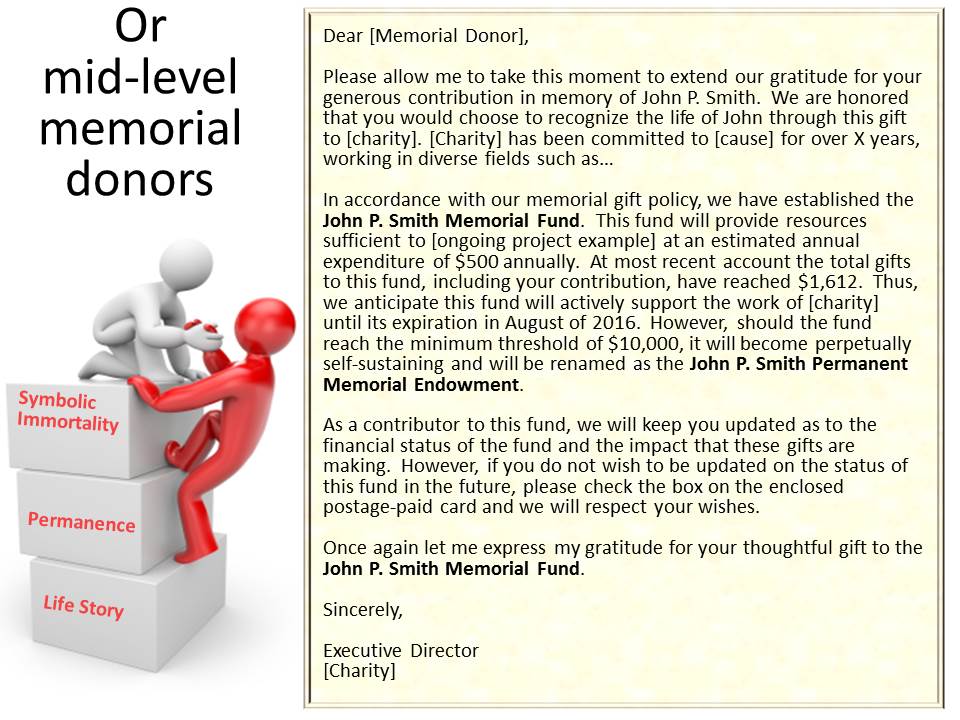
Although at the time of this writing, this has not yet been experimentally tested, it might be possible to extend the permanence opportunity to memorial donations. The above letter describes how such a presentation might be made to memorial donors. Theoretically, such an approach could have a powerful psychological impact, because it presents the opportunity to have a permanent remembrance of one’s deceased friend or family member. Here money given in memory automatically goes into a memorial fund and upon reaching a minimum threshold level becomes a permanent memorial endowment. If the minimum threshold is not met, then the fund pays out and expires at a preset rate.
The motivation to convert to a permanent fund may be particularly high given the natural desire for applying symbolic immortality to recently deceased friends or family members. This is an example of how underlying theoretical knowledge might be used to develop innovative new strategies in a variety of circumstances. (I hope in the future to be able to field test the efficacy of this strategy.)
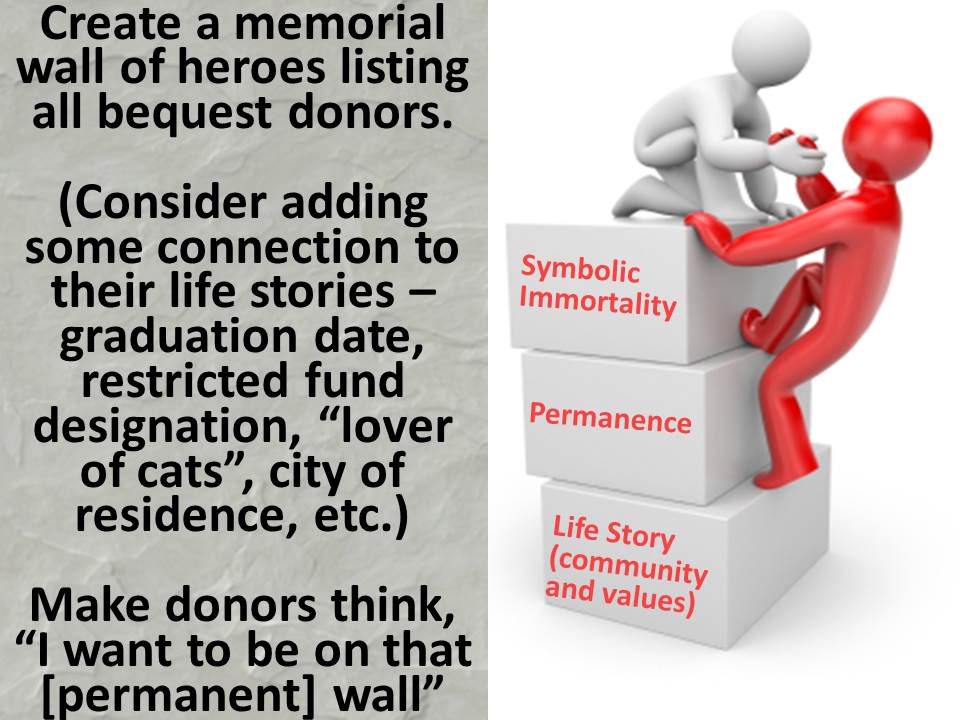
As another example of applying our understanding of bequest related psychological processes, a charity might consider creating a memorial wall of heroes, listing all deceased bequest donors. This, of course, would be especially helpful in charities where donors are likely to visit the location of the memorial wall. It could also be quite helpful to add information related to the decedents’ life stories and how theirs lives connected with the particular charity.
This could be easier, or more challenging, depending upon the charity type. For example, a school graduation date and degrees earned would be a natural way to connect one’s life story with the university. Other information might relate to the specific restricted fund to which the bequest was directed. City of residence, surviving relatives, or essentially any information that created a permanent statement of symbolic immortality linking to the decedent’s autobiography could have a positive effect. The goal is for prospective donors to be able to visualize the wall when they are in the midst of estate planning. The non-profit wants donors to think, “I want to be on that wall.” Although not yet experimentally tested, this is another example of a plausible idea which springs from an understanding of the psychological and neurological processes involved in bequest decision-making.
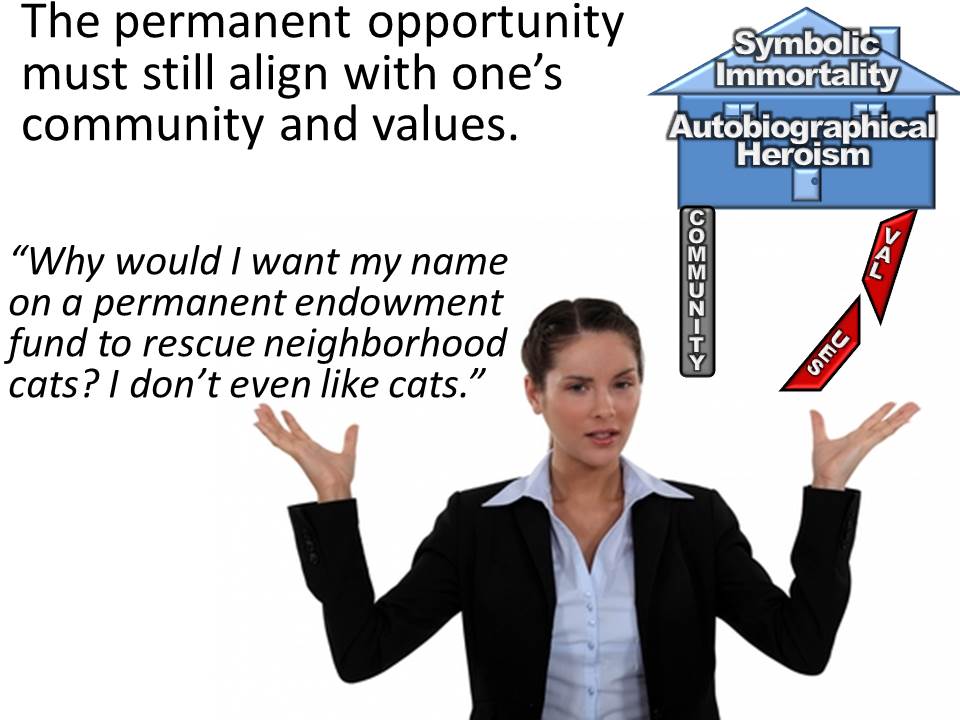
There are a variety of different ways to develop opportunities that emphasize permanence. However, the desire for symbolic immortality, as the highest expression of autobiographical heroism, must always be based upon the foundation of the prospect’s chosen community and community values. It will have no effect to develop the most attractive permanent giving opportunity if the prospect’s values do not align with the organization or the cause.
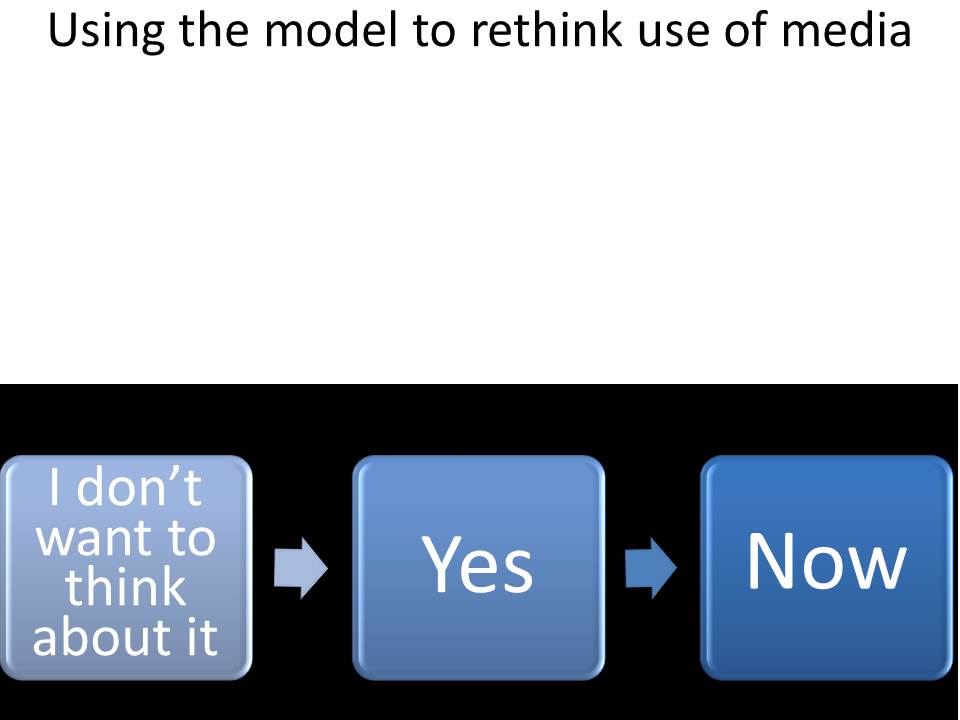
In addition to using the model to develop new types of giving opportunities, this framework of understanding can also help to reframe how we use different marketing channels.
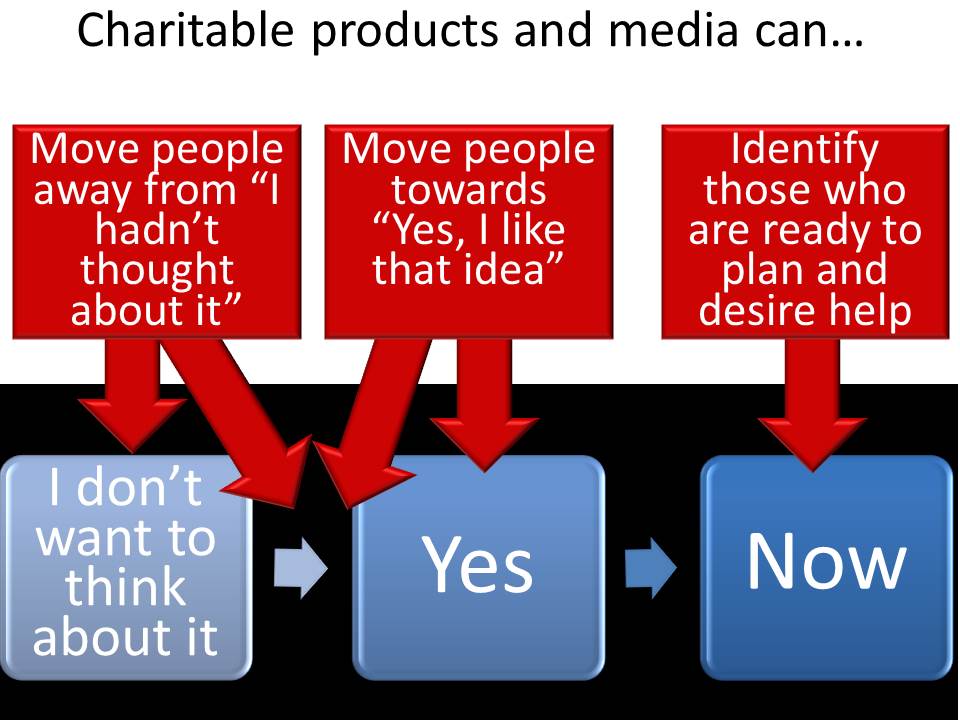
If we understand the bequest decision-making process as having three stages (“I don’t want to think about it,” “yes,” and “now”), we can apply this understanding to the role of media marketing. The development of attractive charitable products related to bequest giving and communication about charitable bequest giving through media can accomplish a lot. First, media channels can move people away from “I don’t want to think about it” and towards, “yes, I like that idea.” Further, media can identify those who are ready to plan and desire immediate assistance in that planning process.
Broadcast media, however, may not be very well suited to move people from having a general intention to make a charitable bequest to actually executing documents. That move generally is motivated either by direct personal involvement of a fundraiser or, more commonly, by some external circumstance, typically related to mortality or change of family structure, that motivates the person to engage in new planning.
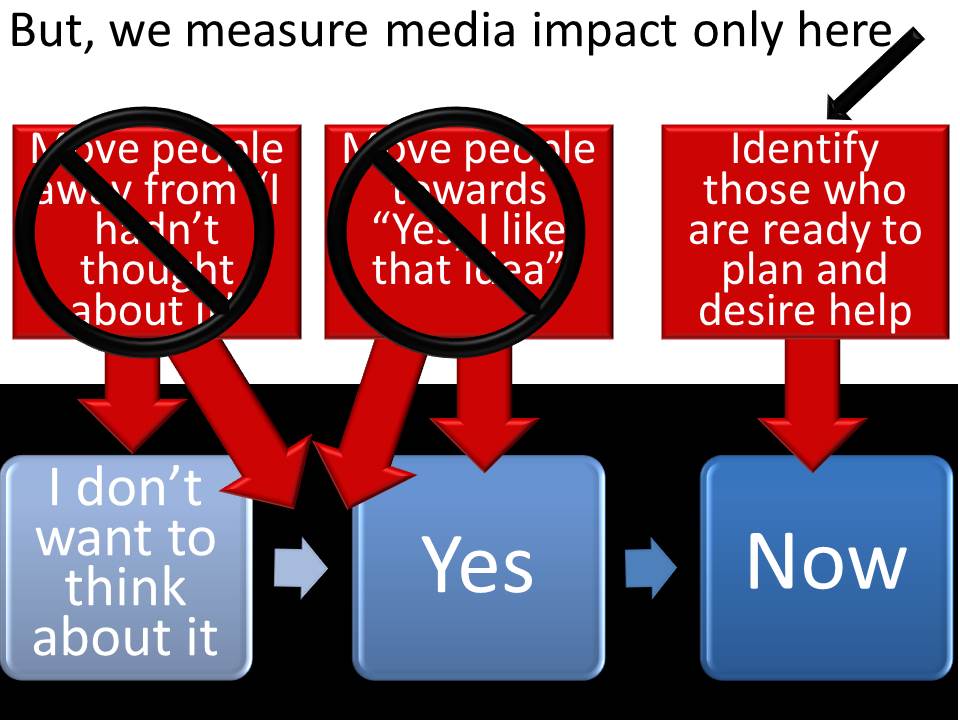
Given that media and charitable products have great potential to move people from “I don’t want to think about it” to “yes,” it is unfortunate that most measurements of bequest giving marketing tend to emphasize only the identification of those who are immediately ready to plan and desire assistance with that planning. This measures only the very small segment of any group that is in an immediate planning mode at any one time. This focus on such a narrow group in such rare circumstances ignores the most powerful parts of charitable bequest gift marketing. In other words, a response rate of 1% or less to an offer of providing estate planning materials or assistance completely ignores the impact of the marketing messages on the other 99%.
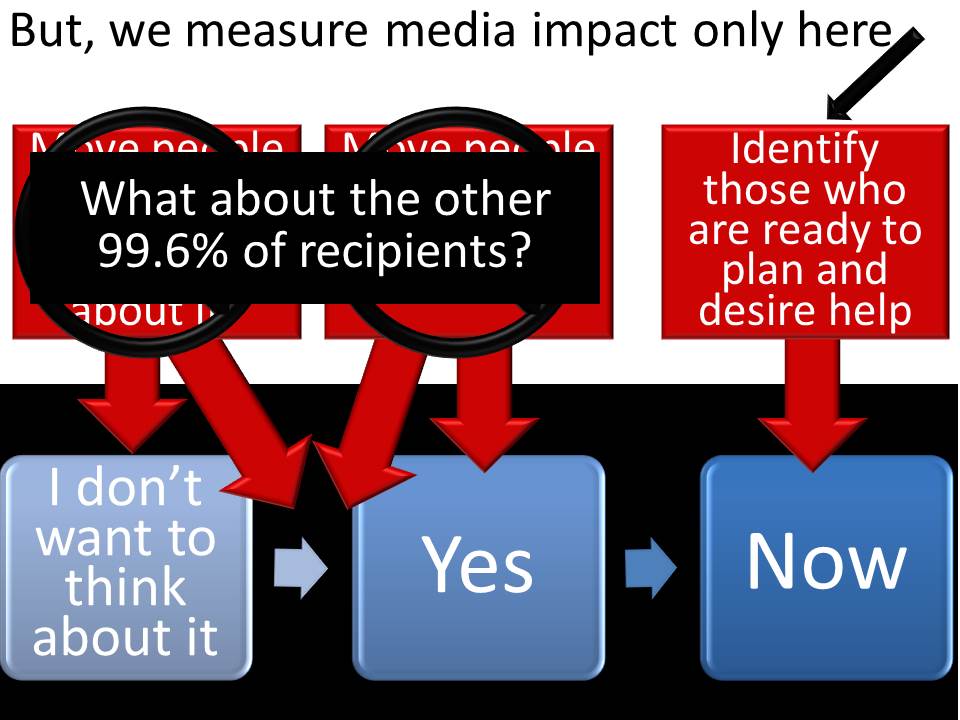
This leads to the obvious question of, “Why are we not measuring the impact on the other 99%+ recipients of charitable bequest marketing materials?”
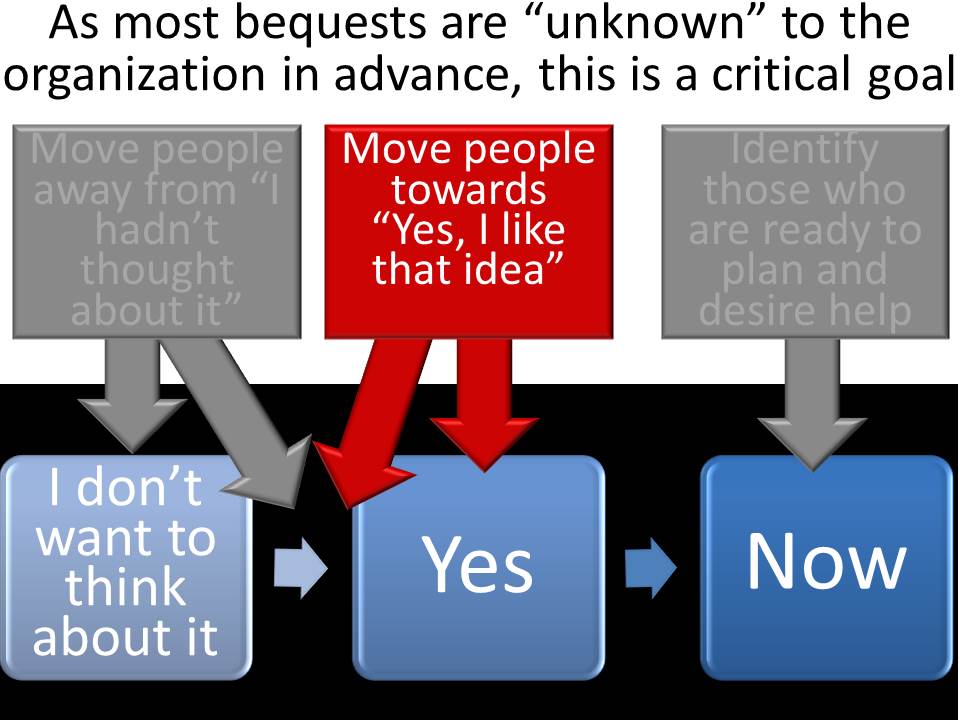
Measuring this shift in intentions is much more important for charitable bequest fund raising than for current giving fundraising. In current giving fundraising, we can measure the success of an appeal letter based upon its ability to generate immediate gifts. (It would even be possible to run a regression analysis to see if a particular letter generated an increased or decreased level of future current gifts within the next several months.) But that type of measurement tradition works against successful measurement in the area of charitable bequest marketing.
Unlike current giving, most charitable planning actions take place without the knowledge of the charity. So we are not going to passively receive the same kind of feedback that we receive when we are marketing for current gifts. Estate planning itself is not a regular part of life, but instead takes place during those punctuation points usually caused by increasing mortality salience or changing family structure. If we can move prospects to have a general intention to make a charitable bequest gift, at some point outside interventions will likely generate the motivation to engage in new planning. (Or, alternatively, a series of personal visits from a fundraiser may also provide such motivation.)
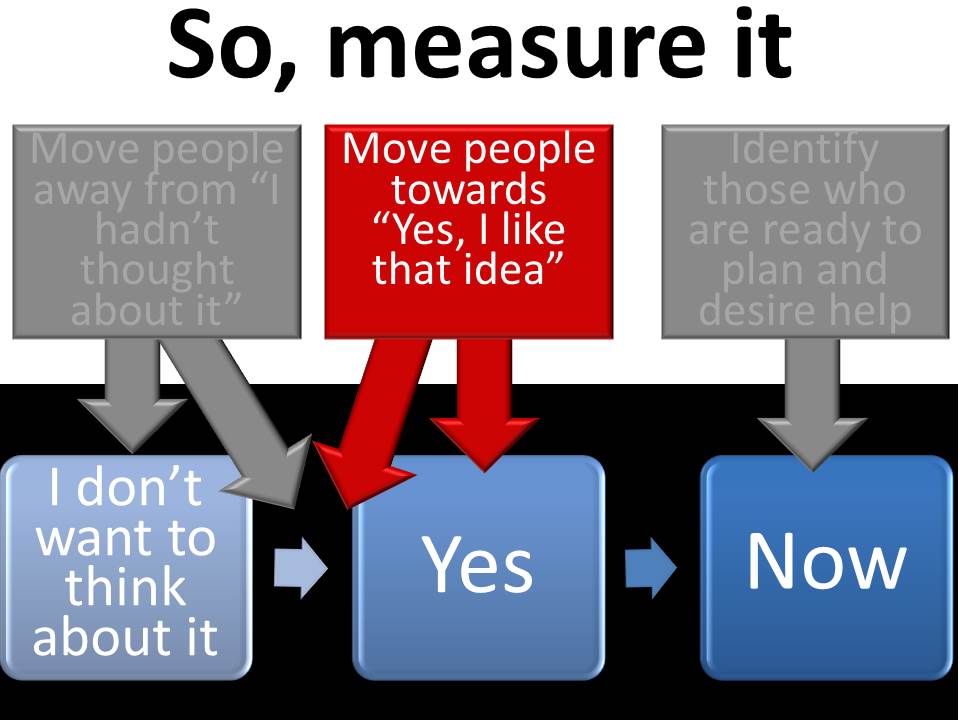
Given the importance of changing people’s attitudes about leaving a charitable bequest gift, it makes sense to seriously consider measuring that change in attitude among an organization’s supporters.
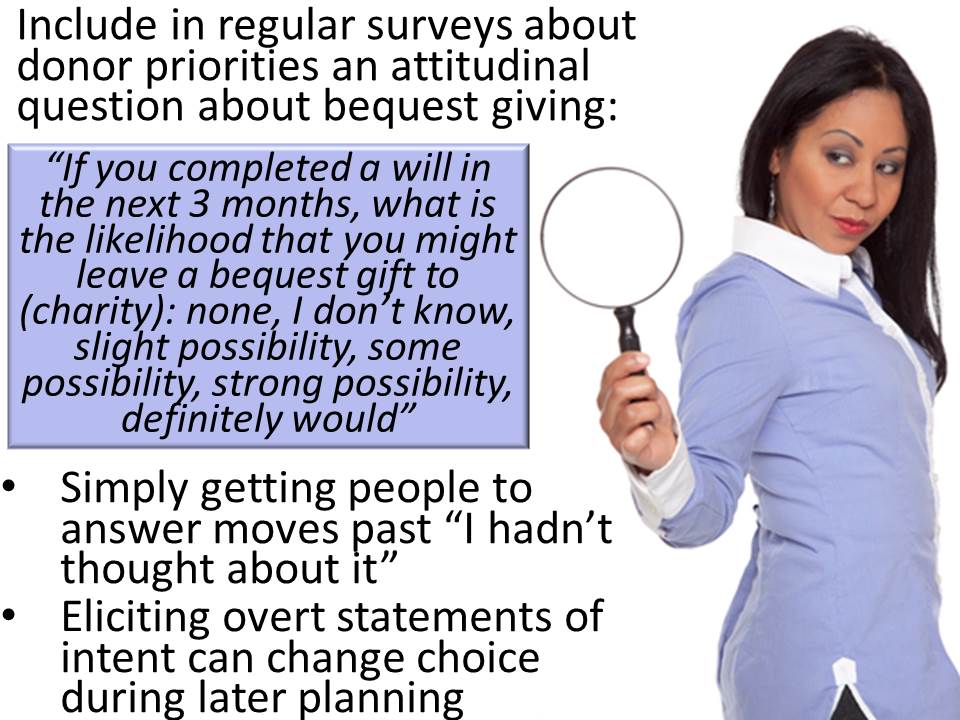
How might we go about conducting this measurement? It could be done in the same way that attitudes towards other topics are commonly measured every day. If a charity is willing to conduct regular surveys about donor priorities and preferences regarding the charity, it is then a relatively easy matter to include a single question related to bequest giving intentions. Asking a question as simple as, “If you completed a will in the next three months, what is the likelihood that you might leave a bequest gift to this charity?” allows tracking the indicator across time.
Such measurement does not require mailing a survey to the entire donor base repeatedly. Instead, it could involve mailing to a relatively small, randomly selected subset of donors on a regular basis. For example, if a charity mailed a questionnaire to 10% of their donor base every quarter, then an individual donor would see a survey only every 2 ½ to 3 years. This is not a burdensome amount of communication, either for the charity or for the donors. But, it would create a quarterly measurement of attitudes related to bequest giving. In other words, it would create a measurement of the impact of charitable bequest marketing on the other 99% of donors who are not interested in requesting immediate assistance with estate planning. Naturally, a 10% sample can vary somewhat from quarter to quarter simply because of the particular people who responded to the survey in that quarter. Thus, not every single movement of the number would be important. Nevertheless, such tracking creates a scientifically useful basis for measuring the impact of charitable bequest marketing over time. A person with a research orientation could even consider mailing different pieces to different parts of the sample to see which marketing piece had the greatest effect on expressed attitudes. Such a strategy not only provides an excellent measurement of the impact of bequest marketing on the 99% of nonrespondents who, ultimately, will be critical in generating actual post death charitable transfers, but it is also independently influential in encouraging completed charitable bequests.
Responding to a question related to one’s intentions to leave a charitable bequest to the organization accomplishes two important goals. First, it gets people to move past the “I don’t want to think about it,” stage by intentionally “thinking about it.” It does so in a format that is not aversive, because it is simply one single question in the context of a brief survey about other organization-related topics.
Additionally, getting people to make a statement of intent can crystallize that intention in such a way as to increase the propensity for them to actually engage in the behavior. This crystallized intention becomes especially important when outside circumstances necessitate engaging in new estate planning. Thus, simply getting donors to answer the question is, for multiple reasons, an important victory in encouraging charitable bequest giving. This is aside from the fact that regular measurements of donor attitudes creates a concrete, immediate outcome in a field where such meaningful measurements are few and far between.
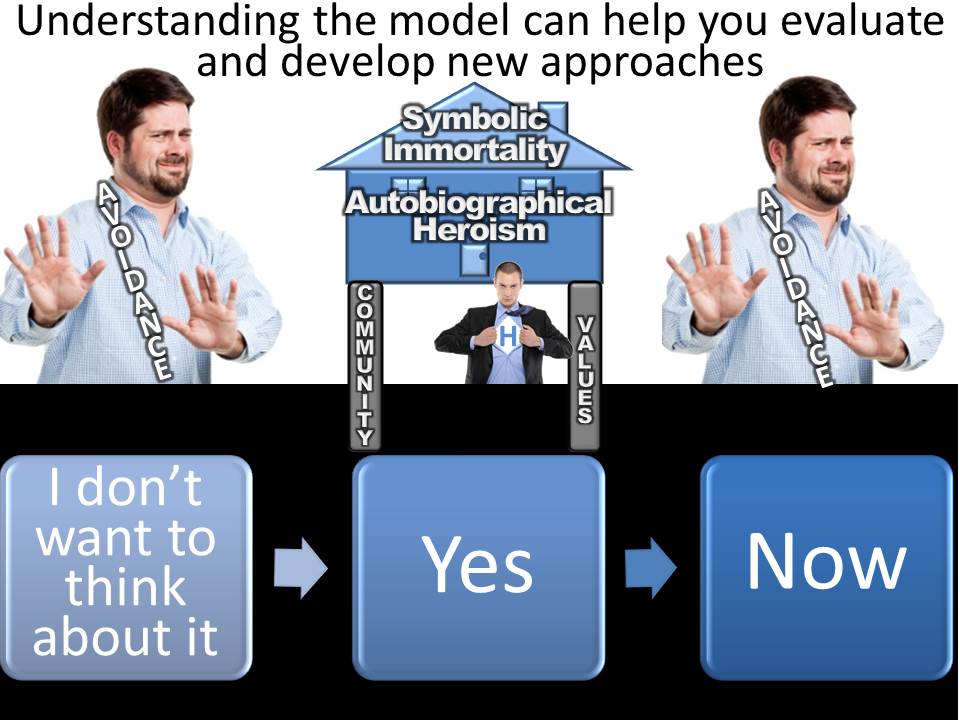
To summarize what we have learned to this point, the above graphic visually represents the underlying model of how bequest decisions are made. We have examined a variety of scenarios in which understanding this model leads to particular proposals for charitable bequest marketing strategies. But, ultimately the most important value of understanding this model of charitable bequest decision-making is that this understanding can be applied to any organization in any situation to create brand-new marketing products and strategies.
The most important practical value of understanding the model will come from your own brain and how you can apply the model to the particular circumstances of your situation for your charity and your particular group of donors. Starting with an underlying model that is verified by neuroscience results, experimental psychology results, experimental charitable bequest giving research results, and psychological theory, provides the solid framework and footing which can lead to truly transformational methods to encourage charitable bequest giving for your organization.