At this point we have looked at scientific evidence underlying the model. And we have looked at a variety of different applications of the model and how it can be used to generate successful ideas and methodologies for encouraging charitable bequest giving. Next, we will look at how the model applies to your two biggest competitors. Now, when I refer to your two biggest competitors I am not referring to other public charities who serve your same cause, or who are located in your same city. Those are not your biggest competitors. In many ways, these organizations are in the same boat as your organization. It is quite common for bequest donors, especially female donors, to name a wide variety of charitable recipients. However, 90% of your significant donors will die, leaving no charitable bequest gift. They are not leaving gifts to your competitor charities, because they are not leaving gifts to any charities. The biggest reason for that relates to the number one most important competitor for charitable bequest gifts. And, by this point, you have probably guessed who that number one competitor is. It is the prospective donor’s offspring, his or her children and grandchildren.
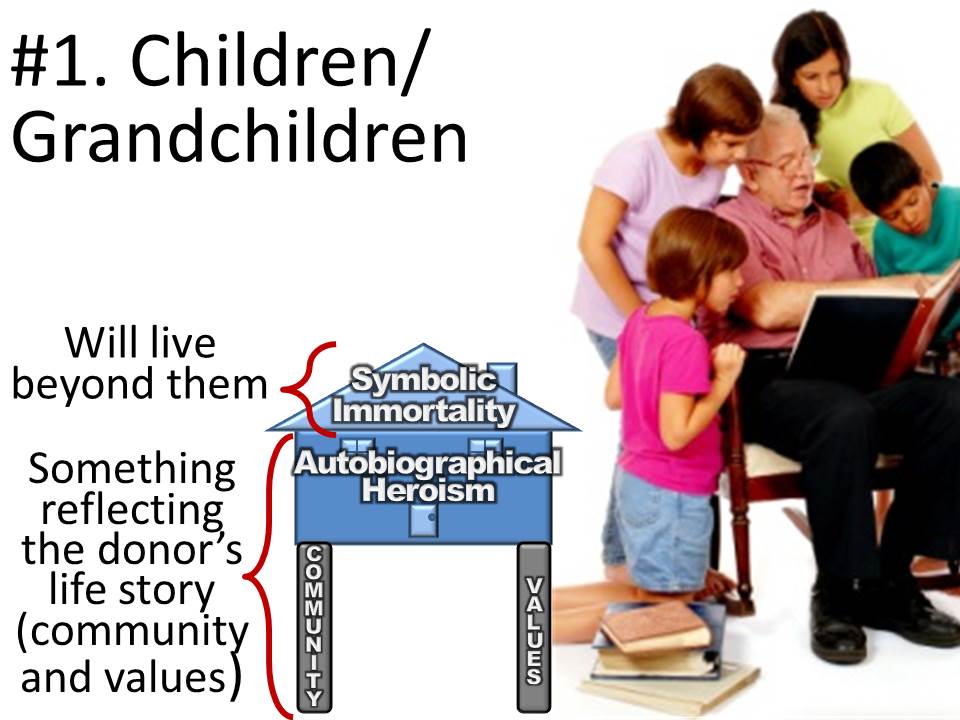
From the perspective of the bequest decision-making model, children and grandchildren are an ideal expression of symbolic immortality. They reflect the donor’s life story and are intimately connected with the donor’s community and values. And they will live beyond the donor’s life. It is no surprise then that the bulk of all bequest transfers go to children and grandchildren (after there is no surviving spouse).
So how can we use this information? It makes sense and it fits the model, but how is it helpful? Initially, it can be helpful when it helps us to recognize the importance of childlessness as a predictor of engaging in charitable estate planning. When we are able to identify a supporter who is not “burdened” by having these natural competitors, we should recognize that supporter as a potentially high value bequest giving prospect. Let’s look at some national numbers that support this supposition.
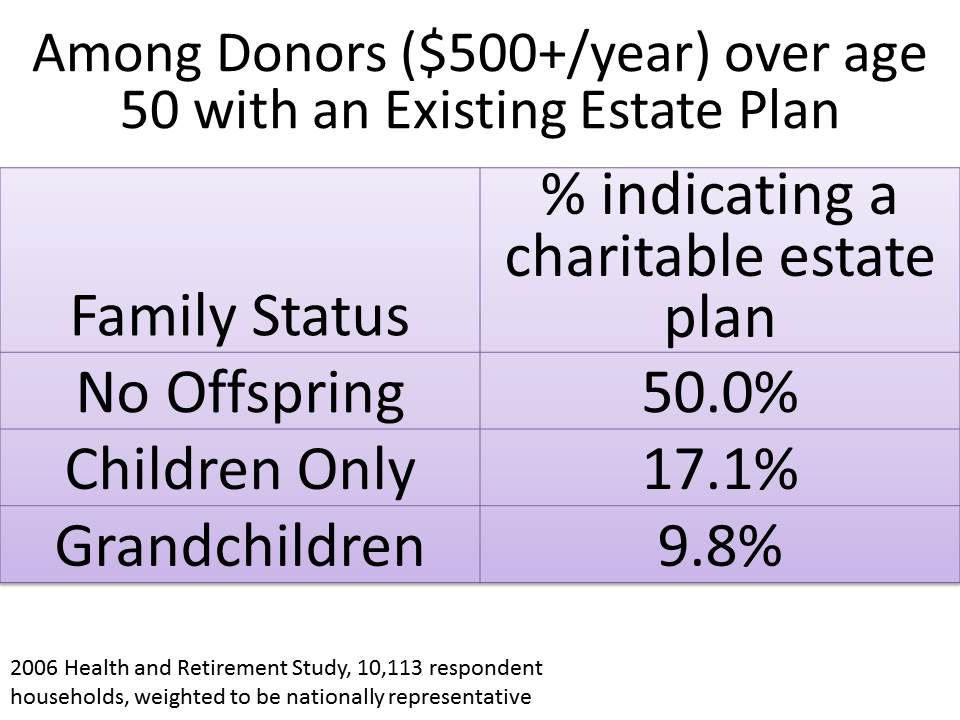
The above table shows results from a large survey weighted to be nationally representative. Here we are looking only at individuals who make annual donations to charity of $500 a year or more, who are over the age of 50, and who have an existing estate plan. Of course, this group of older donors with estate plans will be, as a whole, much more likely to have a charitable estate plan than the general population. But what is notable from this table is the massive difference between charitable bequest planning among those with no offspring, and those with children or grandchildren. A donor who gives over $500 a year, who is over age 50, with an existing estate plan, who has grandchildren has less than a 10% chance of having included a charitable beneficiary in that plan. However, a similarly-situated person who has no offspring has a 50-50 chance of having a charitable beneficiary in their plan. This single demographic factor is associated with a massive difference in the propensity to engage in charitable bequest planning, and it should be respected as such when prioritizing the prospects for bequest giving communication and solicitation.
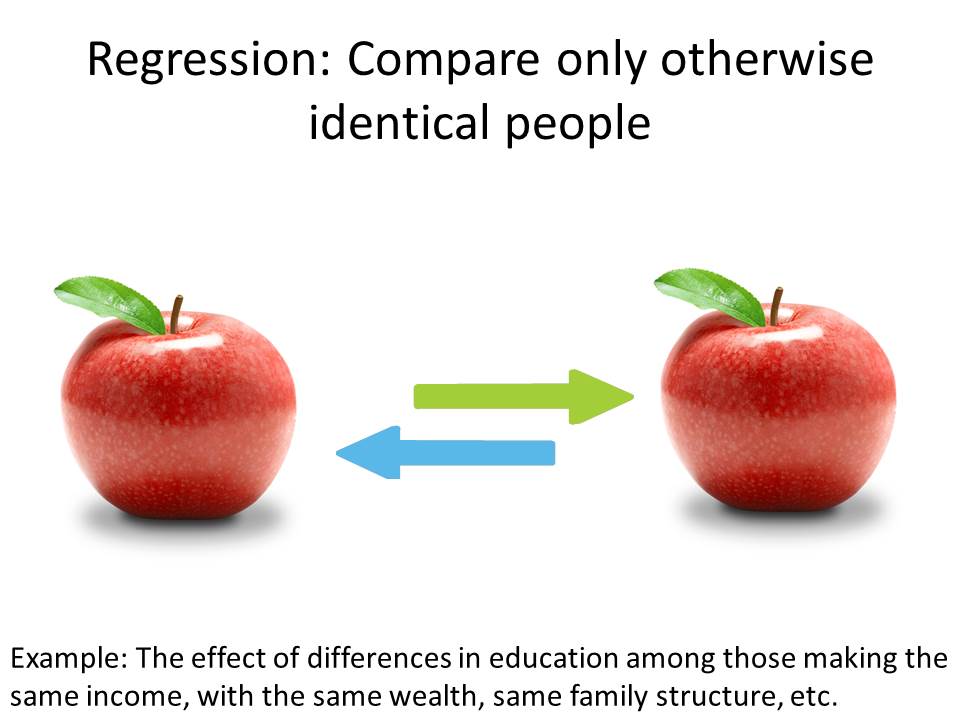
Next we examine regression results that compare otherwise identical people. By using regression, we are able to make an “apples to apples” comparison between individuals who are otherwise similar. This is especially important for a variety of factors that might influence charitable behavior. For example, we might say that those with a higher education are more likely to make charitable gifts. But that association may be caused by the tendency of higher education to generate higher income, and it may be the income and not the education that is actually causing the increased likelihood of charitable giving. If we want to actually understand the separate influence of education, aside from its association with increased income, then we have to use a regression technique. Regression allows us to compare people of the same income who are different in their level of education. In this way we can really begin to uncover how powerful a particular factor is, by itself, in predicting the outcome of interest.
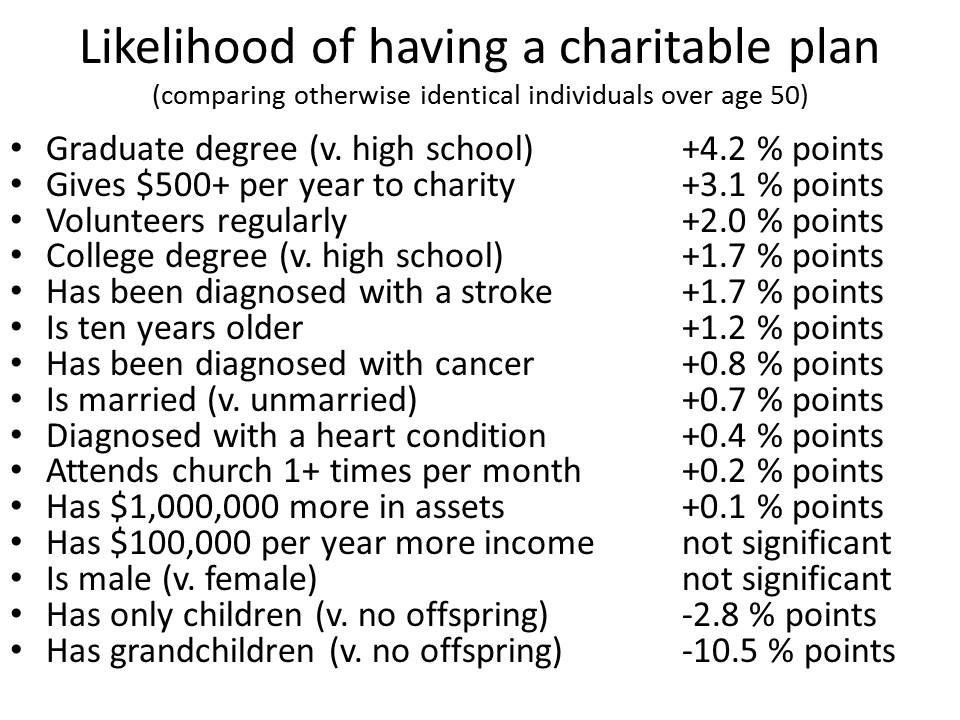
The above table provides results from a regression measuring the likelihood of having a charitable plan (in this case, the results are generated by a probit model and report the marginal effects of each element assuming all other variables were set to their sample means). This shows the separately identifiable impact of each variable on the likelihood of having a charitable plan, comparing otherwise similar individuals over the age of 50. Keeping in mind that approximately 6% of these individuals will have a charitable estate plan, we can see the relative importance of various factors.
For example, having a graduate degree increases the likelihood of having a charitable plan by 4.2 percentage points. Giving $500 or more per year to charity increases the likelihood of having a charitable plan by 3.1 percentage points. Volunteering regularly increases the likelihood of having a charitable plan by 2.0 percentage points. However, having grandchildren as compared with having no offspring decreases the likelihood of having a charitable plan by 10.5 percentage points.
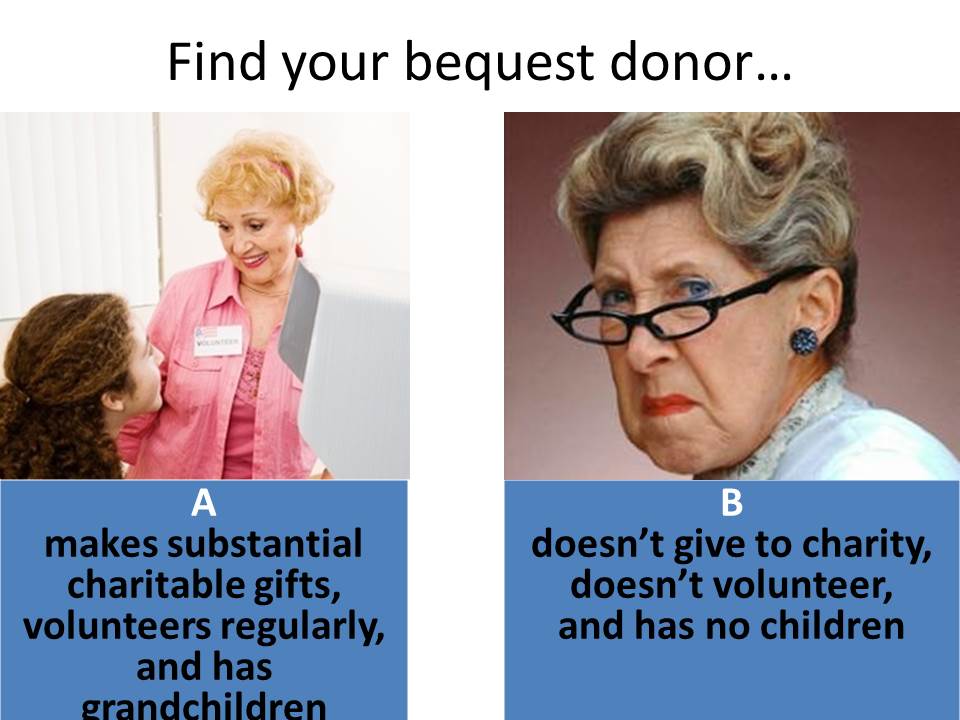
For a simple illustration of what these results mean, consider the following comparison. Suppose there are two older adults and we want to predict which one is more likely to leave a charitable bequest at death. Person “A” makes substantial charitable gifts, volunteers regularly, and has grandchildren. Person “B” does not give to charity, does not volunteer, and has no children. We might naturally think that the person who regularly volunteers and makes substantial gifts to charity would clearly be more likely to be a bequest donor. In that case we would be naturally wrong. Statistically speaking, the person who has no children or grandchildren is more likely to leave a charitable bequest, even though he or she doesn’t volunteer or make current charitable gifts. This illustration shows the importance of appropriately targeting those who have no offspring.
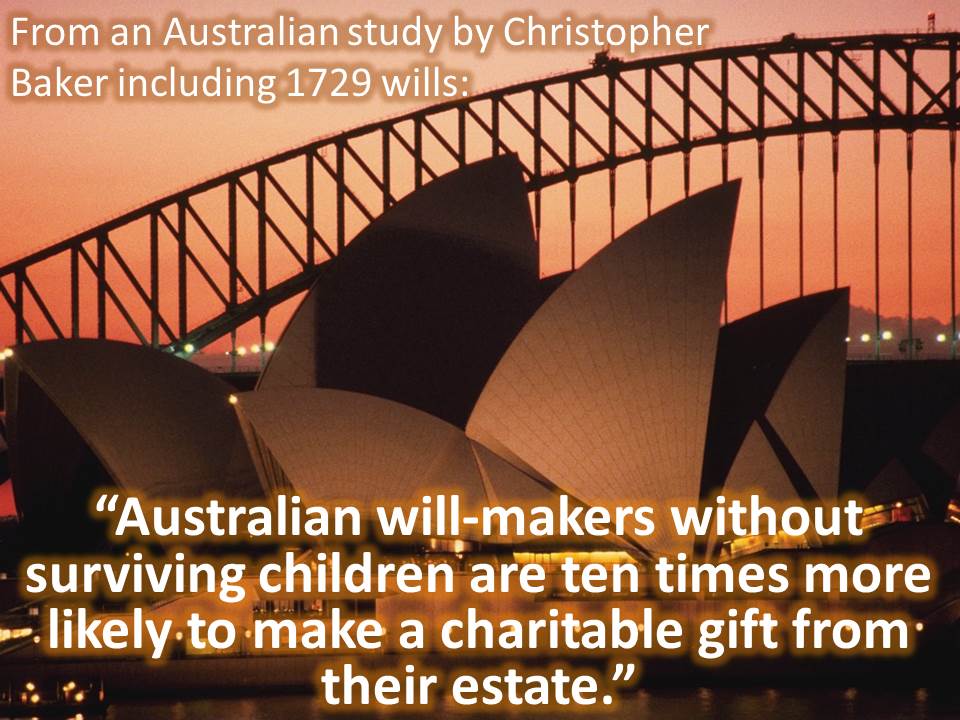
Results from Australia suggests that this phenomenon is not limited to the United States. My colleague (and sometime co-author) Christopher Baker examined 1729 wills in Australia and concluded that “Australian will makers without surviving children are 10 times more likely to make a charitable gift from their estate.” The point here is not that we should be surprised that those without children are more likely to leave a charitable bequest. The point is that the magnitude of that factor in determining who leaves a charitable bequest is massive and should not be ignored. If we were to give a precise weight to that factor in an analysis of a set of donor records, how much weight should we give it? The next table attempts to answer that question.
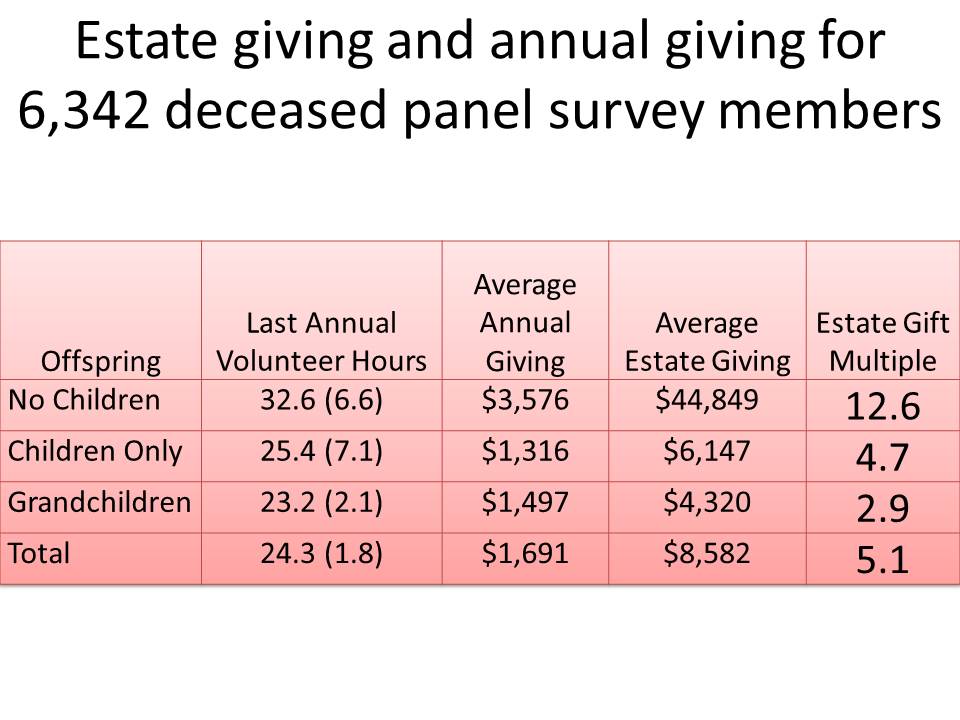
The above table shows the estate giving and annual giving for a little over 6,000 people who were in a longitudinal survey and died during the course of that survey. The results show that, on average, those with no children left an estate gift of approximately 12.6 times their average annual giving. The group with grandchildren left an estate gift of approximately 2.9 times their average annual giving. Thus, a quick and easy methodology for comparing the relative value of donors in terms of bequest gifts would be to apply these estate gift multiples to their average level of giving. (For a more sophisticated approach to modeling this valuation see my forthcoming publication on national charitable estate giving statistics.)
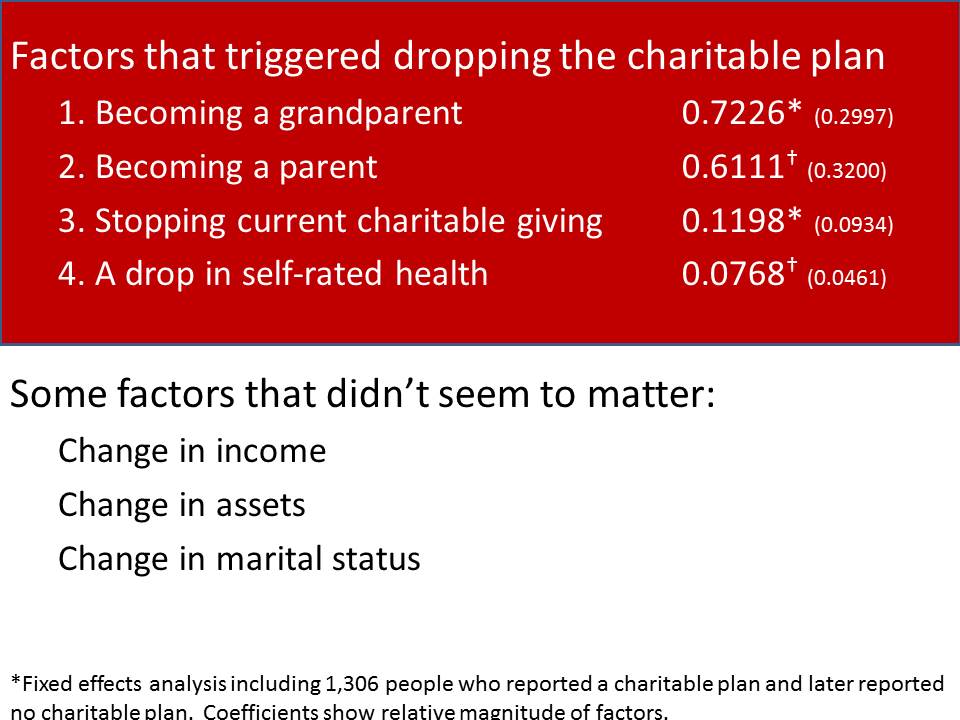
This next set of results is different because it looks at the timing of dropping a charitable plan. Although the individual numbers shown here are not directly interpretable as percentages, they show the relative magnitude of each factor. In this analysis, only four factors were statistically significant in predicting that a charitable plan would be dropped. The number one most important factor was becoming a grandparent. The number two factor was becoming a parent. Much less significantly was ceasing all current charitable giving.
These results once again emphasize the idea that the biggest competitor for charitable bequests are offspring, both children and grandchildren. As a side note, changes in income, assets, or marital status were not significant in predicting dropping a charitable component out of an estate plan in this particular analysis.
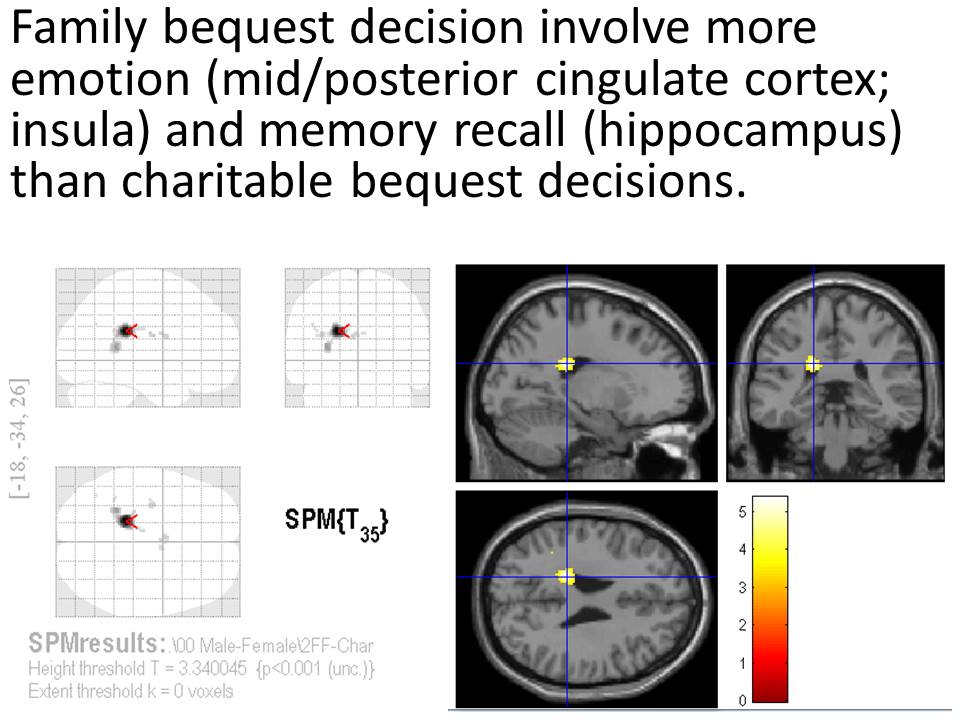
These previous statistical results also fit with the neuroimaging findings that family bequest decision making involves more emotion and memory recall than charitable bequest decisions.
So given that these type of family bequest decisions are so much more common and naturally involve so much more emotion and memory than charitable bequest decisions, how can charities compete?
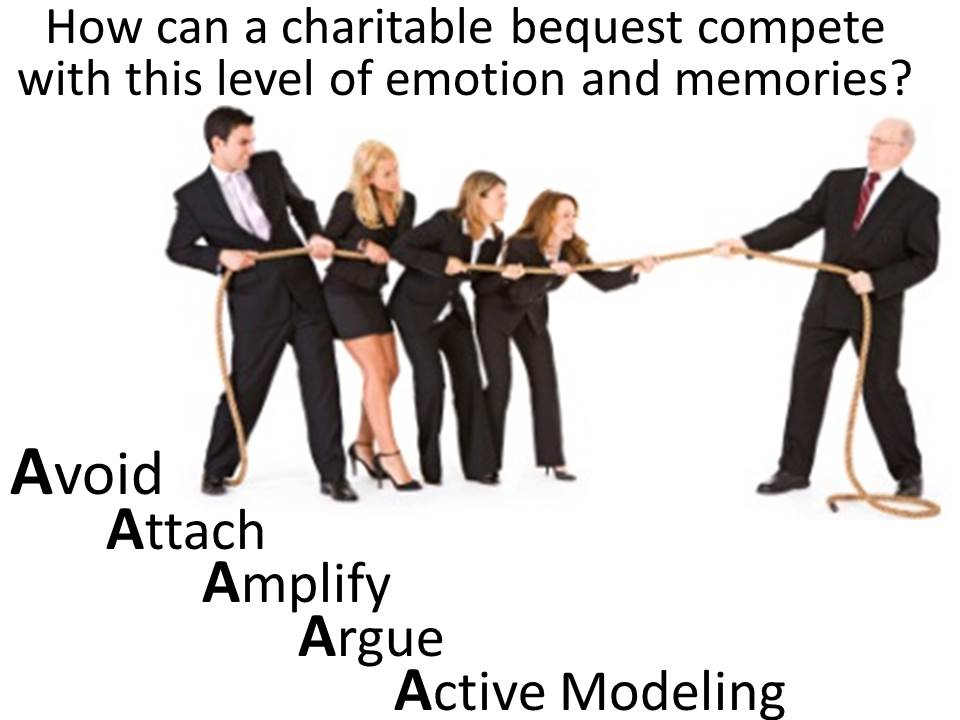
This is not a lost cause. Charities can compete with bequest gifts to family members. As we attempt to compete with this most significant natural set of competitors, we can think about strategies categorized into the 5 A’s. Next, we will examine each of the strategies of avoid, attach, amplify, argue, and active modeling.
The first strategy in competing with other bequest recipients is to simply avoid those who have children or grandchildren. In other words, whenever possible spend time cultivating older prospects who are childless.
A second strategy is to attach the emotion and memory associated with a deceased “loved one” to the nonprofit cause representing that person. We’ve already seen the experimental results that show just how powerful this strategy can be in changing attitudes towards bequest giving.
For the bequest donor with a deceased “loved one,” the charity may provide the only realistic method to give “to” the deceased “loved one”. Thus, the charity does not need to independently generate emotion and memory in the donor. Instead, the charity simply attaches its cause to the pre-existing memory and emotion associated with the deceased “loved one.” Surprisingly, the experimental results showed that attaching a charity to a living friend or family member through a tribute bequest was almost as effective as attaching the charity to a deceased friend or family member. Both sets of results suggest that it is possible to attach the emotion and memory associated with another person to a charitable cause and through that attachment to increase the desire to benefit that charitable cause through a bequest gift.
Although the experimental results described previously measured the impact of memorial or honoring gifts for a friend or family member, it is probably more appropriate to use the generic term of “loved one,” given the popularity of animal charities as recipients of bequest gifts. When examining the 100 largest fundraising nonprofits in the United Kingdom, domesticated animal charities represented seven of the highest 15 nonprofits in terms of the percentage of income raised through bequests. Conceptually, some of this charitable bequest activity may relate to the desire to create a lasting memory (autobiographical heroism) for a family pet. Although the “loved one” is different, the concept of attaching the cause to the pre-existing emotion and memory engendered by a deceased or living “loved one” is essentially the same.
We can encourage this form of attachment by sharing models. In other words, we can share stories of those who have immortalized deceased loved ones with a permanent bequest gift. This creates both a reminder for those who were aware of the possibility and education for those who were not aware of the possibility of leaving such a bequest gift. Such modeling fits with the visualized autobiographical mechanisms common to bequest decision-making.
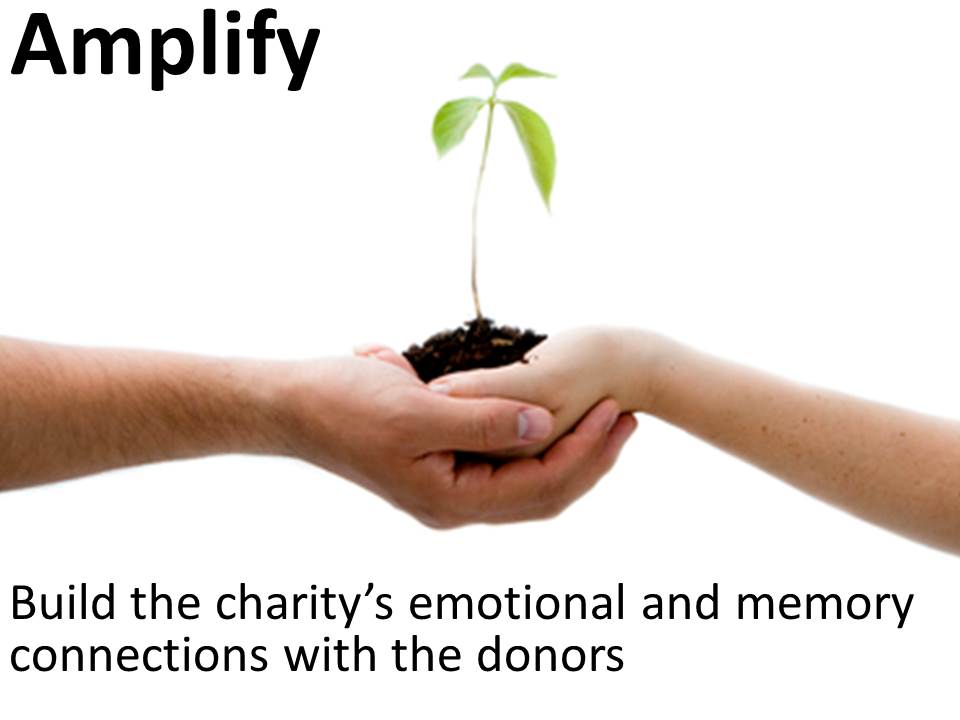
Of course, if we are not borrowing the emotion and memory attached to another individual, we must rely upon the emotional and memory connections with the charity itself. This, of course, is a general development goal that is shared with all parts of the organizational fundraising team. It is one of many examples where success in one area of development improves the chances for success in other areas of development. The methodologies used to amplify the charity’s emotional and memory connections with the donors are as varied as the organizations that use them. This simply points out that success in these areas may ultimately also express itself in success in the area of charitable bequest donations.
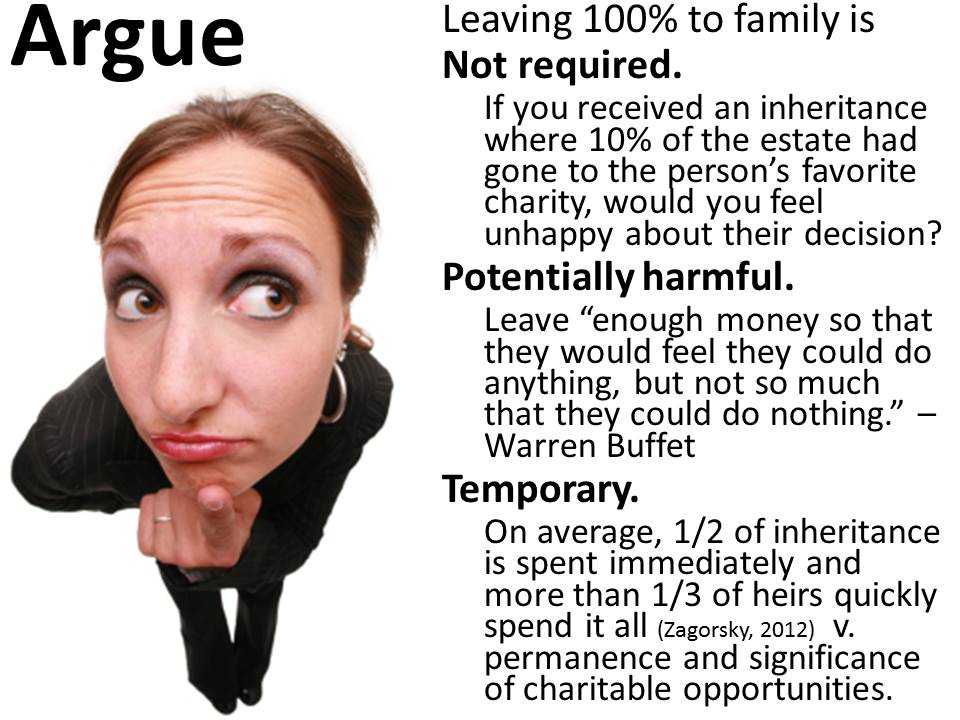
The next approach is to make logical, rational arguments. Here we use rational arguments to show the limits to the benefit of leaving funds to children or grandchildren and the acceptability of leaving some funds to charitable organizations. These arguments could take a variety of different forms, some of which were tested in the previous experimental results.
For example, emphasizing the temporary nature of gifts given to heirs due to the propensity of a substantial share of heirs to quickly spend their inheritance was tested and found to have a modestly positive effect on intentions to leave a charitable bequest gift. Similarly, the strategy of turning the tables by asking whether or not the person would feel offended if someone left them money, but had also left money to a charity was incorporated as part of the “American social norms” intervention tested previously. That intervention also appeared to have a positive effect on charitable bequest intentions. For those with substantial wealth, the Warren Buffett quote of desiring to leave his children, “Enough money so that they would feel they could do anything, but not so much that they could do nothing,” might also be motivational, and might lead prospects to consider recipients other than their natural heirs.
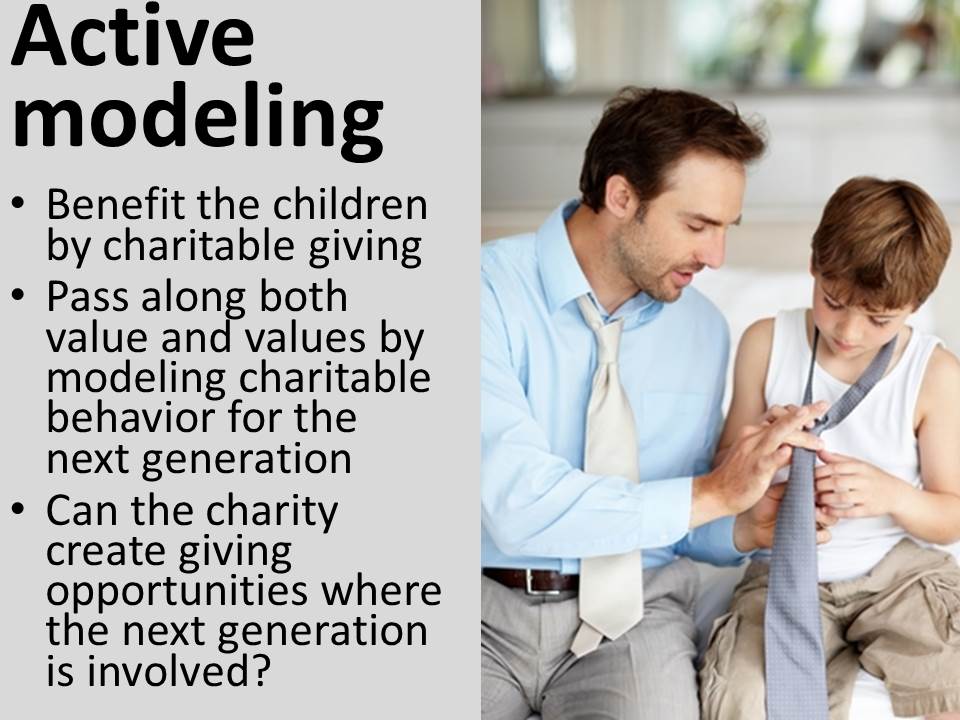
As an additional approach, some charitable giving opportunities might incorporate the heirs, not as competitors, but as participants in a continuing tradition of philanthropy. Donors may desire to benefit the children through charitable giving by passing along philanthropic values. The charity might consider how it could create opportunities to involve the next generation in the charitable process. The following example shows that this approach of involving the next generation is by no means a new idea.
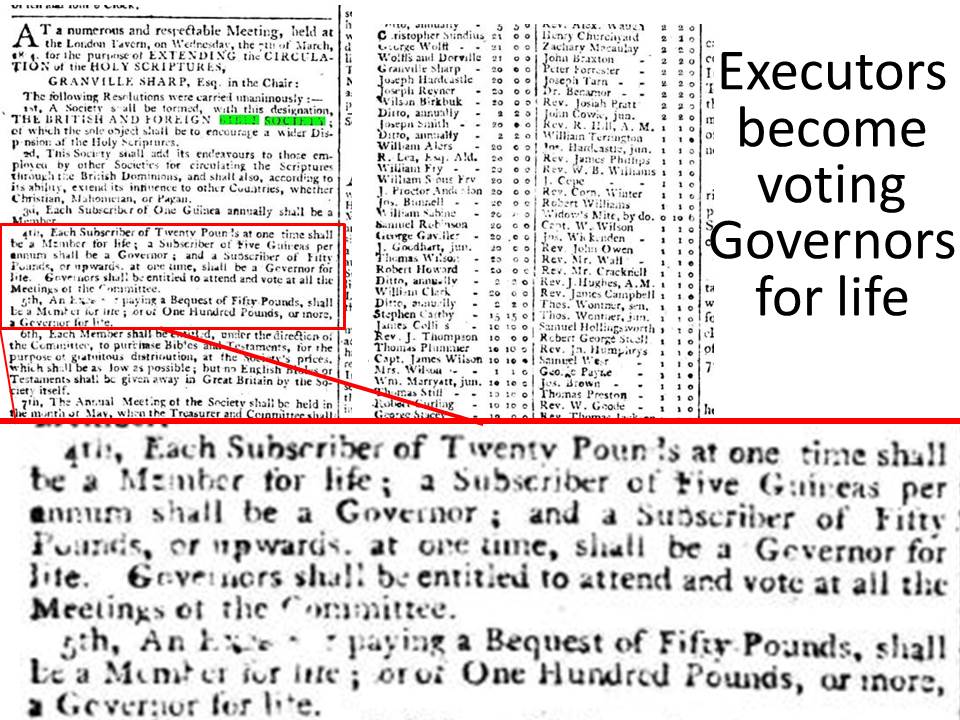
The above image is taken from the public notice of the founding of the Bible Society in 1804, including a listing of the founding donors and their donation amounts. (The Morning Post, London, England, Monday, March 19, 1804: pg. (1); Issue 11061. 19th Century British Library Newspapers: Part II). Although the words are a bit difficult to make out, notice how the governance structure of the nonprofit organization was established. The fourth paragraph indicates “a Subscriber of Fifty Pounds, or upwards, at one time shall be a Governor for life. Governors shall be entitled to attend and vote at all the Meetings of the Committee.” This shows that major donors could influence the direction of the organization. (In some sense, this is a direct exchange model of the concept applied in many nonprofit organizations today where substantial donors are commonly asked to serve as board members.) But, the fascinating part of this advertisement, for charitable bequest marketing purposes, is the 5th paragraph. It reads, “An Executor paying a Bequest of Fifty Pounds, shall be a Member for life; or of One Hundred Pounds, or more, a Governor for life.” Here we have an example of giving an organizational leadership role to the next generation by appointing the executor as a “governor for life.” While, this does not mean that organizations should rework their governance structure to match this early 19th century model, there may be opportunities to involve multiple generates in administering funds donated by a decedent’s estate in such a way that could be attractive to prospective bequest donors.
We have examined the “competition” that comes from the donor’s offspring. However, there is another source of competition, which actually is a charitable competitor. It is easy to think that an organization’s charitable competition is limited to other organizations supporting the same cause or in the same locality. But, in fact, the greatest charitable competitor may come from a different source.
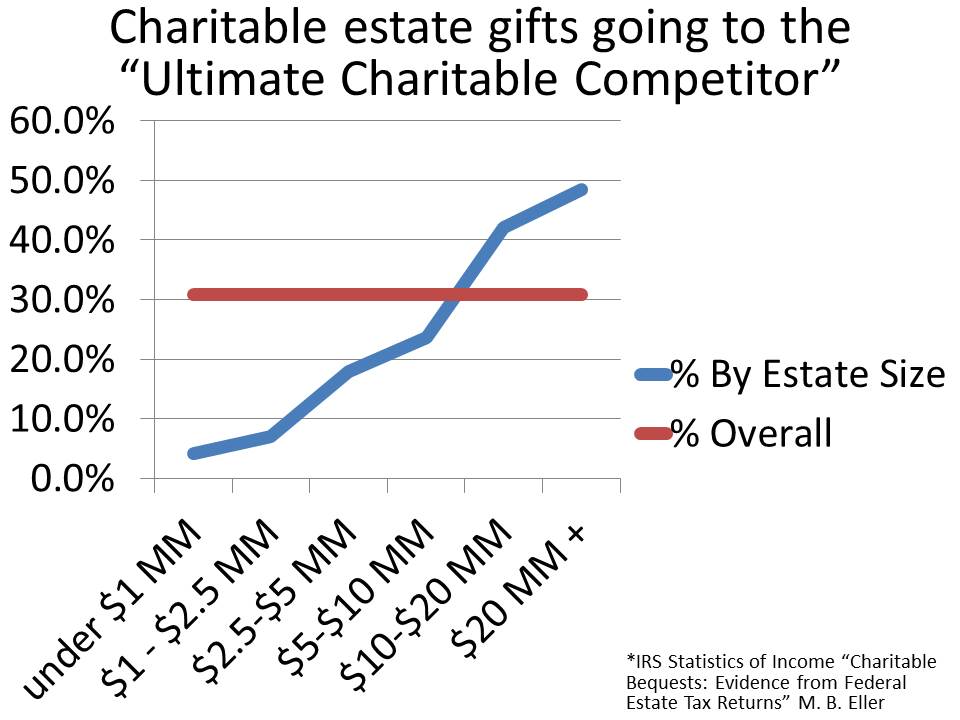
The above chart shows the share of total charitable bequests dollars going to this “ultimate charitable competitor.” The chart demonstrates that this competitor is particular attractive for donors with very large estates. According to the IRS statistics of income report, for estates of $20 million or more, nearly half of all charitable dollars went to this “ultimate charitable competitor.”
In case it is not apparent by now, this “ultimate charitable competitor” is the private family foundation. The above statistics point out one of the reasons why an increase in total charitable bequest giving dollars may not necessarily translate directly to benefit existing nonprofits. Especially for the largest estates, a substantial share of these charitable bequest dollars will go to private family foundations.
The point here is not to be negative about the influence of such a competitor, but rather to use private family foundations as an example of a giving opportunity that takes advantage of the key psychological characteristics underlying our model of charitable bequest decision-making. Ultimately, the goal is to understand why private family foundations are so attractive and to use some of their characteristics to build our own giving opportunities for supporters of our organizations.
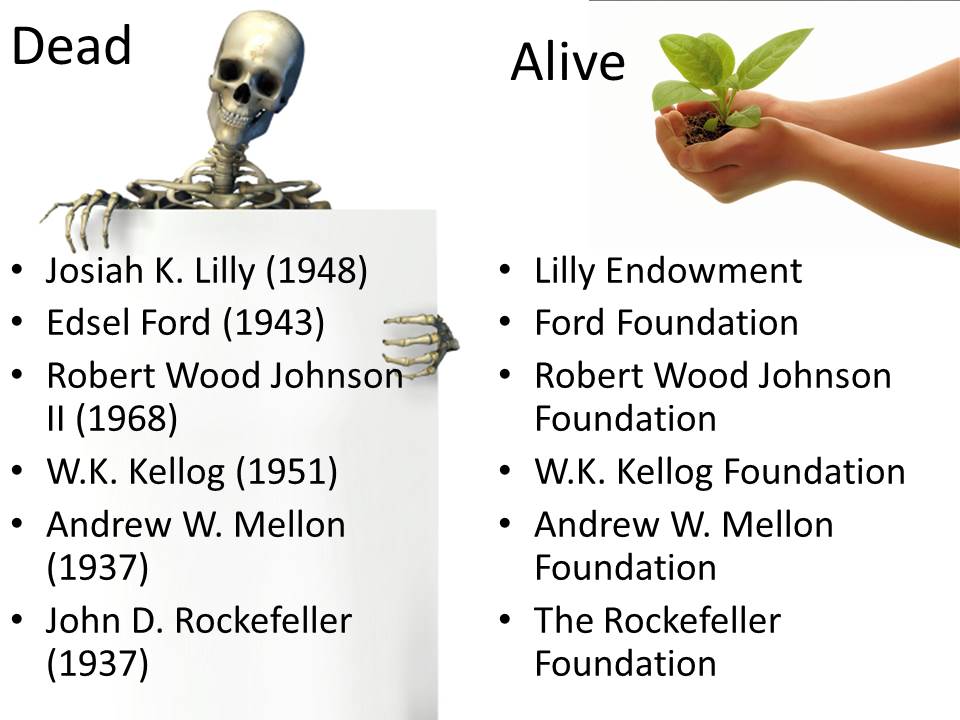
Private family foundations can create great opportunities for symbolic immortality. It is common to regularly hear the names of foundations created by individuals who have long since died. These individuals, and to some extent their values, have been immortalized by the foundations they have created. In some cases, in the absence of their foundation, almost no one would have reason to recall their names. But, through their foundations, these individuals continue to influence our world and maintain a level of symbolic immortality.
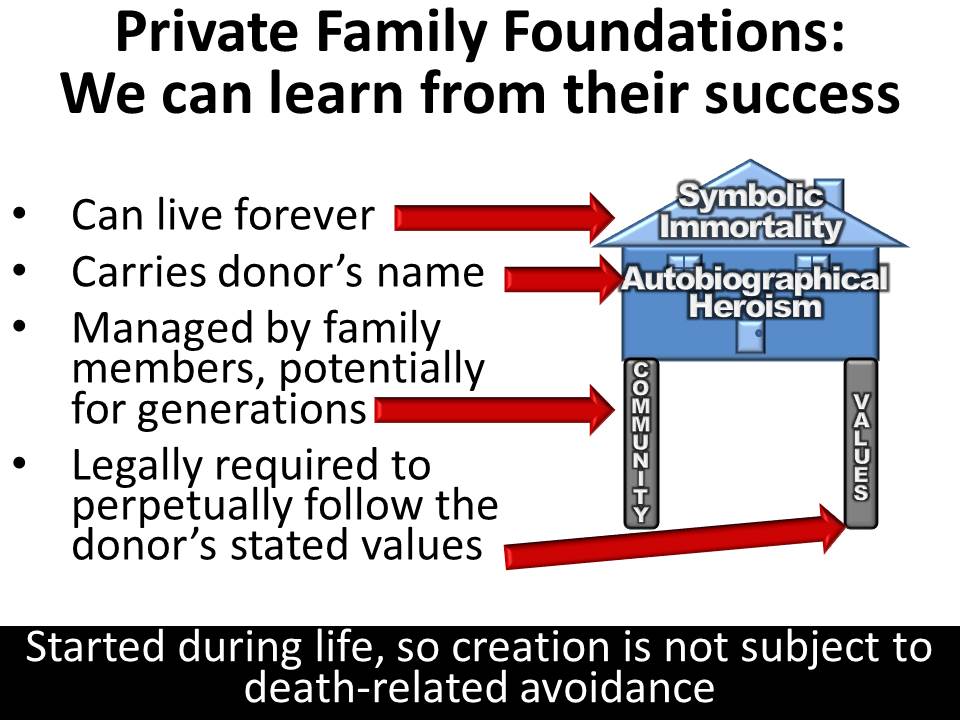
Consider how a private family foundation fulfills the underlying desires discussed previously. A private family foundation can live forever (thus advancing the desire for symbolic immortality). The private family foundation carries the donor’s name or the donor’s family’s name (thus emphasizing the autobiographical heroism of the donor and the donor’s family). The private family foundation is typically managed by family members and can be structured so that family members will manage the private family foundation for multiple generations to come (thus incorporating descendants into the philanthropic process). The donor can create a private family foundation to fulfill specifically selected purposes, which the foundation is legally required to perpetually follow (thus, except in very rare circumstances where the intentions are uncertain or later become contrary to public policy, the donor’s values can be perpetually pursued).
Often private family foundations are created during life (although the largest transfers to the foundation may occur at death). This creation during life means that the concept of starting a private family foundation is not associated with death. Consequently, discussion of the topic is not subject to interference from the avoidance defense.
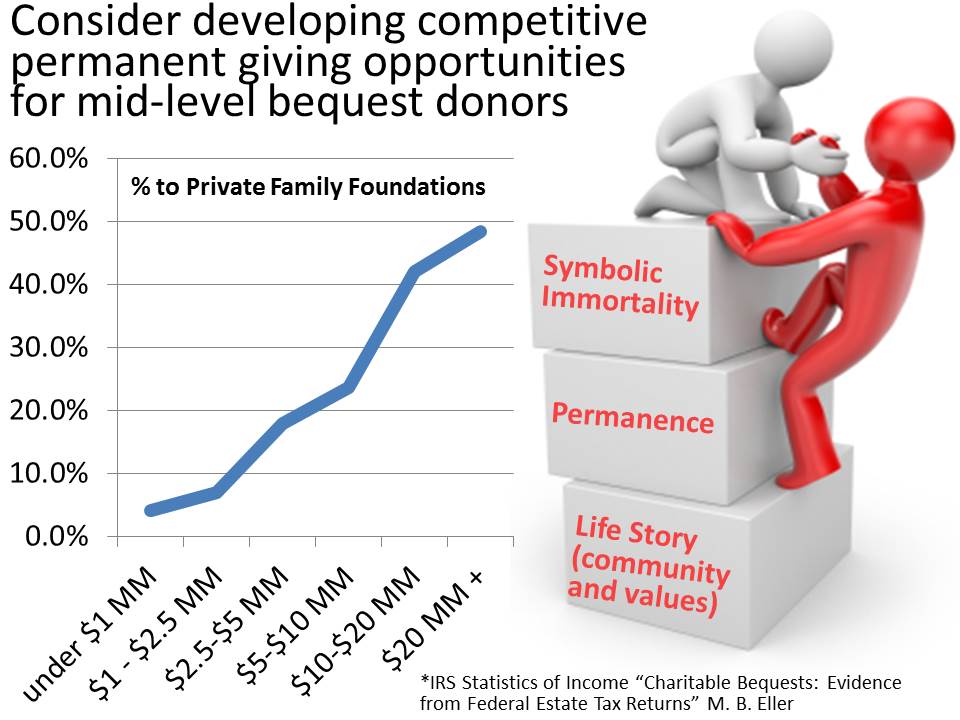
Rather than bemoan the difficulty of competing with private family foundations, a more constructive approach is to consider how to develop competitive giving opportunities. These competitive opportunities, incorporating some of the characteristics of a private foundation, may be particularly attractive for mid-level bequest donors who do not see the establishment of a private family foundation as a realistic option. As reflected by the above chart, the private family foundation does not take a dominant share of the charitable bequest dollars from this mid-level market.
The private family foundation can be, not just as a challenging competitor, but a roadmap for building attractive giving opportunities. Depending upon our organizations, these opportunities may look like different types of endowed funds such as scholarships, lectureships, or permanent funds to support certain activities. Although these funds may be limited to supporting the cause of one nonprofit organization, they can incorporate many of the characteristics that make private family foundations so attractive. For example, the charity could create permanent funds bearing the name of the donor or the donor’s family. Where possible, the charity might consider how family members could be involved in the administration and management of the permanent fund. A formal gift agreement may help to create a legal expectation to permanently follow the donor’s stated intentions similar to the governing document of a private family foundation.
Additionally, the charity may consider encouraging the lifetime establishment of such funds in conjunction with a bequest commitment. How might this work in practice? Suppose a university had a permanent fund giving opportunity, such as a permanent named scholarship or an endowed chair with a relatively high minimum required gift. One approach to opening this opportunity to mid-level donors would be to permit the creation of the scholarship or endowed chair upon a commitment to give twice the annual payout amount each year, along with a charitable bequest commitment for the remaining amount. In this way, the endowed fund could reach its minimum level, either by virtue of accumulating the annual gifts not paid out, or by receiving a bequest gift fulfillment. In this way, the charity could legitimately have a reason to request evidence of a charitable bequest plan as a sign of a commitment to – through one means or another – reach the minimum funding level.
This is just one example of how a charity might choose to incorporate the attractive characteristics of a private family foundation into giving opportunities provided to donors. There can, of course, be a variety of additional applications depending upon the charity and the creativity and openness of the charity’s leadership.
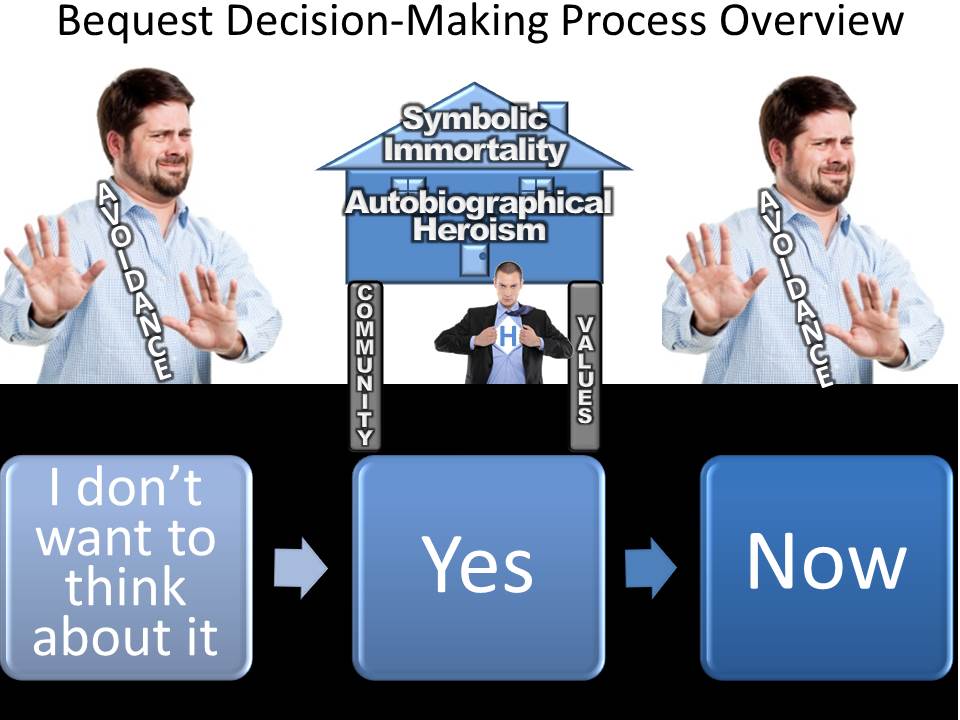
Although we have reviewed a variety of specific suggestions and strategies, the ultimate goal here is not to provide a list of pre-determined techniques. Rather, the goal has been to create a deep understanding of the charitable bequest decision-making process. From that deep understanding, we can ultimately develop new techniques and strategies precisely targeted to accomplish the goals of a specific organization working in a specific context. Now at the conclusion of this extended lecture, going inside the mind of the charitable bequest donor, I want to encourage you, dear reader, to develop the next generation of effective techniques to encourage charitable bequest planning. Take this understanding of the bequest decision-making process and use it to create dynamic approaches and strategies that we’ve never seen before. And, where possible, measure your results, so that you will know and you will be able to communicate the degree to which your strategies have indeed been successful. I look forward to learning about these exciting new techniques as they develop.
And finally, as I mentioned at the beginning, our current level of understanding of the processes of charitable bequest decision-making is, I believe, gradually improving. I personally hope to continue to conduct experimental and neuroimaging research that will further our understanding of this most important decision-making process. And when another sufficiently large batch of relevant findings have accumulated, I hope to be able to communicate those to you in the future as well. Best wishes as you pursue the noble task of encouraging generosity among your fellow men and women.